Pak's caretaker PM Kakar refuses to give out general election date; says job of election commission
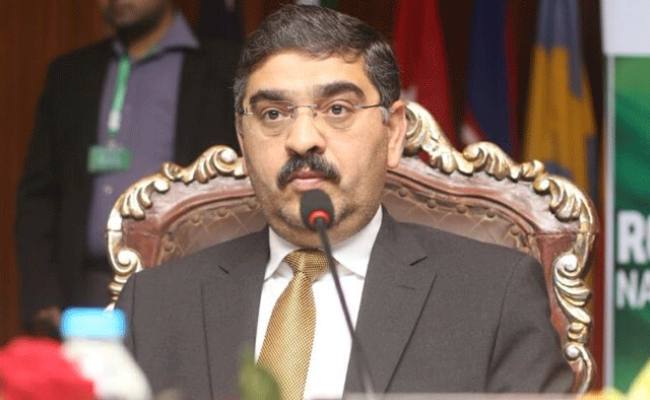
Islamabad (PTI): Pakistan's interim Prime Minister Anwaar-ul Haq Kakar on Friday refused to give a date for the country's general elections, asserting that it was the job of the election authorities.
Kakar was speaking at a press conference after a meeting at the PM House when he was asked if he would like to set a date for the upcoming national elections.
"If I were to announce elections, I would be engaging in an unlawful act, and as a journalist, you should be aware that if you steer us towards illegal actions and pose questions that might tempt us to break the law, then what should my response be?" he said.
He was asked the same question earlier this week and responded that it was for the Election Commission of Pakistan (ECP) to decide a date.
The date for the general elections has become a controversial matter in Pakistan as polls should be held within a constitutionally mandated 90-day period after the dissolution of the National Assembly, which was done on August 9.
However, just days before the end of its term, the previous government endorsed the results of the countrywide census.
The decision made it mandatory for the election commission to devise new electoral districts before elections, for which it has been provided 120 days by the country's constitution.
The ECP has announced to complete the delimitation process by November 30 and then announce election schedules, which are expected to be held in January. However, President Ari Alvi and some political parties insist the elections should be held within 90 days.
In a letter to the ECP chief this week, Alvi, who was a founding member of jailed former prime minister Imran Khan's Pakistan Tehreek-e-Insaf party, proposed November 6 as the day for the polls, but the top election body has so far not commented on the suggestion.
It is believed that polls will be held somewhere in January, but without a firm date, rumours are making rounds about the intention of the caretaker set-up to prolong its tenure. Earlier this week, Kakar clarified that the interim government had no intention of extending its term.
He had sided with the ECP and said on a Geo News programme that, per the law, deciding the date for general elections was the ECP's prerogative.
Let the Truth be known. If you read VB and like VB, please be a VB Supporter and Help us deliver the Truth to one and all.
AIITA welcomes Karnataka’s ban on obscene songs in school events
Bhatkal: The Karnataka unit of the All India Ideal Teachers Association (AIITA) has welcomed the Karnataka government’s decision to strictly ban school children from dancing to obscene songs during educational and cultural programmes in government, aided, and private schools across the state.
AIITA Karnataka State President M. R. Manvi congratulated the government for taking what he termed an important step to preserve the sanctity of education.
“Such decisions to safeguard the dignity of school children and uphold the values of education are the need of the hour. This rule should not be limited to government schools alone but must be strictly implemented in all private educational institutions as well,” he said.
He further urged the government to address other concerns within school programmes.
“The government should not only prohibit obscene dances in the name of school anniversaries, but also ensure that plays and dialogues that incite religious hatred are avoided. Schools should be centres of harmony, not platforms for spreading hatred,” he added.
According to a recent circular issued by the Department of School Education and Literacy, obscene dances are adversely affecting the mental health and moral values of students.
In this regard, schools have been advised to use songs that promote nationalism, positive thinking, the greatness of Kannada culture, and value-based traditions instead of inappropriate content during programmes.
The circular also emphasises that students should be dressed in decent attire.
AIITA also backed the department’s warning that disciplinary action would be taken against head teachers if such guidelines are violated. The association has further demanded that district Deputy Directors of Public Instruction strictly monitor the implementation of these rules.