Palestinian teenager who died in Israeli prison showed signs of starvation, medical report says
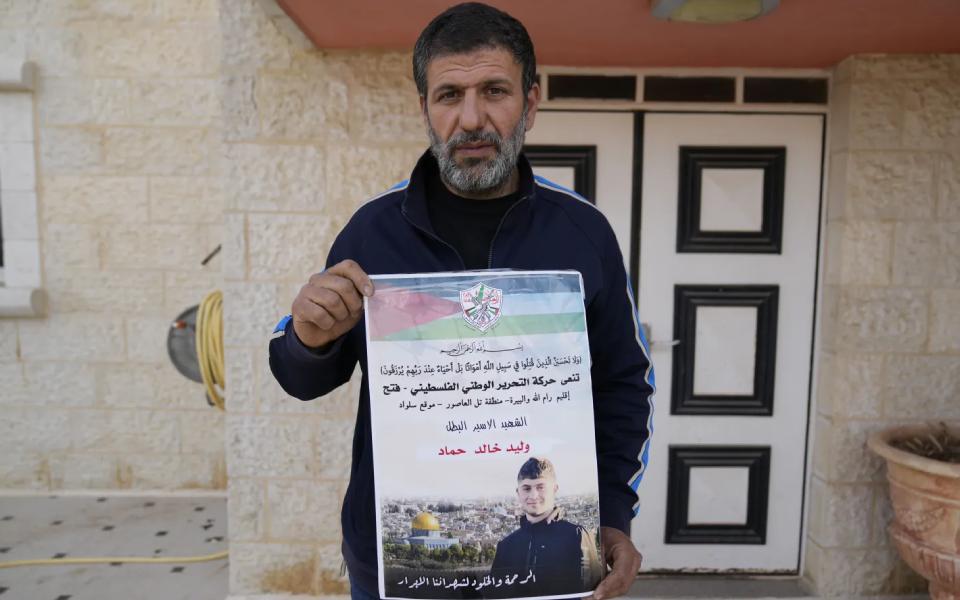
Tel Aviv, Apr 6 (AP): Starvation was likely the leading cause of death for a Palestinian teenager who died in an Israeli prison, according to an Israeli doctor who observed the autopsy.
Seventeen-year-old Walid Ahmad, who had been held for six months without being charged, suffered from extreme malnutrition, and also showed signs of inflammation of the colon and scabies, said a report written by Dr. Daniel Solomon, who watched the autopsy, conducted by Israeli experts, at the request of the boy's family.
The Associated Press obtained a copy of Solomon's report from the family. It did not conclude a cause of death, but said Ahmad was in a state of extreme weight loss and muscle wasting.
It also noted that Ahmad had complained to the prison of inadequate food since at least December, citing reports from the prison medical clinic.
Ahmad died last month after collapsing in Megiddo Prison and striking his head, Palestinian officials said, citing eyewitness accounts from other prisoners. Israel's prison service said a team was appointed to investigate Ahmad's death and its findings would be sent to the authorised authorities.
Ahmad is the youngest Palestinian prisoner to die in an Israeli prison since the start of the Gaza war, according to Physicians for Human Rights Israel, which has documented Palestinian prisoner deaths. He was taken into custody from his home in the West Bank during a pre-dawn raid in September for allegedly throwing stones at soldiers, his family said.
The autopsy was conducted on March 27 at Israel's Abu Kabir Forensic Institute, which has not released a report of its findings and did not respond to requests for comment. The Ahmad family's lawyer, Nadia Daqqa, confirmed Solomon, a gastrointestinal surgeon, was granted permission to observe the autopsy by an Israeli civil court.
Widespread abuse in Israeli prisons, rights groups say
Rights groups have documented widespread abuse in Israeli detention facilities holding thousands of Palestinians who were rounded up after Hamas' October 7, 2023, attack ignited the war in the Gaza Strip.
The Palestinian Authority says Israel is holding the bodies of 72 Palestinian prisoners who died in Israeli jails, including 61 who died since the beginning of the war. Israel often holds on to bodies of dead Palestinians, citing security grounds or for political leverage.
Conditions in Israeli prisons have worsened since the start of the war, former detainees have told the AP. They described beatings, severe overcrowding, insufficient medical care, scabies outbreaks and poor sanitary conditions.
Megiddo Prison, a maximum security facility where many Palestinian detainees, including teens, are held without charge, is regarded as one of the harshest, said Naji Abbas, head of the Prisoners and Detainees Department at Physicians for Human Rights Israel.
Israel's prison service said it operates according to the law and all prisoners are given basic rights.
Ahmad's lawyer, Firas al-Jabrini, said Israeli authorities denied his requests to visit his client in prison, but three prisoners held there told him Ahmad suffered from severe diarrhea, vomiting, headaches and dizziness before he died.
They suspected it was caused by dirty water, as well as cheese and yogurt prison guards brought in the morning and that sat out all day while detainees were fasting for the Muslim holy month of Ramadan, the lawyer said.
Malnourished and frail
According to Dr. Solomon's report the autopsy showed that Ahmed likely suffered from inflammation of the large intestine, a condition known as colitis that can cause frequent diarrhea and can in some cases contribute to death.
But medical experts said colitis usually doesn't cause death in young patients and was likely exacerbated by severe malnutrition.
“He suffered from starvation that led to severe malnutrition and in combination with untreated colitis that caused dehydration and electrolyte levels disturbances in his blood which can cause heart rate abnormalities and death,” said Dr. Lina Qasem Hassan, the head of the board for Physicians for Human Rights Israel who reviewed the report at the request of the AP.
She said the findings indicated medical neglect, exacerbated by Ahmad's inability to fight disease or infection because of how malnourished and frail he was.
Dr. Arne Stray-Pedersen, a professor of forensic medicine at the University of Oslo in Norway who was not involved in the autopsy, said the report suggests there was a period of prolonged malnutrition and sickness lasting at least a few weeks or months. “Based on the report, I interpret the underlying cause of death to be emaciation-wasting,” he said.
Scabies rashes were also noted on his legs and genital area, the report said. There was also air between his lungs that expanded into his neck and back, it said, which can cause infection. Air can come from small tears in the lungs, which can occur from severe vomiting or coughing, it said.
Ahmad's family said he was a healthy high schooler who enjoyed playing soccer before he was taken into custody. His father, Khalid Ahmad, said his son sat through four brief court hearings by videoconference, and he noticed at one of them, in February, that his son appeared to be in poor health.
The family hasn't yet received a death certificate from Israel, the elder Ahmad said Friday, and are hoping Dr. Solomon's report will help bring his son's body home.
“We will demand our son's body for burial," he said “What is happening in Israeli prisons is a real tragedy, as there is no value for life.”
Let the Truth be known. If you read VB and like VB, please be a VB Supporter and Help us deliver the Truth to one and all.
BCI urges CJI to take action against Andhra HC judge for sending young lawyer to 24-hour custody

New Delhi (PTI): The Bar Council of India on Wednesday sought the urgent intervention of Chief Justice of India Surya Kant following a "deeply disturbing" incident where a judge of the Andhra Pradesh High Court reportedly sent a young advocate to
24-hour judicial custody over a procedural lapse.
The Bar Council of India (BCI) Chairperson and senior advocate Manan Kumar Mishra, in a formal representation, termed the conduct of Justice Tarlada Rajasekhar Rao "grossly inappropriate" and "damaging to the confidence of the Bar".
“I most respectfully request your Lordship to kindly take immediate institutional cognizance of the matter and call for the video recording of the proceedings, the order passed, and the surrounding circumstances.
“I further request that appropriate administrative action may kindly be considered, including withdrawal of judicial work from the learned Judge pending review, his immediate transfer to some far off High Court, and his nomination for appropriate judicial training/orientation on court management, judicial temperament, Bar-Bench relations, and proportional exercise of contempt/judicial authority,” Mishra wrote.
This representation is made to preserve the “dignity, moral authority and public confidence of the judiciary”, he said, adding, “Judges command the highest respect not by fear, but by fairness, patience, restraint and constitutional humility”.
The communication urged the CJI to intervene at the earliest to ensure that the faith of Bar, particularly young advocates, in the protective and corrective role of the judiciary is restored.
The controversy stems from proceedings on May 5.
According to the BCI, a video circulating online shows Justice Rao rebuking a young advocate who was unable to produce a specific order copy during a hearing.
The letter said that despite the advocate "repeatedly seeking pardon and mercy" and claiming he was in physical pain, the judge remained "unmoved".
The judge allegedly told the lawyer, "now you will learn," and mocked his experience before directing the Registrar and police personnel to take him into custody for 24 hours.
The BCI chairperson said that the judge’s actions lacked proportionality and fairness.
"The dignity of the court is not enhanced when a lawyer is made to beg for grace in open court and is still sent to custody for a procedural lapse," the letter said.
"A young lawyer... is an officer of the Court, still learning, still growing, and entitled to correction without humiliation," it added.
The bar body said that such actions create a "chilling effect" on the legal fraternity, particularly among junior members, and undermine the mutual respect required between the Bench and the Bar.