Philippines president declares national energy emergency amid global fuel supply risks
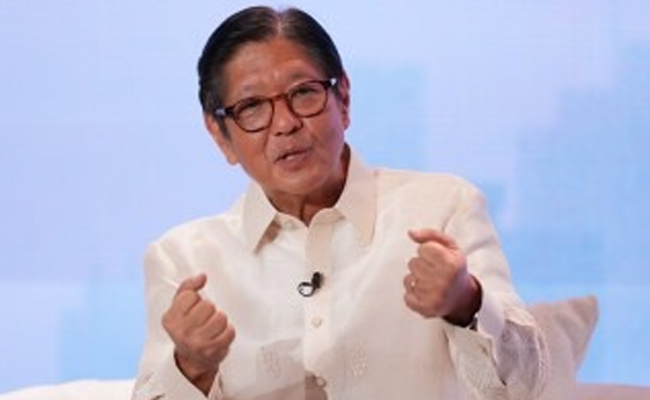
Manila: Philippine President Ferdinand Marcos Jr has declared a national energy emergency, citing the “imminent danger” to the country’s fuel supply due to global disruptions linked to the ongoing conflict involving the US, Israel, and Iran, Al Jazeera reported.
“The declaration of a state of national energy emergency will enable the government… to implement responsive and coordinated measures under existing laws to address the risks posed by disruptions in the global energy supply and the domestic economy,” Al Jazeera quoted Marcos Jr as saying.
As part of the emergency response, a committee has been formed to ensure the orderly movement, supply, distribution and availability of fuel, food, medicine, agricultural products and other essential goods, he said.
The emergency declaration, which will remain in force for one year, allows the government to procure fuel in advance and take action against hoarding and profiteering.
Authorities are also empowered to take action against the hoarding, profiteering and manipulation of petroleum product supplies.
Energy Secretary Sharon Garin said the country currently has about 45 days of fuel supply based on current consumption. She added that the government is working to procure 1 million barrels of oil from countries within and outside Southeast Asia to build a buffer stock, though uncertainties remain.
Meanwhile, Philippine Ambassador to the US Jose Manuel Romualdez said the government is in talks with Washington to secure exemptions that would allow for the purchase of oil from countries under US sanctions.
The announcement comes amid rising public discontent. Transport workers, commuters, and consumer groups have planned a two-day strike to protest fuel price hikes and what they call inadequate government response.
Piston, a federation of public transport associations, described the declaration of a national energy emergency as a “superficial band-aid that deliberately ignores the structural roots of the fuel crisis”.
“If the government genuinely intends to protect transport workers and commuters from this geopolitical crisis, it would immediately suspend the Excise Tax and Value-Added Tax on petroleum products to drastically lower prices overnight,” Al Jazeera quoted Piston as saying.
Renato Reyes Jr, of the progressive civil society coalition Bayan, said the declaration “does not address the basic problem of runaway oil prices and [their] effects on the mass transport system and other sectors in the country”.
As part of the government’s mitigation measures, students and workers in some cities are being given free access to bus rides, and the government has started to provide a 5,000 peso subsidy for public transport workers, including motorcycle taxi drivers, to help them cope with rising fuel costs.
Let the Truth be known. If you read VB and like VB, please be a VB Supporter and Help us deliver the Truth to one and all.
Women’s Reservation Bill: K'taka CM accuses PM Modi of adopting 'double standard'
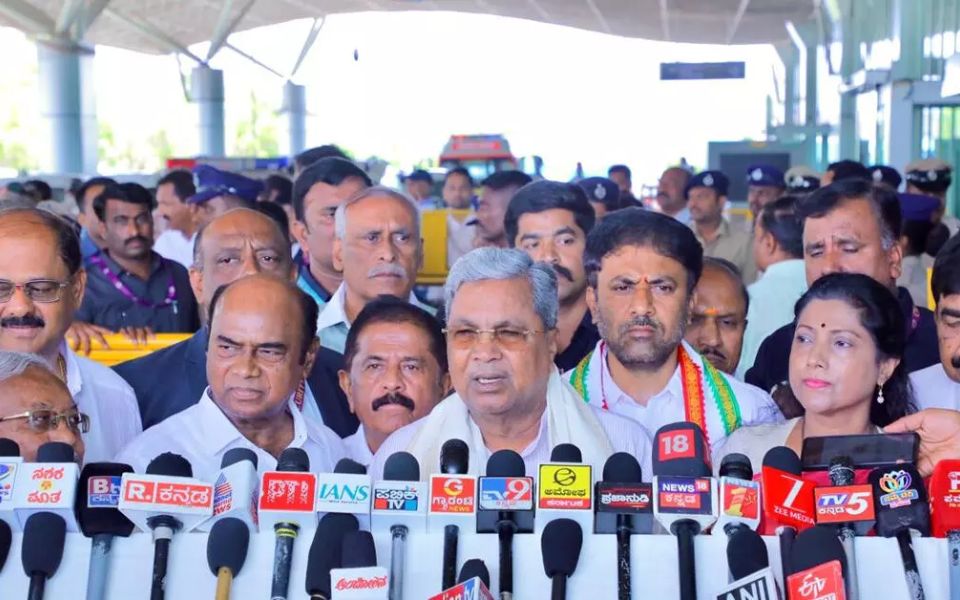
Mysuru (Karnataka) (PTI): Karnataka Chief Minister Siddaramaiah on Monday accused Prime Minister Narendra Modi of adopting a “double standard” on women’s reservation, alleging that the Centre had delayed implementation despite having the opportunity to act earlier.
Addressing reporters here, Siddaramaiah said the BJP and Modi had earlier opposed welfare guarantees and were now replicating them, while also questioning the timing and intent behind the women’s reservation move.
“That’s what I call double standards. Narendra Modi is not for social justice. If he was, this would have been done long ago. How many years has he been in power? It’s been 12 years. Why hasn’t it been done so far?” he asked.
The Chief Minister reiterated that the Congress had consistently supported women’s reservation and accused the Centre of "politicising" the issue.
“We spoke about women’s reservation. The Prime Minister asked me what our stand was. I said we are in favour of women’s reservation,” he said, referring to recent discussions with the PM.
He maintained that delimitation should only be carried out after a fresh Census to ensure equitable representation among states.
“In my view, delimitation should be done after a new census. That is why we opposed it. We have not opposed women’s reservation. We have always supported it,” he said.
Highlighting Congress’ past role, he said, “Who brought the 73rd and 74th amendments? Rajiv Gandhi and the Congress party. Those amendments ensured 50 per cent reservation for women in local bodies. Why would we oppose it?”
Siddaramaiah further questioned the union government’s delay in implementation. “Narendra Modi indulged in politics and got it passed in 2023. Why didn’t he implement it immediately? Then why did he wait so long? He could have implemented it immediately. If he is committed to women’s reservation, he should have implemented it,” he said.
On the linkage between delimitation and reservation, he asked, “Why did the Centre link it with delimitation? Why did it go for a constitutional amendment?” adding that such a move could disadvantage southern states that have successfully controlled population growth.
“Southern states have controlled population well, but northern states haven’t. Naturally, it benefits them and disadvantages us,” he said.
Responding to BJP’s criticism that women would “teach Congress a lesson,” Siddaramaiah said, “They are doing politics. If Modi had brought this earlier, who would have opposed women’s reservation?”
On electoral prospects elsewhere, he said he had no direct information on Tamil Nadu but was optimistic about ruling DMK's victory.
"According to the information I have, DMK and its alliance are likely to win,” while asserting that Kerala would also be won by the opposition.
In a major setback to the BJP-led Central government, a Constitution Amendment Bill to implement 33 per cent reservation for women in legislatures in 2029 and increase the number of Lok Sabha seats to 816 was defeated on Friday, with the ruling dispensation asserting that the struggle to give the rights to women will continue.
While 298 members voted in support of the bill in Lok Sabha, 230 MPs voted against it. Out of 528 members who voted, the bill required 352 votes for a two-third majority.
According to the Constitution (131st Amendment) Bill, Lok Sabha seats were to be increased to 816 from the current 543 to "operationalise" the women's reservation law before the 2029 parliamentary polls, following a delimitation exercise based on the 2011 Census.
Seats were also to be increased in state and Union territory assemblies to accommodate 33 per cent reservation for women.