Pilot says lightning caused deadly Russian crash landing
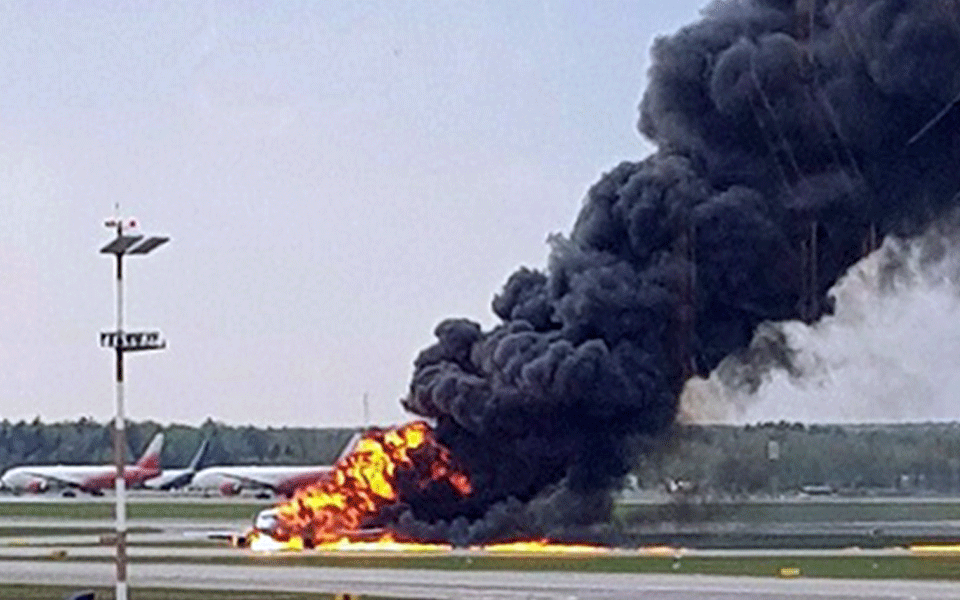
Moscow: The pilot of a Russian passenger plane that erupted in a ball of fire on the runway of Moscow's busiest airport, killing 41 people, said lightning led to the emergency landing.
Investigators were on Monday working to understand the causes of the blaze after the Sukhoi Superjet-100 had to return to Sheremetyevo airport shortly after take-off Sunday evening.
But pilot Denis Yevdokimov told Russian media the craft lost communication and needed to switch to emergency control mode "because of lightning" on the Aeroflot flight to the Arctic city of Murmansk. He did not specify if the plane was struck directly.
"We managed to restore communication through the emergency frequency on our radio connection. But the link was only for a short time and kept cutting out... it was possible to say only a few words," he told the Komsomolskaya Pravda newspaper.
Videos on social media showed the plane crash-landing and then speeding along the runway with flames pouring from its fuselage.
Passengers could be seen leaping onto an inflatable slide at the front and running from the blazing plane as columns of black smoke billowed into the sky.
Another video shot inside the cabin showed roaring flames outside the window and passengers crying out in panic.
Evdokimov said he believed the plane burst into flames on landing, most likely because of full fuel tanks.
At least two children were among the 41 dead and nine more people were in hospital, three of them seriously injured, authorities said.
The aircraft's black boxes have been found and handed over to investigators, a source in the Russian emergency services told news agencies.
Several of the 78 people on board said they believed lightning was the cause of the tragedy, which came at the end of several days of public holidays following Workers' Day on May 1.
"I saw a flash of white light," Dmitry Khlebushkin told the state RIA news agency.
Pyotr Egorov, also on board, told media: "We had just taken off when the plane was hit by lightning... the landing was very hard, we almost passed out from fear.
"The plane bounced on the tarmac like a grasshopper and burst into flames on the ground." The jet -- carrying 73 passengers and five crew members -- left Sheremetyevo at 6:02pm (1502 GMT), and the crew issued a distress signal shortly afterwards, officials said.
Russia's national carrier Aeroflot was once notorious for its poor safety record but in recent years its image has improved and it has not had a fatal accident in more than a decade.
The Russian Sukhoi Superjet-100 however has been dogged with problems since its launch in 2011.
In 2012, a Superjet performing at an Indonesian air show slammed into a volcano, killing all 45 people on board. Indonesia blamed the crash on pilot error.
Technical problems with the plane have been reported in recent years and Russia has struggled to convince foreign carriers to purchase it.
The government offered subsidies to encourage Russian airlines to buy the Superjet and Aeroflot has became its main operator. In September 2018, it announced a record order of 100 Superjet-100s.
The Murmansk region -- where many of those killed or injured are believed to be from -- went into a three-day period of mourning from Monday. Other Aeroflot flights are expected to be affected in the coming days.
Russian President Vladimir Putin offered his condolences to the victims' loved ones and said the investigation "should be as thorough as possible", according to the Kremlin. Prime Minister Dmitry Medvedev ordered a special committee to investigate the disaster.
Let the Truth be known. If you read VB and like VB, please be a VB Supporter and Help us deliver the Truth to one and all.
Sujit Nair raises concerns over speculation of DMK-AIADMK understanding to block TVK
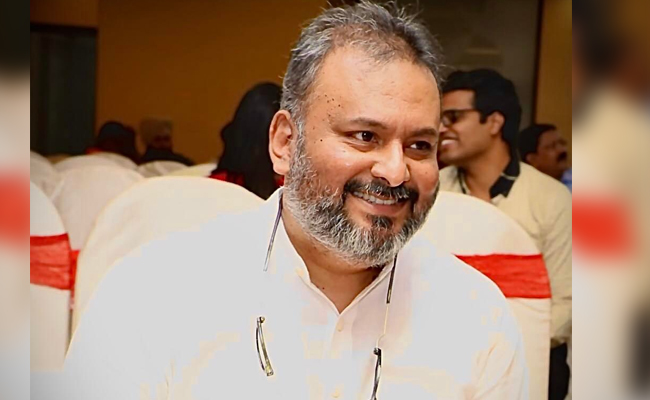
Chennai: Journalist and political commentator Sujit Nair has expressed concern over speculation that the Dravida Munnetra Kazhagam and the All India Anna Dravida Munnetra Kazhagam could explore a post-poll understanding to prevent Vijay-led Tamilaga Vettri Kazhagam from forming the government in Tamil Nadu.
In a social media post, Sujit Nair said the election verdict in Tamil Nadu reflected a clear public demand for political change and argued that the mandate should be respected irrespective of political preferences.
Referring to reports and political discussions surrounding a possible understanding between the DMK and AIADMK, he said he hoped such developments remained only speculative conversations and did not turn into reality.
Nair stated that if such an alliance were to take shape, it would raise serious questions about ideological politics in the country. He said TVK had emerged through a democratic electoral process and that the legitimacy to govern in a parliamentary democracy comes from the people’s verdict.
According to him, attempts to prevent an electoral winner from forming the government through unexpected political arrangements may be constitutionally valid, but many people could view them as politically opportunistic.
He further said that such a move could particularly affect the political image of the DMK, which has historically projected itself around ideology, social justice and opposition politics. Nair said that in ideological terms, the DMK appeared closer to TVK than to the AIADMK, and joining hands with its long-time political rival only to remain in power could weaken its broader political narrative.
He added that the same questions would apply to the AIADMK as well, as the party had spent decades positioning itself against the DMK and such an arrangement could create discomfort among its cadre and supporters.
Drawing a comparison with Maharashtra politics in 2019, Nair said he had expressed similar views when the Shiv Sena formed an alliance with the Indian National Congress and the Nationalist Congress Party after the Assembly elections.
He said post-poll alliances between long-standing political rivals often create a public perception that ideology and electoral mandates become secondary when political power equations come into play.
Nair also said such developments increase public cynicism towards politics and reinforce the belief among voters that ideology is often sidelined after elections.
He maintained that the Tamil Nadu verdict was emphatic and said respecting both the spirit and substance of the mandate was important for the credibility of democratic politics.