PM Modi, Biden and over 100 world leaders to address UNGA in person next week
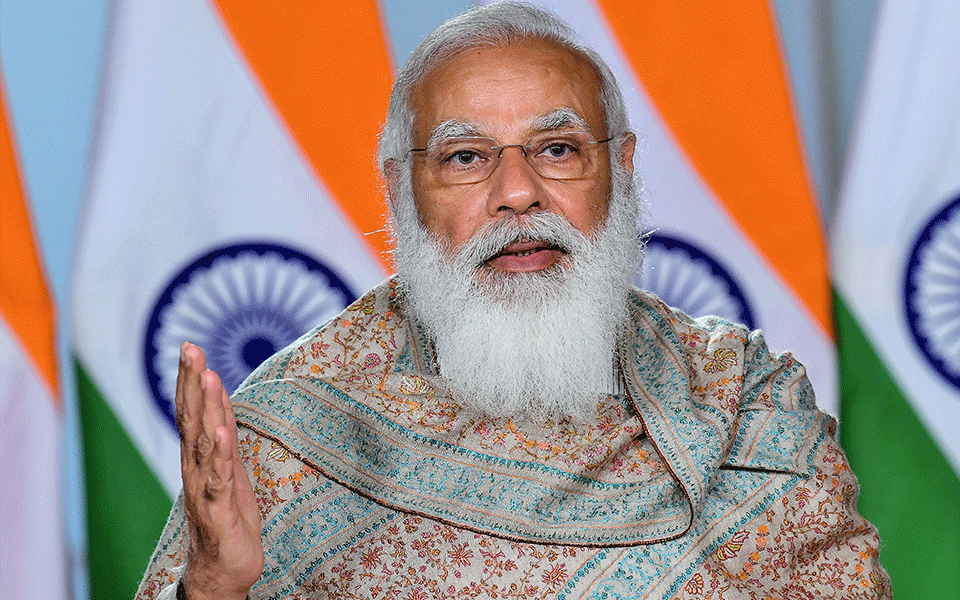
United Nations (PTI): Prime Minister Narendra Modi and US President Joe Biden will address the UN General Debate in-person next week, as over 100 heads of state and government arrive in New York to attend the annual high-level General Assembly session, which had gone virtual in 2020 due to the COVID-19 pandemic.
Modi will address world leaders from the iconic UN General Assembly hall on the morning of September 25, a day after he participates in the Quad Leaders' Summit in Washington DC hosted by Biden on September 24.
Modi, Biden, Australian Prime Minister Scott Morrison and his Japanese counterpart Yoshihide Suga will participate in the Leaders' Summit of the Quadrilateral Framework in Washington and review progress made since their first virtual Summit on 12 March 2021 and discuss regional issues of shared interest, the Ministry of External Affairs said in a statement.
Modi will address the General Debate of the 76th Session of the United Nations General Assembly (UNGA) on September 25. The theme for this year's General Debate is Building Resilience through hope to recover from COVID-19, rebuild sustainably, respond to the needs of the planet, respect the rights of people, and revitalise the United Nations', the MEA statement said.
As per the second provisional list of speakers for the General Assembly, about 109 heads of state and government will address the General Debate in person and nearly 60 will deliver speeches through pre-recorded video statements.
Biden will travel to New York to deliver his first address to the 193-member General Assembly as American President. The US is traditionally the second speaker after Brazil at the General Debate, which this year will run from September 21 to 27.
Afghanistan's diplomat is listed as the last speaker on the last day of the General Debate. Currently the Afghan envoy at the UN is Ambassador Ghulam Isaczai, who was appointed by former President Ashraf Ghani as Kabul's envoy to the UN in June 2021. The interim Taliban government in power has not yet made any submission challenging Isaczai's credentials.
The diplomats of Myanmar and Guinea are also listed to speak on behalf of their countries on the last day of the debate. However, following the coup in Myanmar, its military rulers have said the country's Ambassador at UN Kyaw Moe Tun has been dismissed and they want Aung Thurein to replace him.
In response to a question on who should represent Myanmar at the UNGA, UN Secretary General Antonio Guterres had said that it is a matter that is strictly in the hands of the Credentials Committee and, of course, we will abide by what member states decide in the Credentials Committee or eventually, if necessary in the General Assembly. This is an area where the Secretariat has no power whatsoever.
Sri Lankan President Gotabaya Rajapaksa, Israel's new Prime Minister Naftali Bennett, UK Prime Minister Boris Johnson and Palestinian President Mahmoud Abbas are among the world leaders who will address the session in person.
The 76th session of the UN General Assembly will begin on Tuesday. Maldives Foreign Minister Abdulla Shahid will be President of the year-long session.
Modi had last addressed the UN General Assembly session in 2019. Last year, world leaders had submitted pre-recorded video statements for the United Nations General Assembly session in September, as heads of state and government could not physically attend the annual gathering due to the coronavirus pandemic.
It was the first time in the UN's 75-year history that the high-level session had gone virtual. This year too, the option has been kept open for the world leaders to send in pre-recorded statements since the pandemic continues to rage across several nations around the world.
The other events during the 76th session of the General Assembly are the meeting to commemorate the 20th Anniversary of the adoption of the Durban Declaration and Programme of Action on September 22, Dialogue on Energy convened by UN Secretary-General Guterres on September 24 and the plenary meeting to commemorate and promote the International Day for the Total Elimination of Nuclear Weapons on September 28.
Guterres and UK Prime Minister Johnson will hold an informal, closed-door roundtable with a small but representative group of heads of state and government on the sidelines of the General Assembly on September 20.
Let the Truth be known. If you read VB and like VB, please be a VB Supporter and Help us deliver the Truth to one and all.
Karnataka by-polls: Cong ahead in Bagalkot, BJP leads in Davanagere South
_vb_21.jpeg)
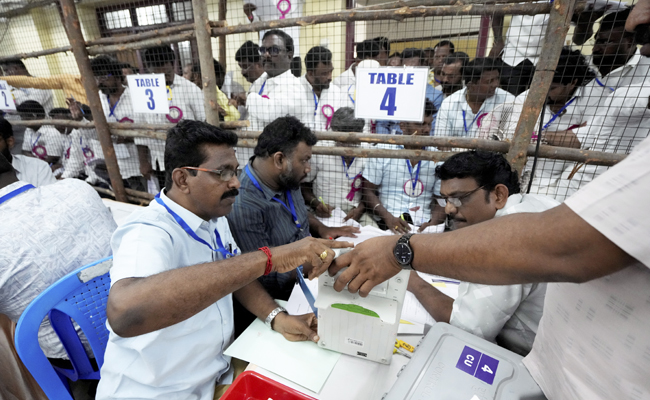
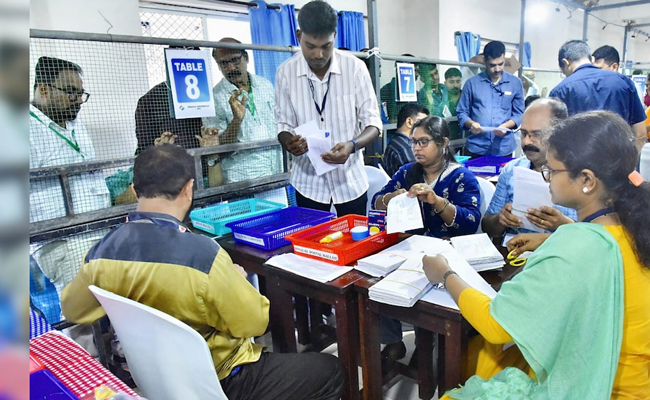
Bengaluru (PTI): Trends show Congress and BJP have maintained leads respectively in Karnataka's Bagalkot and Davanagere South Assembly seats, where counting of votes is underway on Monday, for the bypolls held for two seats on April 9.
The polls were necessitated by the deaths of senior Congress MLAs H Y Meti (Bagalkot) and Shamanur Shivashankarappa (Davanagere South).
According to the Election Commission, Congress party's Umesh Meti was ahead of BJP's Veerabhadrayya Charantimath by a margin of 9,969 votes in Bagalkot.
In Davanagere South, BJP's Srinivas T Dasakariyappa was leading over Congress party's Samarth Mallikarjun by a margin of 8,539 votes.
Nine and 25 candidates were in the fray, respectively in the Bagalkot and Davanagere South Assembly segments.