PM Modi greets Maldives President Muizzu on Eid; highlights civilisational linkages
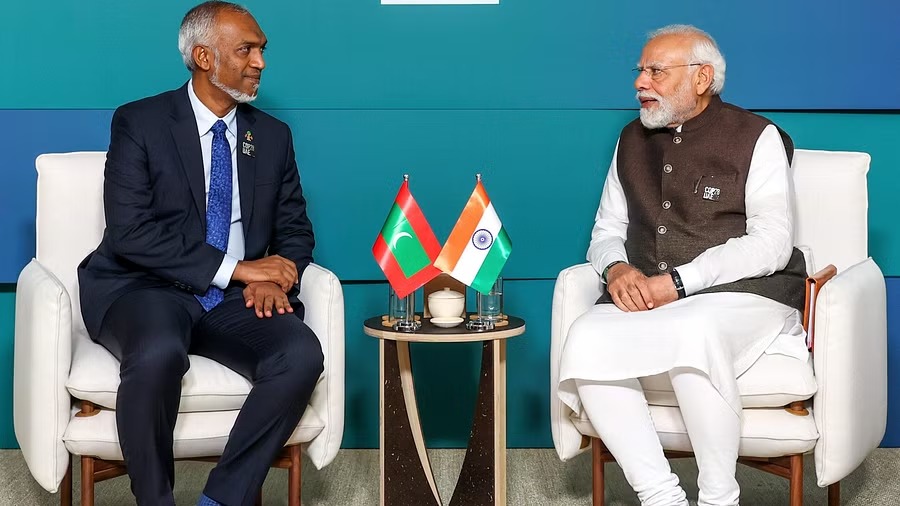
Male (PTI): Prime Minister Narendra Modi on Wednesday warmly greeted Maldives President Mohamed Muizzu, the government and the people of the archipelago nation on the occasion of Eid and also highlighted the cultural and civilisational linkages between the two countries.
"As we celebrate Eid al-Fitr with traditional fervour, people across the world are reminded of the values of compassion, brotherhood and togetherness, which are essential in building a peaceful and inclusive world that we all aspire for," Prime Minister Modi said in his greetings to President Muizzu.
"Hon'ble Prime Minister of India @NarendraModi extended warm greetings to His Excellency President of Maldives Dr. @MMuizzu, the Government & the people of the Republic of Maldives," the Indian High Commission here said in a post on X.
In his message, Prime Minister Modi also highlighted the cultural and civilisational linkages shared by India and Maldives that go back in time.
The India-Maldives ties have come under stress as President Muizzu, widely seen as a pro-China leader, maintained after assuming charge as the president in November that he will keep his election promise of evicting Indian military personnel from his country.
There were 88 Indian military personnel manning three aviation platforms in the Maldives. Last month, the first batch of 26 Indian military personnel was replaced by civilian personnel from India. The remaining Indian defence personnel are expected to return to India by May 10, the deadline set by Muizzu.
At the request of the Maldives government, India last week allowed the export of certain quantities of essential commodities for the year 2024-25, displaying a strong commitment to supporting human-centric development in the island nation.
The Maldives is India’s key maritime neighbour in the Indian Ocean Region (IOR) and occupies a special place in its initiatives like ‘SAGAR’ (Security and Growth for All in the Region) and the ‘Neighbourhood First Policy’ of the Modi government.
Let the Truth be known. If you read VB and like VB, please be a VB Supporter and Help us deliver the Truth to one and all.
TN Assembly elections: Eight-month pregnant homemaker wins Thiru Vi Ka Nagar seat for TVK
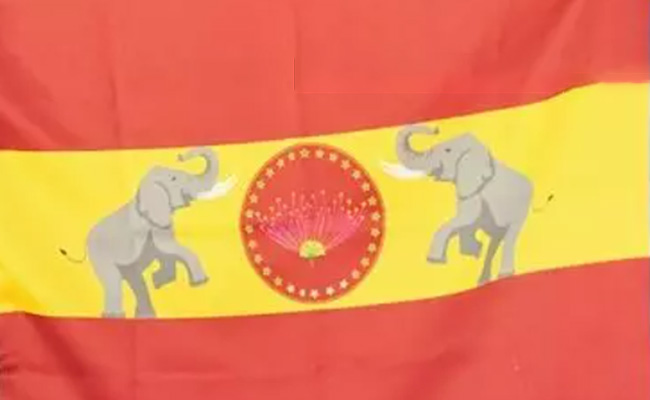
Chennai (PTI): Before giving birth, she had already delivered a mandate—a symbol of hope for Thiru Vi Ka Nagar.
Echoing Delhi’s 2013 “common citizen” political churn associated with the rise of the Aam Aadmi Party (AAP), an eight-month-pregnant homemaker, M R Pallavi, has been elected as an MLA from Chennai’s Thiru Vi Ka Nagar constituency, emerging as one of the notable first-time faces of the Vijay-led TVK in the recently held Tamil Nadu Assembly elections.
In the narrow lanes of Thiru Vi Ka Nagar, a steady stream of media personnel has been making their way to Pallavi’s residence—a scene reminiscent of the result day in Delhi when journalists thronged the modest home of Rakhi Birla, who had won from Mangolpuri on an AAP ticket.
Pallavi, 36, a homemaker educated up to class XII, defeated the DMK candidate K S Ravichandran by a margin of 22,333 votes in the reserved Thiru Vi Ka Nagar Assembly constituency.
Tamilaga Vettri Kazhagam emerged as the single largest party by winning 108 seats, while DMK and AIADMK got 59 and 47, respectively.
Pallavi’s victory has drawn attention due to her personal circumstances. She campaigned extensively while eight months pregnant, going door-to-door to reach voters.
According to local accounts, she even fainted once during the campaign but continued her outreach.
She has not spoken to the media following her victory, as doctors have advised her to rest. Her husband, Rajesh, briefly recounted her campaign efforts.
A self-professed admirer of actor-turned-politician Vijay, Pallavi joined TVK soon after its formation and is now among its first-time legislators.
Doctors have advised her to be hospitalised around May 20, as she is expecting her second child. Ahead of that, voters in Thiru Vi Ka Nagar have entrusted her with representing them in the state Assembly.
Political observers say the rise of candidates like Pallavi signals a possible shift in Tamil Nadu’s political landscape, with voters backing a new party and candidates from non-traditional backgrounds.