PM Modi meets top Lankan leadership; describes terrorism as a ''joint threat''
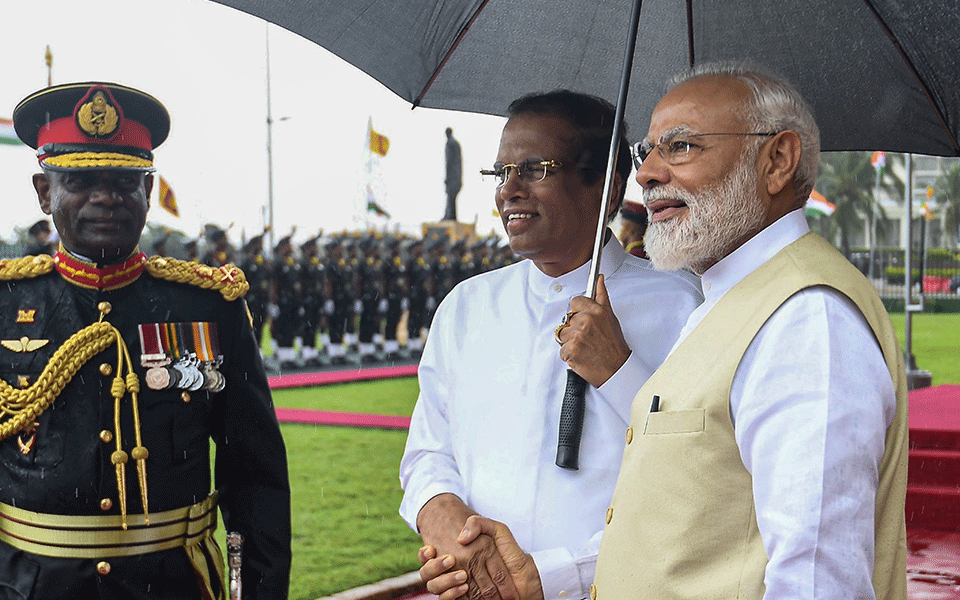
Colombo: Prime Minister Narendra Modi met with Sri Lankan President Maithripala Sirisena on Sunday for the second time within 10 days and the two leaders agreed that terrorism is a "joint threat" that needs collective and focussed action.
Modi is the first foreign leader to visit Sri Lanka after the deadly Easter terror attacks in April. His visit is considered as a sign of India's affirmation of solidarity with Sri Lanka in the aftermath of the attacks.
"Met President @MaithripalaS, our second meeting in 10 days. President Sirisena and I agreed that terrorism is a joint threat that needs collective and focussed action. Reiterated India's commitment to partner with Sri Lanka for a shared, secure and prosperous future," Modi tweeted after his talks with President Sirisena.
External Affairs Ministry spokesperson Raveesh Kumar said that the two leaders discussed bilateral issues of mutual interest. A banquet was hosted in honour of Prime Minister Modi by President Sirisena.
Modi also received a special gift, a replica of the Samadhi Buddha Statue, from "special friend" Sirisena.
"A special gift from a special friend. President @MaithripalaS presented PM @narendramodi the Samadhi Buddha Statue. This is considered to be one of the best sculptures in the Anuradhapura era. The original statue was sculptured between the 4th and 7th centuries AD," the Prime Minister's Office tweeted.
"This replica of the Samadhi Buddha Statue has been hand carved using white teak. This masterpiece has taken almost two years to complete. The meditation pose is known as Dhyana Mudra," it added.
Earlier, Prime Minister Modi's entourage made a detour to St Anthony's church - one of the sites of the horrific Easter Sunday attacks - on their way to the Presidential Secretariat, where a red carpet welcome awaited.
Modi paid tributes to the victims of the deadly terror strikes at the church and said the "cowardly acts of terror cannot defeat the spirit of Sri Lanka".
"I am confident Sri Lanka will rise again. Cowardly acts of terror cannot defeat the spirit of Sri Lanka. India stands in solidarity with the people of Sri Lanka," said Modi.
Nine suicide bombers carried out a series of devastating blasts that tore through St Anthony's Church in Colombo, St Sebastian's Church in the western coastal town of Negombo and another church in the eastern town of Batticaloa, and three high-end hotels frequented by tourists in the country's deadliest violence since the devastating civil war ended in 2009.
The Islamic State has claimed the attacks, but the government has blamed local extremist group National Thawheed Jamaath (NTJ) for the bombings.
After paying tributes to the victims of the Easter attacks at the Catholic church, Modi arrived at the President's House where he was accorded a ceremonial reception. President Sirisena held an umbrella to provide cover to himself and Prime Minister Modi from rain.
Prime Minister Modi held "fruitful discussions" with his Lankan counterpart Ranil Wickremesinghe.
"Assured India's full support to further strengthen bilateral development partnership including through people oriented projects in Sri Lanka," Modi said after his meeting with Wickremesinghe.
Modi also held extensive meeting with the Leader of Opposition Mahinda Rajapaksa and discussed the need for close collaboration between the two countries in the fields of counter terrorism, security and economic development.
"Had an extensive meeting with the Leader of Opposition, Mr. Mahinda Rajapaksa. We discussed the need for close collaboration between India and Sri Lanka in the fields of counter terrorism, security and economic development," Modi tweeted.
Rajapaksa, the former Sri Lankan president, led his country to a decisive victory against the Tamil Tigers in 2009.
The LTTE collapsed in 2009 after the Lankan army killed its supreme leader Velupillai Prabhakaran. The war is thought to have killed between 70,000 and 80,000 people.
A Tamil National Alliance delegation led by R Sampanthan also called on Prime Minister Modi and congratulated him on his electoral victory.
Modi termed his visit to Colombo "immensely fruitful".
"Sri Lanka has a special place in our hearts. I assure my sisters and brothers of Sri Lanka that India will always be there with you and support your nation's progress. Thank you for the memorable welcome and hospitality," he said before leaving the island nation.
Under Prime Minister Modi the bilateral ties between India and Sri Lanka have touched a new high, including in the areas of security co-operation, trade, and cultural ties.
Modi visited Sri Lanka twice earlier too - in March 2015 and May 2017.
Under the Modi government, India handed over the first lot of houses built under a USD 350 million project for people, mostly Tamils who live in Sri Lanka's tea plantation areas.
Modi arrived in Colombo from Maldives where he held wide-ranging talks with Maldivian President Ibrahim Mohamed Solih on Saturday.
Let the Truth be known. If you read VB and like VB, please be a VB Supporter and Help us deliver the Truth to one and all.
Karnataka: GBA city corporation polls likely between June 14 and 24
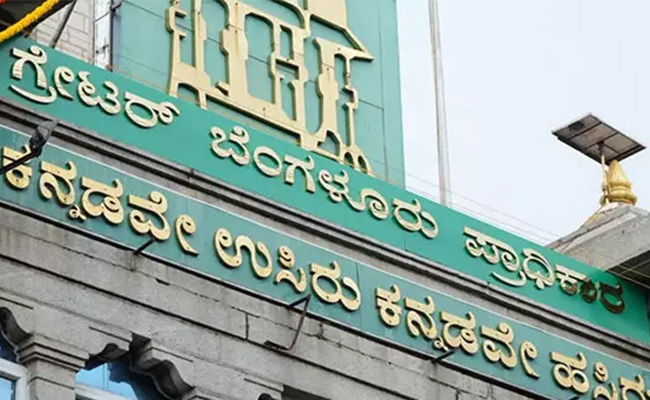
Bengaluru (PTI): Karnataka State Election Commissioner G S Sangreshi on Friday said elections to the five city corporations under the GBA will be held anytime between June 14 and June 24.
He said the exact date for the polls will be announced after a week, asserting that the power to postpone the elections, as requested by GBA authorities, lies with the Supreme Court.
The Supreme Court had directed the Karnataka government and the State Election Commission to conduct Bengaluru local body elections by June 30.
On Friday, the SEC held a consultation meeting with the GBA Chief Commissioner and commissioners of the five city corporations regarding the election schedule, as per the provisions of the GBA Act.
“During the meeting, I informed GBA officials that only the election date has to be fixed, as all other measures and formalities for conducting the polls have already been completed,” Sangreshi said.
“They requested the Commission to consider factors such as rains, exams, census work, SIR, and manpower shortages while fixing the date and sought additional time,” he added.
Speaking to reporters after the meeting, he said, “I told them this meeting was not for seeking time. Elections to the five corporations under the GBA must be held before June 30, as directed by the Supreme Court, and a compliance report must be submitted to the court. I do not have the power to postpone the elections as requested.”
The Supreme Court has already given a “final opportunity,” and both the SEC and the government must comply with its directions, the State Election Commissioner said.
He asked GBA officials to suggest suitable dates between June 14 and June 24.
“While stating that they are ready for elections, the officials highlighted operational challenges, including manpower shortages. However, I have informed them that the elections will have to be held between June 14 and June 24. After a week, I will announce the final date,” he said.
Reiterating that he does not have the power to postpone the elections, Sangreshi said the authority rests with the Supreme Court, and elections must be conducted as scheduled.
“We have consulted the GBA as per the rules. It is up to them to suggest a date within the given window. If they need more time, they must approach the court. Our responsibility is to fix the date and complete the polls before June 30,” he said.
The matter regarding manpower and other concerns raised by GBA officials is already before the Supreme Court, and the State Election Commission has also filed a petition in this regard. The case is yet to be heard.
“Since the matter has not come up for hearing, the earlier order remains binding. Therefore, preparations are underway,” he added.
The tenure of the previous elected body under the erstwhile Bruhat Bengaluru Mahanagara Palike (BBMP) ended on September 10, 2020, and since then, a government-appointed administrator has been managing its day-to-day affairs.
Bengaluru was divided into five municipal corporations—Central, East, West, North, and South—under the Greater Bengaluru Authority in September 2025, replacing the BBMP.
Sangreshi had earlier said that elections to the five corporations would be conducted using ballot papers instead of Electronic Voting Machines.
This follows the Congress government’s decision last September to recommend the use of ballot papers in all future panchayat and urban local body elections, citing concerns over declining public confidence in EVMs.
The state government subsequently enacted the Karnataka Gram Swaraj and Panchayat Raj (Amendment) Act, 2026, paving the way for the use of ballot papers in local body elections.