PM Modi, US President Trump meet in Japan; discuss Iran, trade, defence, 5G
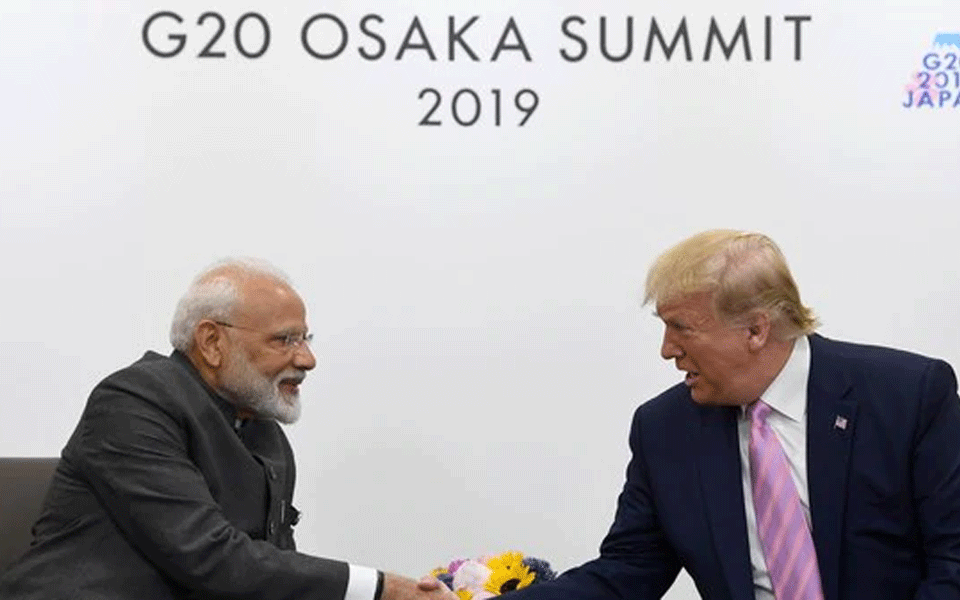
Osaka: Prime Minister Narendra Modi on Friday held wide-ranging talks with US President Donald Trump and discussed ways to leverage the power of technology, improve defence and security ties as well as issues relating to trade, Iran and 5G.
Modi, who is in Osaka, Japan for the G20 Summit, thanked Trump for expressing his "love towards India" in a letter delivered by US Secretary of State Mike Pompeo this week.
The Prime Minister said that India stands committed to further deepen economic and cultural relations with the US. The two leaders discussed Iran, 5G, bilateral relations and defence ties on the sidelines of the summit.
"The talks with @POTUS were wide ranging. We discussed ways to leverage the power of technology, improve defence and security ties as well as issues relating to trade.
"India stands committed to further deepen economic and cultural relations with USA," Modi said on Twitter.
The US reimposed sanctions on Iran in November after pulling out of a 2015 nuclear accord between Tehran and six world powers. To reduce Iran's crude oil export to zero, the US ended on May 2 waivers that had allowed the top buyers of Iranian oil, including India, to continue their imports for six months.
India, complying with the US sanctions, has ended all imports of oil from Iran. Trump congratulated Modi on his election victory and said that the two countries would work together in many areas including military.
"It was a big victory, you deserve it, you have done a great job. We have big things to announce. In terms of trade, in terms of manufacturing, we would be discussing 5G. I congratulate you and I look forward to talks," Trump said.
"We have become great friends and our countries have never been closer. I can say that with surety. We will work together in many ways including military, we'll be discussing trade today," he said.
On Iran, Trump said: "We have a lot of time. There's no rush, they can take their time. There is absolutely no time pressure".
"PM @narendramodi and @POTUS held talks on the sidelines of the #G20 Summit in Osaka. Both leaders discussed various bilateral and global issues," the Prime Minister's Office said in a tweet.
The two leaders met shortly after the Japan-America-India trilateral meeting during which Modi highlighted "the importance India attaches to" the grouping.
The Modi-Trump meeting assumes significance as the US president, championing his 'America First' policy, has been a vocal critic of India for levying "tremendously high" duties on US products.
Before his arrival in Japan on Thursday, Trump tweeted, "I look forward to speaking with Prime Minister (Narendra) Modi about the fact that India, for years having put very high Tariffs against the United States, just recently increased the Tariffs even further. This is unacceptable and the Tariffs must be withdrawn!"
This was Modi's first meeting with Trump after the BJP's landslide win in the parliamentary election.
India has raised tariffs on 28 items, including almond, pulses and walnut, exported from the US in retaliation to America's withdrawal of preferential access for Indian products.
The Trump administration wants Prime Minister Modi to lower the trade barriers and embrace "fair and reciprocal" trade.
Trump has also criticised India's high import tariff on the iconic Harley Davidson motorcycles as "unacceptable" though acknowledging that his "good friend" Prime Minister Modi has reduced it from 100 per cent to 50 per cent.
Last February, India slashed the customs duty on imported motorcycles like Harley-Davidson to 50 per cent after Trump called it "unfair" and threatened to increase the tariff on import of Indian bikes to the US.
The government on June 21 last year decided to impose these duties in retaliation to the US decision of significantly hiking customs duties on certain steel and aluminium products.
America, in March last year, imposed 25 per cent tariff on steel and a 10 per cent import duty on aluminium products.
Let the Truth be known. If you read VB and like VB, please be a VB Supporter and Help us deliver the Truth to one and all.
Right to vote under threat, must be made fundamental right: Cong's Jairam Ramesh
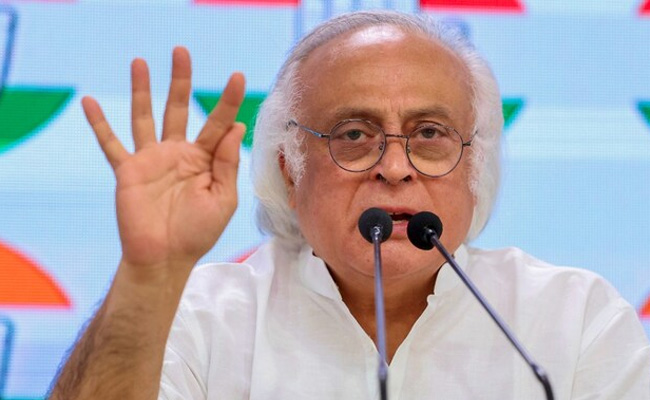
New Delhi (PTI): Congress leader Jairam Ramesh alleged on Thursday that the right to vote is under threat and the time has come when it should be made a fundamental right for citizens.
Speaking with reporters, Ramesh lashed out at Chief Election Commissioner (CEC) Gyanesh Kumar, saying the Election Commission (EC) has never been as compromised as it has been under him.
"The rot started under his predecessor. This man is a player and not a neutral observer," the Congress leader said, slamming Kumar.
Kumar is completely compromised and has become a player in elections, he alleged.
"Home Minister Amit Shah had talked about three Ds -- detect, delete and deport. So we want to know how many non-Indian citizens have been detected, how many have been deleted and how many have been deported," Ramesh said, adding that the right to vote is now under threat.
On opposition parties submitting a fresh notice in the Rajya Sabha, seeking to move a motion for the CEC's removal, the Congress leader said they will continue to make efforts for Kumar's removal as he is "compromised".
Ramesh also batted for the right to vote to be recognised as a fundamental right.
"I believe that the time has come that the right to vote should be made a fundamental right. It is a statutory right, it is not a fundamental right. Fundamental rights are justiciable," he said.
The former Union minister said this was discussed in the Constituent Assembly, but it was eventually decided that it should be made part of the Constitution.
B R Ambedkar and Jagjivan Ram had warned that in the future, governments might try to disenfranchise voters, he added.
"Once and for all, include the right to vote as a fundamental right for Indian citizens," Ramesh asserted.