Poll finds majority of Americans view Trump’s second term as worse than expected
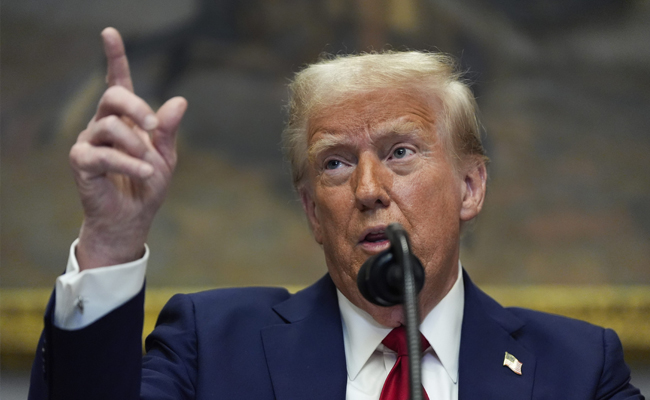
Washington, D.C.: Two months into Donald Trump’s second term, a new Yahoo News/YouGov survey reveals that a significant number of Americans believe his presidency has been worse than anticipated. The poll, conducted between March 20 and 24 among 1,677 U.S. adults, shows that 41% of respondents feel Trump’s performance has fallen below expectations, while 30% say it has been better. Another 22% say it has been "about the same" as they expected.
Trump’s approval ratings have also declined since his re-election in November. Immediately after the election, 51% of Americans approved of his first-term performance, with 43% disapproving. However, the latest poll indicates a reversal, with 50% now disapproving of his current performance and 44% approving. His personal favourability has also dropped, with 52% viewing him unfavourably and 44% favourably.
Public perception of Trump’s impact on American democracy has shifted noticeably. In November, 43% of respondents said Trump “likes to talk tough” but would not threaten democracy, compared to 39% who felt he posed a real threat. In the latest poll, 47% now believe Trump threatens democracy, while only 39% think otherwise.
Economic concerns appear to be a major factor behind Trump’s declining popularity. Nearly half of Americans identified the cost of living (23%) or the economy (23%) as the country’s most pressing issues. However, only 11% felt Trump prioritised these issues in his second term, with far more citing immigration (37%) and government spending (25%) as his focus.
The poll also highlights persistent economic anxiety among Americans. Only 26% rate the economy as excellent or good, and 47% believe it is worsening. A majority (51%) say inflation is rising, and 66% report that grocery prices continue to climb.
Trump’s approval rating for handling the economy stands at 39%, with 51% disapproving. His approval for managing the cost of living is lower, at 34%. The poll further indicates that Trump’s tariff policies have not improved public sentiment. While 46% agree tariffs may encourage domestic manufacturing, a larger share (49%) believes they will lead to a recession, and 68% feel tariffs will raise personal costs.
Overall, 51% of respondents believe Trump’s tariff policies are negatively affecting the economy, while only 20% view them positively.
The survey sample was weighted by gender, age, race, education, 2024 election turnout and vote, party identification, and voter registration status. The margin of error is approximately 2.6%.
Let the Truth be known. If you read VB and like VB, please be a VB Supporter and Help us deliver the Truth to one and all.
Maharashtra sets up state vaccination task force to strengthen immunisation programme

Mumbai (PTI): The Maharashtra government has set up a State Vaccination Task Force to strengthen the regular immunisation programme and review the progress of related campaigns, a health department official said on Monday.
The State Vaccination Task Force will comprise at least 29 members and will be headed by the administrative head of the health department, he informed.
The government has also constituted separate district-level and municipal vaccination task forces to improve implementation and address challenges at the grassroots level, he said.
Municipal task forces, chaired by respective civic commissioners, have been constituted in view of the vast urban population in Maharashtra and the role of civic bodies in implementing different health programmes.
The district-level task forces will function under the chairmanship of collectors.
"Complete immunisation of children at the appropriate age is an extremely simple, cost-effective and highly effective measure to reduce child mortality and the prevalence of diseases among kids. Immunisation is a powerful tool for reducing illness in children," maintained the official.
To ensure full vaccination of all children, the state government implements various campaigns from time to time as per the central government guidelines, he pointed out.
"Active participation and cooperation of other relevant government departments are essential (in making these campaigns successful)," according to the official.
The state-level body will review the regular immunisation programme, associated campaigns and vaccine-preventable diseases in detail. It will also conduct focused assessments of high-risk districts and municipal corporations, including vacancies at district, municipal and sub-district levels, availability of cold chain equipment, resource gaps and training requirements, he noted.
The state task force will review allocation and utilisation of funds for immunisation and ensure timely action by officers concerned based on reports from district and municipal task forces and state-level monitoring mechanisms, the official said.
It will also ensure active coordination and participation of other government departments in immunisation drives, while district and municipal task forces will carry out similar functions at their respective levels, the official added.