Kabul (AP): A powerful 6.3 magnitude earthquake shook northern Afghanistan before dawn Monday, killing at least 20 people and injuring more than 640 others, as well as damaging the historic Blue Mosque, officials said.
The numbers of people killed or injured could rise, officials said.
In the town of Khulm, near the epicentre, people dug through the rubble of collapsed mud brick homes with shovels and picked through debris to salvage what belongings they could.
Local resident Ahmad Zia said the air was polluted from all the dust that rose from the ruins of houses. “We pulled the bodies of two people from the rubble, and their funerals will be held today,” he said.
Footage on social media from Mazar-e-Sharif, the capital of northern Balkh province, showed several bricks had fallen from the walls of the Blue Mosque but the structure remained intact. The centuries-old site, one of Afghanistan's most revered religious landmarks, is a major gathering place during Islamic and cultural festivals.
The impoverished country often faces difficulty in responding to such natural disasters, especially in remote regions. Buildings tend to be low-rise constructions, mostly of concrete and brick, with homes in rural and outlying areas made from mud bricks and wood, many poorly built.
In August, a quake in eastern Afghanistan killed more than 2,200 people.
Hundreds of houses destroyed
The US Geological Survey said the quake's epicentre was located 22 kilometres west-southwest of the town of Khulm, and that it struck at 12:59 am at a depth of 28 kilometres.
The deputy spokesman for Afghanistan's National Disaster Management Authority, Qari Taj Mohammad Hemat, said the earthquake had struck Balkh, Samangan, Sar-e-Pul, and Kunduz provinces and had left 20 people dead and 643 others injured, of whom 25 were in critical condition.
Earlier, Sharafat Zaman, a spokesperson for the Ministry of Public Health, said the dead and more than 500 of the injured had been brought to hospitals in Balkh and Samangan provinces. Rescuers were on the scene and the figures were changing, he added.
In the nearby province of Badakhshan, the quake partially or completely destroyed 800 houses in one village in the Shahr-e-Bozorg district, said Ihsanullah Kamgar, spokesperson for the provincial police headquarters. But with a lack of internet in the remote area, there were still no accurate casualty figures, he added.
Yousaf Hammad, a spokesman for Afghanistan's disaster management agency, said most of the injured suffered minor wounds and were discharged after treatment.
Another resident of Khulm, Abdul Mubin, said he had been sleeping in his shop when the earthquake struck. “I saw that everything was destroyed. People had suffered a lot of financial losses,” he said. “Many people's houses were destroyed and their household goods were under the rubble.”
RemarkToggle Search
Home > English News > Powerful 6.3 earthquake hits northern Afghanistan, ...
Back
Download Print Bookmark
Powerful 6.3 earthquake hits northern Afghanistan, killing 20, damaging historic Blue Mosque
AFGHAN-6THLD QUAKE
08:38 PM, 03 Nov 2025 819 Words
(Eds: Eds: UPDATES: Updates Media. EDITS: Restores line about possible increase in casualties.)
By By ABDUL QAHAR AFGHAN and SIDDIQULLAH ALIZAI
Kabul (AP): A powerful 6.3 magnitude earthquake shook northern Afghanistan before dawn Monday, killing at least 20 people and injuring more than 640 others, as well as damaging the historic Blue Mosque, officials said.
The numbers of people killed or injured could rise, officials said.
In the town of Khulm, near the epicentre, people dug through the rubble of collapsed mud brick homes with shovels and picked through debris to salvage what belongings they could.
Local resident Ahmad Zia said the air was polluted from all the dust that rose from the ruins of houses. “We pulled the bodies of two people from the rubble, and their funerals will be held today,” he said.
Footage on social media from Mazar-e-Sharif, the capital of northern Balkh province, showed several bricks had fallen from the walls of the Blue Mosque but the structure remained intact. The centuries-old site, one of Afghanistan's most revered religious landmarks, is a major gathering place during Islamic and cultural festivals.
The impoverished country often faces difficulty in responding to such natural disasters, especially in remote regions. Buildings tend to be low-rise constructions, mostly of concrete and brick, with homes in rural and outlying areas made from mud bricks and wood, many poorly built.
In August, a quake in eastern Afghanistan killed more than 2,200 people.
Hundreds of houses destroyed
The US Geological Survey said the quake's epicentre was located 22 kilometres west-southwest of the town of Khulm, and that it struck at 12:59 am at a depth of 28 kilometres.
The deputy spokesman for Afghanistan's National Disaster Management Authority, Qari Taj Mohammad Hemat, said the earthquake had struck Balkh, Samangan, Sar-e-Pul, and Kunduz provinces and had left 20 people dead and 643 others injured, of whom 25 were in critical condition.
Earlier, Sharafat Zaman, a spokesperson for the Ministry of Public Health, said the dead and more than 500 of the injured had been brought to hospitals in Balkh and Samangan provinces. Rescuers were on the scene and the figures were changing, he added.
In the nearby province of Badakhshan, the quake partially or completely destroyed 800 houses in one village in the Shahr-e-Bozorg district, said Ihsanullah Kamgar, spokesperson for the provincial police headquarters. But with a lack of internet in the remote area, there were still no accurate casualty figures, he added.
Yousaf Hammad, a spokesman for Afghanistan's disaster management agency, said most of the injured suffered minor wounds and were discharged after treatment.
Another resident of Khulm, Abdul Mubin, said he had been sleeping in his shop when the earthquake struck. “I saw that everything was destroyed. People had suffered a lot of financial losses,” he said. “Many people's houses were destroyed and their household goods were under the rubble.”
Rockslide briefly blocks highway
The Ministry of Defence announced that rescue and emergency teams had reached the quake areas in Balkh and Samangan, which suffered the most damage. The teams were transporting the injured and assisting others, it said.
The Taliban government's chief spokesman, Zabihullah Mujahid, posted on X that government organisations were working to get the help needed.
The quake was also felt in the capital, Kabul, and several other provinces. The Defense Ministry said a rockslide briefly blocked a main mountain highway linking Kabul with Mazar-e-Sharif, but the road was later reopened. It said some people who were injured and trapped along the highway were transported to the hospital.
In Islamabad, Pakistan's President Asif Ali Zardari expressed his deep sorrow and grief over the loss of lives. In a statement, he offered condolences to the families of the victims, prayed for the swift recovery of the injured, and said that Pakistan stands with the Afghan people in this difficult time.
His statement came as the two countries were engaged in rounds of peace talks amid heightened tension after deadly clashes on the frontier between Afghanistan and Pakistan left dozens of soldiers and civilians dead on both sides. Pakistan accuses the Taliban government of sheltering members of the Pakistani Taliban and failing to curb cross-border attacks. Afghan officials reject the allegations, saying they seek good relations. Another round of peace talks is scheduled for this week in Istanbul, Turkiye.
The United Nations in Afghanistan said on X that its teams were on the ground assessing needs and delivering urgent aid.
“We stand with the affected communities and will provide the necessary support,” the post said.
A magnitude 6.0 earthquake hit eastern Afghanistan on August 31 near the border with Pakistan, killing more than 2,200 people. On October 7, 2023, a magnitude 6.3 quake followed by strong aftershocks left at least 4,000 people dead, according to the Taliban government.
Let the Truth be known. If you read VB and like VB, please be a VB Supporter and Help us deliver the Truth to one and all.
4 workers die after being buried under coal slurry in Jharkhand's Dhanbad
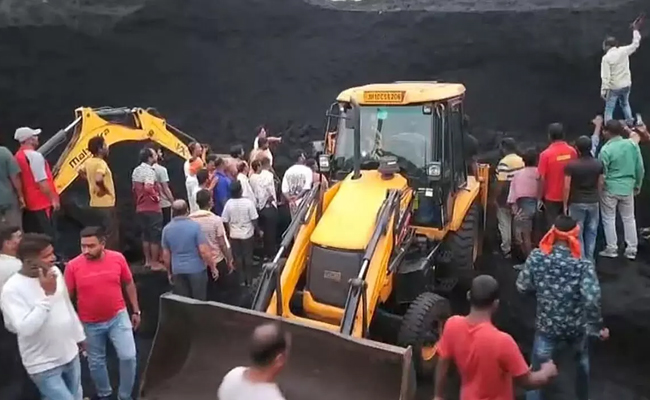
Dhanbad (Jharkhand) (PTI): At least four workers died after being buried under coal slurry in Jharkhand's Dhanbad district on Saturday, a police official said.
The incident took place at Moonidih coal washery in the command area of Bharat Coking Coal Limited (BCCL).
"Bodies of all four workers were dug out of debris during a rescue operation," Putki police station in-charge Waqar Hussain told PTI.
The incident took place when coal slurry was being loaded into trucks by workers, during which a large chunk of slurry fell and trapped several workers underneath, officials said.
The deceased have been identified as Manik Bauri, Dinesh Bauri, Deepak Bauri, and Hemlal Gope.
Meanwhile, the family members of the deceased and local villagers placed the bodies in front of the washery gate and began a protest.
They demanded compensation, jobs for dependents and action against those responsible for the incident.
Police and administration officials are trying to pacify the protesters, an official said.