Powerful earthquake shakes southern Mexico, at least 5 dead
Mexico City: A powerful earthquake centered near the southern Mexico resort of Huatulco killed at least five people, swayed buildings in Mexico City and sent thousands fleeing into the streets.
Mexico President Andr s Manuel L pez Obrador said one person was killed and another injured in a building collapse in Huatulco, Oaxaca.
Otherwise he said reports were of minor damage from the magnitude 7.4 quake, including broken windows and collapsed walls.
Oaxaca Governor Alejandro Murat said a second person was killed in an apparent house collapse in the tiny mountain village of San Juan Ozolotepec, and said a third died in circumstances he did not explain.
Federal civil defense authorities reported two more deaths: a worker at the state-run oil company, Pemex, fell to his death from a refinery structure, and a man died in the Oaxaca village of San Agustin Amatengo when a wall fell on him.
Pemex also said the quake caused a fire at its refinery in the Pacific coast city of Salina Cruz, relatively near the epicenter. It said one worker was injured and the flames were quickly extinguished. Churches, bridges and highways also suffered damage during the quake.
L pez Obrador said there had been more than 140 aftershocks, most of them small.
Seismic alarms sounded midmorning with enough warning for residents to exit buildings. Power was knocked out to some areas. Helicopters flew over downtown Mexico City and police patrols sounded their sirens.
Groups of people still milled around in close proximity on streets and sidewalks in some neighbourhoods of the capital about an hour after the quake. Many were not wearing masks despite past appeals from municipal officials for them to do so as a way to curb the spread of the new coronavirus.
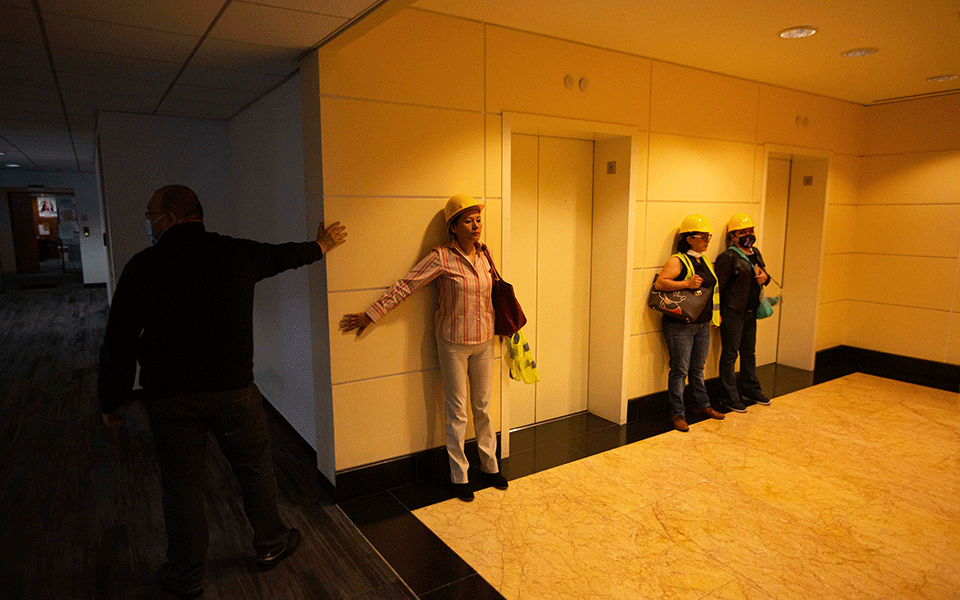
Inside a Mexico City military barracks converted to COVID-19 hospital, medical staff suited in protective equipment tried to calm anxious patients. Unable to evacuate isolation areas, patients huddled under a large beam in the women's ward while a nurse tried to calm one having a panic attack.
Teresa Ju rez could only wish for it to pass quickly from her hospital bed where she lay connected to oxygen. Diabetic and with high blood pressure, Ju rez said she thought about her five children. It's horrible, you're here and you don't know what to do, she said.
The US Geologic Survey said the quake hit at 10.29 am (11.29 am Eastern) along Mexico's southern Pacific coast at a depth of 16 miles (26 km).
The epicentre was 7 miles (12 km) south-southwest of Santa Maria Zapotitlan in Oaxaca state It was felt in Guatemala and throughout south and central Mexico.
In Huatulco, a laid-back beach destination known for surfing and small protected coves, the earthquake knocked goods off shelves and some rubble from buildings.
Mari Gonz lez of the Princess Mayev hotel in Huatulco said staff and guests were able to evacuate the building before the quake, but that 45 minutes after the initial quake they were still outside as strong aftershocks continued.
It was strong, very strong, she said.
Gonz lez said there was some visible broken glass and mirrors, but no major damage. The staff was waiting for the aftershocks to dissipate before fully evaluating the property.
Local news media reported damage to some buildings in the state capital, Oaxaca city. State officials said they were looking for damage.
The USGS estimated that some 2 million people felt strong or moderate shaking and another 49 million felt weak or light shaking. The earthquake hit a quake-prone region where four underground tectonic plates come together.
In the plst 35 years, there have been at least seven magnitude 7 or greater earthquakes, killing around 10,000 people most of them in a 1985 8.0 quake.
This has the potential to be a deadly earthquake and cause significant damage, U.S. Geological Survey seismologist Paul Earle said. This area is capable of and has had larger earthquakes in the past.
There will be aftershocks, Earle said. It is not unexpected to see a magnitude 6 at this point and a number of smaller ones. This quake happened when the Cocos plate, which is to the southwest of the area, slipped under the North American plate, Earle said.
You've got all sorts of plates and they're moving quickly, Earle said. The important thing is how fast the plates are moving relative to each other.
The US National Oceanic and Atmospheric Administration forecast a tsunami threat with waves three to 10 feet above tide levels along parts of the coasts of Mexico.
Smaller waves were expected through Central America, Peru and Ecuador.
Let the Truth be known. If you read VB and like VB, please be a VB Supporter and Help us deliver the Truth to one and all.
Anbumani asks PM Modi to ban sale of cigarettes for those born after 2009
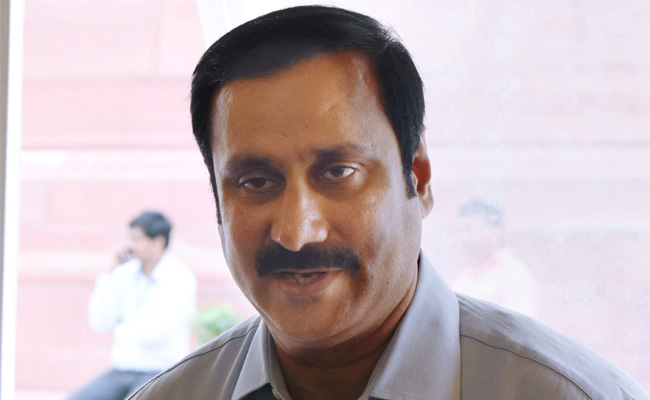
Chennai (PTI): PMK leader Anbumani Ramadoss on Saturday urged Prime Minister Narendra Modi to take legislative measures to prohibit smoking and the sale of cigarettes to individuals born on or after January 1, 2009, thereby creating a smoke-free generation.
Anbumani, former Union minister for health and family welfare, said, "Once implemented, it (ban on cigarettes) will ensure that future generations are legally prevented from ever accessing tobacco products", he said in a letter to Modi.
"I write to you with a deep sense of urgency and responsibility, drawing your kind attention to a critical public health issue that continues to endanger the lives of millions of Indians, particularly among the younger generation who are affected by cigarette smoking", he claimed.
Stating that India unfortunately bears a disproportionately high burden of tobacco-related morbidity and mortality, he said, adding that, according to global health estimates, nearly 267 million Indians, approximately one in five citizens, use tobacco.
"Each year, tobacco consumption directly accounts for over 1.35 million deaths, while exposure to second-hand smoke contributes to a total of approximately 2.3 million deaths annually", he said, adding, "these figures are alarming and reflect a public health crisis of immense magnitude".
He pointed out that Scientific evidence unequivocally establishes tobacco use as a leading cause of cancer and numerous non-communicable diseases, including cardiovascular ailments, chronic respiratory diseases such as COPD, and multiple forms of malignancies. "In India alone, tobacco is responsible for nearly 40–50 per cent of all cancer cases, with over 4.7 lakh deaths annually attributed to tobacco-induced cancers", he added.
"In this context, I strongly urge the Union government to consider enacting a transformative law similar to that of the United Kingdom, that permanently prohibits the sale and consumption of tobacco products for individuals born on or after a specified year (such as 2009). Such a generational ban would mark a decisive step towards eliminating tobacco use in India over time", he said.