Putin agrees that US, Europe could offer NATO-style security guarantees to Ukraine, Trump envoy says
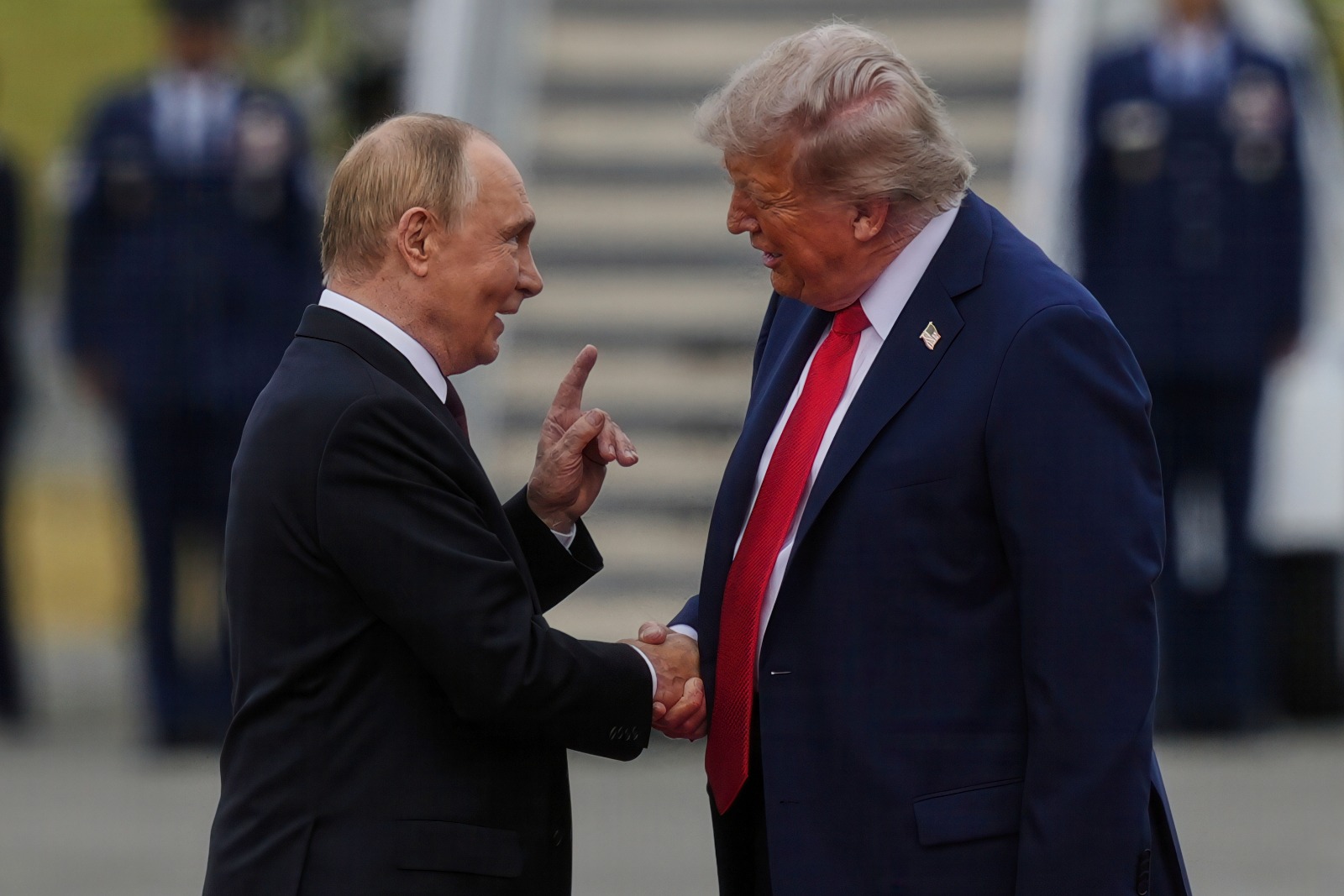
New York (AP): Russian leader Vladimir Putin agreed at his summit with President Donald Trump that the United States and its European allies could offer Ukraine a security guarantee resembling NATO's collective defense mandate as part of an eventual deal to end the war, a U.S. official said Sunday.
Trump envoy Steve Witkoff, who took part in the talks Friday at a military base in Alaska, said it “was the first time we had ever heard the Russians agree to that” and called it “game-changing.”
“We were able to win the following concession: That the United States could offer Article 5-like protection, which is one of the real reasons why Ukraine wants to be in NATO," Witkoff told CNN's “State of the Union.”
Witkoff offered few details on how such an arrangement would work. But it appeared to be a major shift for Putin and could serve as a workaround to his deep-seated objection to Ukraine's potential NATO membership, a step that Kyiv has long sought.
It was expected to be a key topic Monday as Ukrainian President Volodymyr Zelenskyy and major European leaders meet with Trump at the White House to discuss ending the 3 1/2-year conflict.
“BIG PROGRESS ON RUSSIA,” Trump said Sunday on social media. “STAY TUNED!”
Hammering out a plan for security guarantees
Article 5, the heart of the 32-member transatlantic military alliance, says an armed attack against a member nation is considered an attack against them all.
What needed to be hammered out at this week's talks were the contours of any security guarantees, said Secretary of State Marco Rubio, who also participated in the summit. Ukraine and European allies have pushed the U.S. to provide that backstop in any peace agreement to deter future attacks by Moscow.
“How that's constructed, what we call it, how it's built, what guarantees are built into it that are enforceable, that's what we'll be talking about over the next few days with our partners," Rubio said on NBC's “Meet the Press.”
It was unclear, however, whether Trump had fully committed to such a guarantee. Rubio said it would be “a huge concession."
The comments shed new light on what was discussed in Alaska. Before Sunday, U.S. officials had offered few details even as both Trump and Putin said their meeting was a success.
Witkoff also said Russia had agreed to enact a law that it would not “go after any other European countries and violate their sovereignty.”
“The Russians agreed on enshrining legislatively language that would prevent them from — or that they would attest to not attempting to take any more land from Ukraine after a peace deal, where they would attest to not violating any European borders," he said on “Fox News Sunday.”
Europe welcomes US openness to security guarantees
European Commission President Ursula von der Leyen, speaking in Brussels alongside Zelenskyy, applauded the news from the White House as a European coalition looks to set up a force to police any future peace in Ukraine.
"We welcome President Trump's willingness to contribute to Article 5-like security guarantees for Ukraine and the coalition of the willing' — including the European Union — is ready to do its share,” she said.
Zelenskyy thanked the U.S. for signaling that it was willing to support such guarantees but said much remained unclear.
“There are no details how it will work, and what America's role will be, Europe's role will be and what the EU can do — and this is our main task: We need security to work in practice like Article 5 of NATO,” he said.
French President Emmanuel Macron said the substance of security guarantees to secure any peace arrangement will be more important than whether they are given an Article 5-type label.
At the White House meeting, Macron said European leaders will ask the U.S. to back their plans to beef up Ukraine's armed forces with more training and equipment and deploy an allied force away from the front lines.
“We'll show this to our American colleagues, and we'll tell them, Right, we're ready to do this and that, what are you prepared to do?'" Macron said. “That's the security guarantee.”
Defending Trump's shift from ceasefire to peace deal
Witkoff and Rubio defended Trump's decision to abandon a push for a ceasefire, arguing that the Republican president had pivoted toward a full peace agreement because so much progress had been made at the summit.
“We covered almost all the other issues necessary for a peace deal,” Witkoff said, without elaborating. “We began to see some moderation in the way they're thinking about getting to a final peace deal.”
Rubio, appearing on several TV news shows Sunday, said it would have been impossible to reach any truce Friday because Ukraine was not there.
“Now, ultimately, if there isn't a peace agreement, if there isn't an end of this war, the president's been clear, there are going to be consequences,” Rubio said on ABC's “This Week.” “But we're trying to avoid that."
Rubio, who is also Trump's national security adviser, also voiced caution on the progress made.
“We're still a long ways off," he said. “We're not at the precipice of a peace agreement. We're not at the edge of one. But I do think progress was made towards one.”
Land swaps are on the table
Among the issues expected to dominate Monday's meeting: What concessions Zelenskyy might accept on territory.
In talks with European allies after the summit, Trump said Putin reiterated that he wants the key Donetsk and Luhansk regions that make up the Donbas, European officials said. It was unclear among those briefed whether Trump sees that as acceptable.
Witkoff said the Russians have made clear they want territory as determined by legal boundaries instead of the front lines where territory has been seized.
“There is an important discussion to be had with regard to Donetsk and what would happen there. And that discussion is going to specifically be detailed on Monday,” he said.
Zelenskyy has rejected Putin's demands that Ukraine give up the Donbas region, which Russia has failed to take completely, as a condition for peace.
In Brussels, the Ukrainian leader said any talks involving land must be based on current front lines, suggesting he will not abandon land that Russia has not taken.
“The contact line is the best line for talking, and the Europeans support this,” he said. “The constitution of Ukraine makes it impossible, impossible to give up territory or trade land.”
Let the Truth be known. If you read VB and like VB, please be a VB Supporter and Help us deliver the Truth to one and all.
Tumakuru: Dalit family allegedly prevented from entering temple; accused arrested

Tumakuru: Police in Turuvekere have arrested a 65-year-old man for allegedly obstructing a Dalit family from entering a temple and making caste-based remarks, officials said on Saturday.
The accused, identified as Rajanna, has been booked under provisions of the Scheduled Castes and Scheduled Tribes (Prevention of Atrocities) Act based on a complaint filed by Rangaramu T. of Thuyalahalli village.
According to the FIR, the incident took place on April 18 around 5:30 pm when Rangaramu T. and his family visited the Sri Ranganathaswamy temple in Mallur village to offer prayers. It states that the accused allegedly objected to their entry and made remarks referring to caste hierarchy and questioning their presence inside the temple premises.
The FIR further states that the accused made additional remarks asserting that such entry into the temple was not permitted and asked the family to leave. It also mentions that the complainant was subjected to mental harassment through these statements.
Following the complaint, DySP Om Prakash Gowda along with revenue officials and police visited the spot and conducted an inspection.
Further investigation is underway.