Putin meets Khamenei's senior aide in Kremlin, discusses Iran's nuclear programme
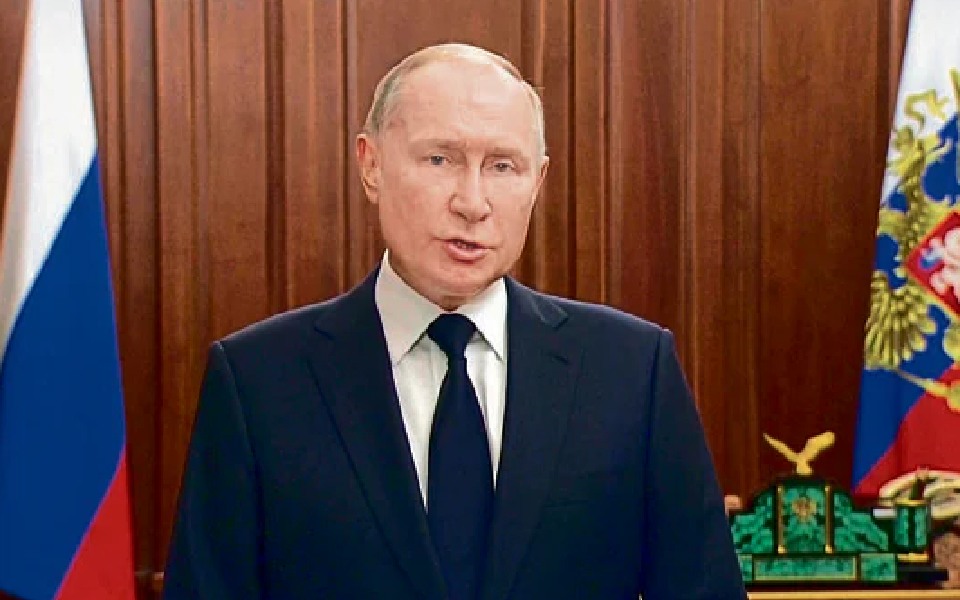
Moscow, Jul 20 (PTI): Russian President Vladimir Putin on Sunday received Iranian Supreme Leader Ayatullah Ali Khamenei’s senior aide here and discussed the aggravation of the situation in West Asia and issues of Iran’s nuclear programme.
The visit by Ali Larijani, senior adviser to Iran’s Supreme Leader, comes almost a month after Putin met Iranian Foreign Minister Abbas Araghchi.
“On behalf of the Iranian leadership, Ali Larijani shared the assessments of the current escalation in the Middle East and the situation around the Iranian nuclear programme,” Kremlin spokesman Dmitry Peskov told reporters without elaborating.
On June 23, President Putin during his meeting with Araghchi had assured Tehran of Moscow's support in de-escalating the Israel-Iran conflict hours after the US strikes at Iranian nuclear sites at dawn on June 22.
Moscow and Tehran have signed a strategic partnership treaty, but it does not provide for military assistance in case any side is attacked.
However, Tehran and Moscow under the treaty have an obligation not to take the side of the aggressor and enter into urgent political consultations to mitigate the situation.
Russia supports Tehran’s right to pursue its civil nuclear research under the International Atomic Energy Agency (IAEA) oversight.
Earlier reports said Larijani had played a key role as the Speaker of the Iranian Parliament in the negotiation and eventual approval of the now defunct Joint Comprehensive Plan of Action (JCPOA), commonly known as the Iran nuclear deal.
He was instrumental in navigating domestic political complexities and securing parliamentary support for the agreement, which involved significant concessions from Iran in exchange for sanctions relief.
However, US President Donald Trump had walked out of the deal in his first term under pressure from Israel.
In his second term, Trump ordered the bombardment of Iranian nuclear sites and demanded the complete end to Tehran’s enrichment activities under civilian nuclear programme, allowed under NPT to which Iran is a signatory.
Let the Truth be known. If you read VB and like VB, please be a VB Supporter and Help us deliver the Truth to one and all.
Fire at mass marriage event attended by Dy CM Shivakumar, nobody affected
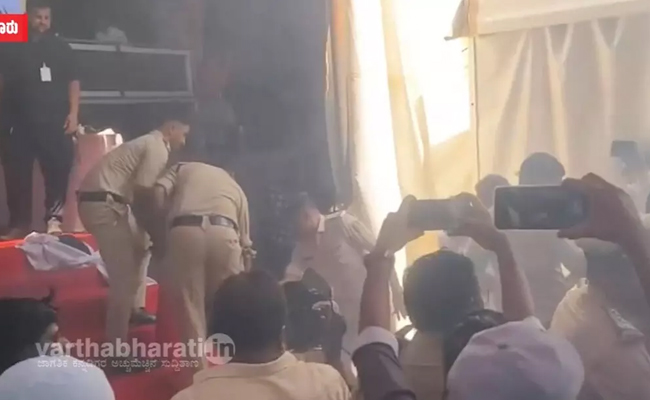
Raichur (Karnataka) (PTI): Fire broke out near the stage of the mass marriage event that was attended by Deputy Chief Minister D K Shivakumar here, police said on Sunday.
Nobody was affected, and the fire was immediately put out, they said.
The fire was noticed shortly after Shivakumar and other dignitaries left the stage, and Forest Minister Eshwaran Khandre was speaking to the media at the venue in Sindhanur, officials said.
According to officials, wires, speakers, and cloth materials near the stage caught fire, allegedly due to a short circuit.
Police personnel present at the spot quickly swung into action and extinguished the fire.
The programme was halted for some time and resumed later, they said.
Several ministers, legislators and political leaders from the region, and actor Sudeep had attended the event.