Putin orders government to soften trade imbalance with India
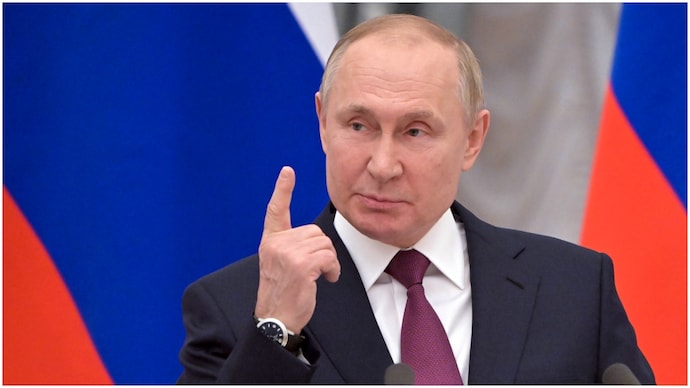
Moscow (PTI): Russian President Vladimir Putin expressed his anticipation for his upcoming visit to India in early December and has ordered the government to devise measures to soften the trade imbalance with India due to the heavy import of crude by New Delhi.
Speaking at the international Valdai discussion forum of security and geopolitical experts from 140 countries, including India, in the Black Sea resort of Sochi in South Russia on Thursday evening, Putin underlined that Russia and India have never had any problems or tensions between them and always took actions by keeping in view their sensitivities.
"We have never had any problems or interstate tensions with India. Never," the Russian leader noted.
Putin highlighted the "special" nature of Russia-India relations since the days of the Soviet Union, when India was fighting for its independence. "In India, they remember this, they know it, and they value it. We appreciate that India has not forgotten it," he declared.
He referred to Prime Minister Narendra Modi as his friend, noting that he feels comfortable in their trustworthy interactions.
Putin lauded India's nationalist government led by Modi, calling him a "balanced, wise", and "nationally oriented" leader.
He remarked, "Everyone in India knows this well," particularly regarding India's decision to ignore US pressure to halt oil imports from Russia.
"The losses faced by India due to punitive US tariffs would be balanced by crude imports from Russia, plus it will gain prestige as a sovereign nation," Putin said.
He said that to remove the trade imbalance, Russia may buy more agricultural products and medicines from India. "More agricultural products may be purchased from India. Certain steps can be undertaken from our side for medicinal products, pharmaceuticals," Putin stated.
He noted the vast potential for economic cooperation between Russia and India but acknowledged the need to resolve specific issues to fully unlock these opportunities.
"We need to solve the whole range of tasks to unlock our opportunities and potential advantages," Putin said, identifying financing, logistics and payment bottlenecks as key concerns.
Putin also recalled that the declaration of a special strategic privileged partnership between Russia and India will soon celebrate its 15th anniversary, declaring, "That's what it really is."
He noted that, in their political relations, Russia and India almost always coordinate their actions.
"We always hear and take into account the positions of our countries on various key issues. Our foreign ministries work very closely together," Putin said.
Additionally, he welcomed the idea of a joint fund to develop AI and other cutting-edge technology proposed by Dr Arvind Gupta, Director General of New Delhi-based Vivekananda International Foundation (VIF), who was attending the Sochi forum.
Let the Truth be known. If you read VB and like VB, please be a VB Supporter and Help us deliver the Truth to one and all.
4 workers die after being buried under coal slurry in Jharkhand's Dhanbad
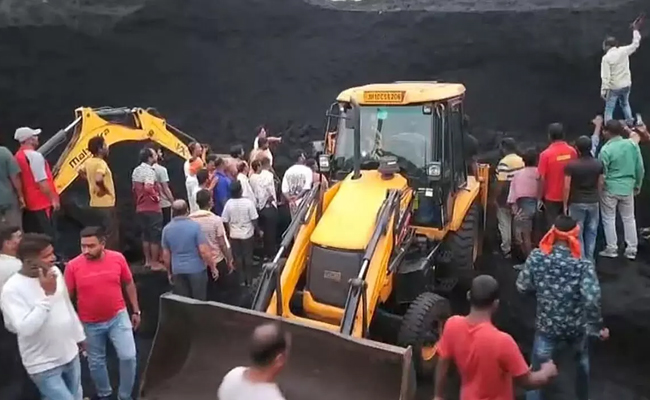
Dhanbad (Jharkhand) (PTI): At least four workers died after being buried under coal slurry in Jharkhand's Dhanbad district on Saturday, a police official said.
The incident took place at Moonidih coal washery in the command area of Bharat Coking Coal Limited (BCCL).
"Bodies of all four workers were dug out of debris during a rescue operation," Putki police station in-charge Waqar Hussain told PTI.
The incident took place when coal slurry was being loaded into trucks by workers, during which a large chunk of slurry fell and trapped several workers underneath, officials said.
The deceased have been identified as Manik Bauri, Dinesh Bauri, Deepak Bauri, and Hemlal Gope.
Meanwhile, the family members of the deceased and local villagers placed the bodies in front of the washery gate and began a protest.
They demanded compensation, jobs for dependents and action against those responsible for the incident.
Police and administration officials are trying to pacify the protesters, an official said.