Putin praises Trump but warns supplies of US long-range missile to Ukraine will badly hurt ties
_vb_04.jpeg)
Moscow (AP): Russian President Vladimir Putin warned the United States that supplies of long-range missiles to Ukraine will seriously damage relations between Moscow and Washington but will not change the situation on the battlefield where the Russian army is making slow but steady advances.
The potential supply of US Tomahawk cruise missiles to Kyiv will signal a “qualitatively new stage of escalation, including in relations between Russia and the US," Putin said at a forum of foreign policy experts in Russia's Black Sea resort of Sochi.
The Russian leader noted that even though Tomahawk missiles will inflict damage on Russia if supplied to Ukraine, Russian air defences will quickly adapt to the new threat. “It will certainly not change the balance of force on the battlefield,” he added, emphasising that the Russian military is continuously making gains against Ukraine.
The White House did not immediately respond to a request for comment on Putin's remarks.
At the same time, Putin hailed US President Donald Trump's efforts to help negotiate peace in Ukraine and described their August summit in Alaska as productive.
“It was good that we made an attempt to search for and find possible ways to settle the Ukrainian crisis,” he said, adding that he felt “comfortable” talking to Trump.
While praising Trump and trying to emphasise potential common interests, including nuclear arms control, the Russian president sent a stern warning to Ukraine's Western allies against trying to seize ships that carry Russian oil to global markers. He argued that would amount to piracy and could trigger a forceful response while sharply destabilising the global oil market.
Asked about the detention of an oil tanker off France's Atlantic coast, which President Emmanuel Macron linked to Russia's so-called shadow fleet of ageing tankers of uncertain ownership that are avoiding Western sanctions, Putin cast it as an attempt by Macron to distract public attention from his country's own internal problems.
He strongly warned the West against such action, arguing that it defies international maritime law and could trigger a forceful response. “The risk of confrontation will seriously increase," he added.
Putin also scoffed at Western claims of possible Russian involvement in recent drone flights over Denmark, casting them as part of purported NATO efforts to “inflame tensions to boost the defense spending.”
“I won't do it anymore — to France, Denmark, Copenhagen, Lisbon — wherever they could reach,” he said with a sardonic grin.
Asked about Charlie Kirk's assassination, Putin called it a “heinous crime” that reflected a “deep split" in American society. He hailed Kirk as a hero killed for promoting the same conservative values that Russia shares.
Putin also praised Michael Gloss, an American and the son of a deputy CIA chief, who joined the Russian military and was killed in action in Ukraine in 2024. He said he had awarded Gloss with a medal, which he handed to Trump's envoy Steve Witkoff during his visit to Moscow.
The Russian leader likened Gloss to Kirk, saying they championed similar “traditional” values. "He gave his life while defending those values as a Russian soldier, and Kirk gave his life while fighting for the same values in the United States,” Putin said.
In response to questions about Gloss, the CIA said in a statement that the agency “considers Michael's passing to be a private family matter — and not a national security issue. The entire CIA family is heartbroken for their loss."
Let the Truth be known. If you read VB and like VB, please be a VB Supporter and Help us deliver the Truth to one and all.
4 workers die after being buried under coal slurry in Jharkhand's Dhanbad
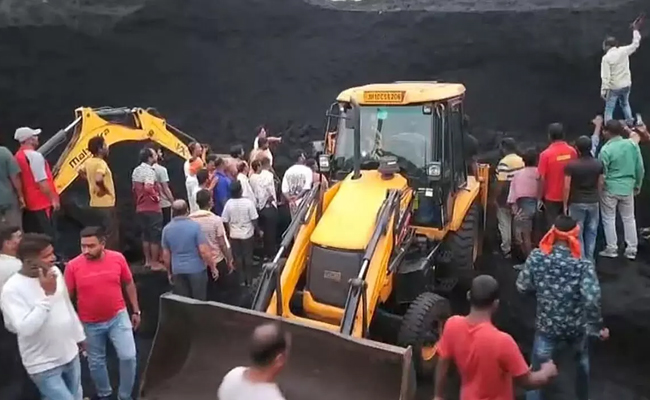
Dhanbad (Jharkhand) (PTI): At least four workers died after being buried under coal slurry in Jharkhand's Dhanbad district on Saturday, a police official said.
The incident took place at Moonidih coal washery in the command area of Bharat Coking Coal Limited (BCCL).
"Bodies of all four workers were dug out of debris during a rescue operation," Putki police station in-charge Waqar Hussain told PTI.
The incident took place when coal slurry was being loaded into trucks by workers, during which a large chunk of slurry fell and trapped several workers underneath, officials said.
The deceased have been identified as Manik Bauri, Dinesh Bauri, Deepak Bauri, and Hemlal Gope.
Meanwhile, the family members of the deceased and local villagers placed the bodies in front of the washery gate and began a protest.
They demanded compensation, jobs for dependents and action against those responsible for the incident.
Police and administration officials are trying to pacify the protesters, an official said.