Quake in Iran kills eight in neighbouring Turkey

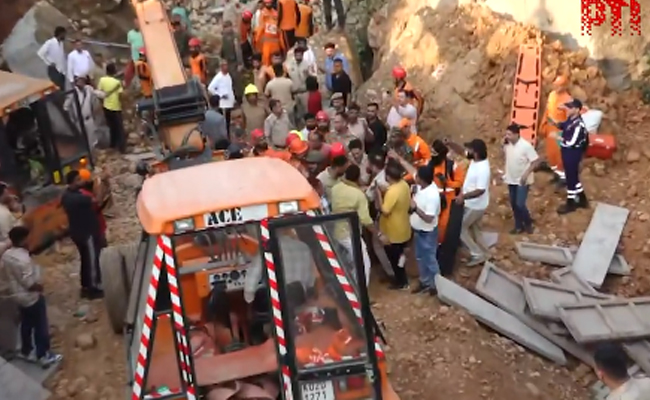
Istanbul: A magnitude 5.7 earthquake in northwestern Iran on Sunday killed at least eight people in neighbouring Turkey and injured dozens more on both sides of the border, authorities said.
"We lost eight of our citizens, including three children," Turkish Interior Minister Suleyman Soylu was quoted as saying by the official Anadolu news agency.
Health Minister Fahrettin Koca said 21 people were injured and eight of them were in critical condition, according to Anadolu. Turkish broadcaster NTV showed images of collapsed adobe houses in several snow-covered villages in Van province on the Iran border.
"There is nobody trapped under the rubble as of this moment," governor Mehmet Emin Bilmez said.
President Recep Tayyip Erdogan spoke by phone with his interior minister to receive information about the search and rescue operation in the region, the Turkish presidency said.
The epicentre of the quake, which struck at 9:23 am (local time), was near the Iranian village of Habash-e Olya, less than 10 kilometres (six miles) from the border, according to the US Geological Survey.
The earthquake had a depth of six kilometres, according to Tehran University's Seismological Centre. It injured at least 40 people and 17 of them have been hospitalised in Iran's West Azerbaijan province, according to the country's emergency services.
The same source also said there was damage to buildings in 43 villages. Iran sits on top of major tectonic plates and sees frequent seismic activity. In November 2017, a 7.3-magnitude quake in the western province of Kermanshah killed 620 people.
In 2003, a 6.6-magnitude quake in southeastern Iran decimated the ancient mud-brick city of Bam and killed at least 31,000 people.
Iran's deadliest quake was a 7.4-magnitude tremor in 1990 that killed 40,000 people in northern Iran, injured 300,000 and left half a million homeless.
Turkey's Van province was struck earlier this month by two avalanches which killed 41 people. In 2011, an earthquake measuring 7.1 hit near the same region, killing more than 500 people.
Let the Truth be known. If you read VB and like VB, please be a VB Supporter and Help us deliver the Truth to one and all.
Teen killed after being hit by private bus in Bengaluru
Bengaluru (PTI): A 16-year-old boy was killed after he was allegedly hit and run over by a private bus while crossing a road here on Friday, police said.
The deceased was identified as Varun, they said.
According to police, the accident occurred around 11:30 am on the Hennur–Bagalur main road.
The boy who crossing the road on foot when he was allegedly struck by the bus and came under its rear wheel, leading to his death on the spot.
He was rushed to a nearby hospital, where he was declared brought dead.
Following the incident, family members and locals staged a protest by blocking the Hennur–Bagalur road, resulting in heavy traffic congestion in the area.
The driver of the bus has been detained, and further legal action is being initiated, a senior police officer said, adding that an investigation is underway.