'Ramadan Mubarak': Trump hosts first iftar dinner
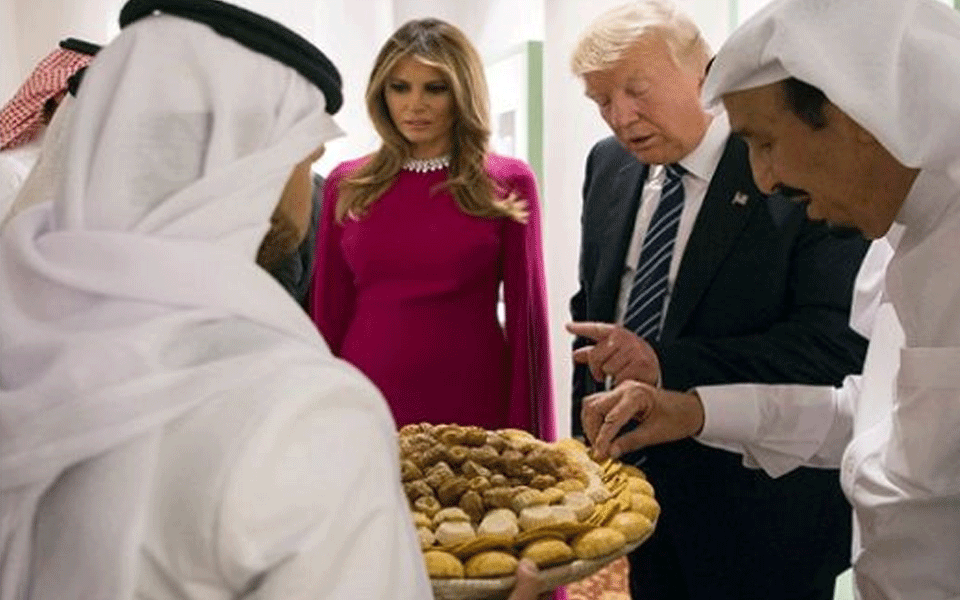
WASHINGTON, June 07: Wishing Muslims around the world a "Ramadan Mubarak" — a blessed holiday — President Donald Trump on Wednesday hosted his first White House dinner for Islam's holy month of Ramadan, an overture that surprised many in the Muslim community after he skipped hosting such a meal last year.
Speaking at an iftar dinner, which breaks the daylong fast, Trump offered a message of unity, recognizing members of the Muslim community at home and abroad.
"In gathering together this evening, we honor a sacred tradition of one of the world's great religions," he told an intimate audience that included Cabinet members and ambassadors from many Muslim-majority nations including Saudi Arabia, Kuwait, Jordan and the United Arab Emirates.
It was a dramatic departure from the inflammatory rhetoric Trump used during his campaign, when he called for a "complete and total shutdown" of Muslims entering the country, compared Syrian refugees fleeing civil war to a deadly snake and declared, "I think Islam hates us" in an interview with CNN.
Instead, Trump spoke of "the renewed bonds of friendship and cooperation" forged with "valued partners" from across the Middle East and said Iftars "mark the coming together of families and friends to celebrate a timeless message of peace, clarity and love. There is great love."
He recalled his visit last year to Saudi Arabia — his first foreign trip — as "one of the great two days of my life."
"Only by working together can we achieve a future of security and prosperity for all," he said.
The dinner came as the Supreme Court considers legal challenges to Trump's travel ban, which critics say unfairly targets some Muslim-majority countries. A ruling is expected as early as this month.
Several Muslim civil rights groups pushed back, organizing a "NOT Trump's Iftar" protest at a park across from the White House. The groups say Trump's heated rhetoric has contributed to an increase in bullying and discrimination against Muslim Americans.
Sharif Aly, CEO of Islamic Relief USA, a humanitarian and advocacy organization, said the group was glad to see the White House had reinstated the iftar, "an event that should be hosted every year, just like the Easter Egg Roll, the Passover Seder and Christmas Open House."
But he urged the administration "to actively engage on issues impacting our beneficiaries," including the travel ban and proposed cuts to social welfare programs.
During his presidential campaign, Trump called for a "complete and total shutdown" of Muslims entering the United States. Last year, he drew international criticism for retweeting anti-Muslim videos posted by a far-right group in Britain. And his decision to recognize Jerusalem as Israel's capital was seen by many critics as an unnecessary provocation in the Muslim world.
The White House has defended Trump's policies as necessary for national security.
Iftar dinners have been held regularly at the White House since the Clinton administration as a form of outreach to the Muslim world. Shortly after the 9/11 terrorist attacks, President George W. Bush hosted ambassadors and diplomats in celebration of Ramadan, declaring "evil has no holy days." President Barack Obama Took up the tradition, saying that discriminating against Muslim Americans "feeds the lie" that the West is at war with their religion.
Last year, Trump broke tradition. Instead of hosting a dinner, the White House issued a statement on the Islamic holiday that focused heavily on the threat of terrorism, noting that recent attacks "steel our resolve to defeat the terrorists and their perverted ideology."
The White House struck a considerably warmer tone last month, when it released a statement from the president declaring "Ramadan Mubarak," a common greeting in Islam for a blessed holiday. The statement praised the Constitution for ensuring Muslims can observe the holiday "unimpeded by government" and did not mention terrorism.
"Ramadan reminds us of the richness Muslims add to the religious tapestry of American life," the statement said.
The current version of Trump's travel ban applies to travelers from five countries with overwhelmingly Muslim populations — Iran, Libya, Somalia, Syria and Yemen. It also affects two non-Muslim countries, blocking travelers from North Korea and some Venezuelan government officials and their families.
Courtesy: kdhnews.com
Let the Truth be known. If you read VB and like VB, please be a VB Supporter and Help us deliver the Truth to one and all.
Chhattisgarh Vedanta power plant blast: Death toll rises to 20; sixteen workers undergoing treatment
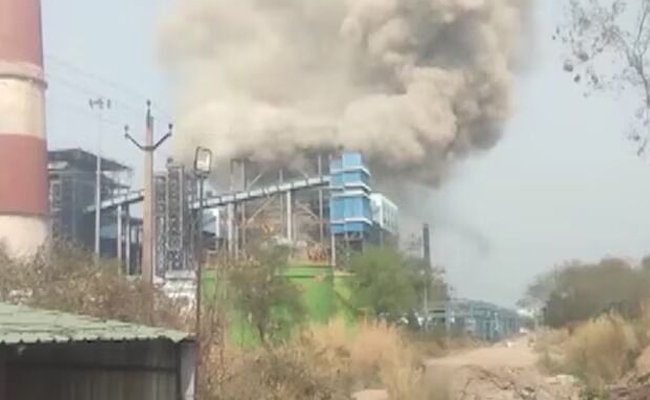
Sakti (Chhattisgarh) (PTI): The death toll in a blast at the Vedanta power plant in Chhattisgarh's Sakti district has mounted to 20 with seven more workers succumbing to injuries, while 16 others are undergoing treatment at different hospitals, officials said on Wednesday.
The deceased include six labourers from West Bengal, five from Chhattisgarh, three each from Jharkhand and Uttar Pradesh, two from Bihar, and one from Madhya Pradesh.
The opposition Congress has demanded registration of an FIR against the plant management and a judicial inquiry into the incident.
The explosion occurred on Tuesday afternoon in a steel tube carrying high-pressure steam from the boiler to the turbine at the Vedanta Ltd power plant located in Singhitarai village, leaving several workers with severe burn injuries.
According to officials, four workers died on the spot, while nine others succumbed to injuries soon after the incident.
Seven more workers have died in hospitals, raising the toll to 20, Sakti Collector Amrit Vikas Topno told PTI on Wednesday.
He said that a total of 36 workers were affected in the blast, and 20 of them died.
"Of the 16 injured workers, five are undergoing treatment in hospitals in Raipur, while 11 others are in hospitals of Raigarh, the neighbouring district of Sakti," he added.
Topno added that every possible effort was being made to provide the best medical treatment to the injured.
The deceased were identified, and their family members are being contacted. Arrangements have been made to transport the mortal remains to their native villages via ambulance following the postmortem examination and to provide immediate financial assistance, he said.
Chief Minister Vishnu Deo Sai has announced a compensation of Rs 5 lakh to the families of each deceased worker and Rs 50,000 for those injured.
Vedanta Power has also announced a Rs 35 lakh compensation for the family of each deceased worker, along with employment support.
The company will also provide Rs 15 lakh to each injured person, ensure salary continuation until recovery, and offer counselling support, a statement from the plant management said.
The chief minister has ordered an inquiry by the Commissioner of the Bilaspur division, assuring strict action against the guilty.
He directed officials to ensure free and proper medical treatment for all injured and emphasised that no negligence in their care would be tolerated.
The district administration has also ordered a separate magisterial probe, while the company has initiated its own internal investigation.
Collector Topno has appointed the Sub-Divisional Magistrate (SDM) of Dabhra to conduct the magisterial inquiry.
The SDM has been asked to submit a report within 30 days covering key aspects, including the cause of the accident, whether it was due to technical or human error, and details of safety inspections carried out at the plant.
Meanwhile, the opposition Congress has demanded registration of an FIR against the plant management and a judicial inquiry into the incident.
State Congress communication wing head Sushil Anand Shukla on Wednesday alleged negligence on the plant management's part and accused the government of attempting to shield those responsible.
He also demanded compensation of Rs 1 crore for the families of the deceased and Rs 50 lakh for the injured.
The construction of a 1,200 MW coal-based thermal power project (two units of 600 MW each) in Singhitarai, originally owned by Athena Chhattisgarh Power Ltd, started in 2009, but remained stalled between 2016 and 2022.
Vedanta acquired the plant in 2022, after which a 600 MW unit was completed and commissioned in August last year, while the second unit is still under construction.
The deceased have been identified as Amrit Lal Patel, Thanda Ram Lahre, Udhab Singh Yadav, Rameshwar Mahilange, and Nadeem Ansari (all from Chhattisgarh); Susanta Jana, Sheikh Saifuddin, Manas Giri, Kailash Mahto, Shibnath Murmu, and Dipankar Singh (West Bengal), Tarun Kumar Ojha, Abdul Karim and Ashok Parhiya (Jharkhand), Raju Ram, Pappu Kumar and Brijesh Kumar (Uttar Pradesh), Aakib Khan and Ritesh Kumar (Bihar), and Chitranjan Dhulai of Madhya Pradesh, officials said.