Read full transcript of Zohran Mamdani’s speech at his inauguration
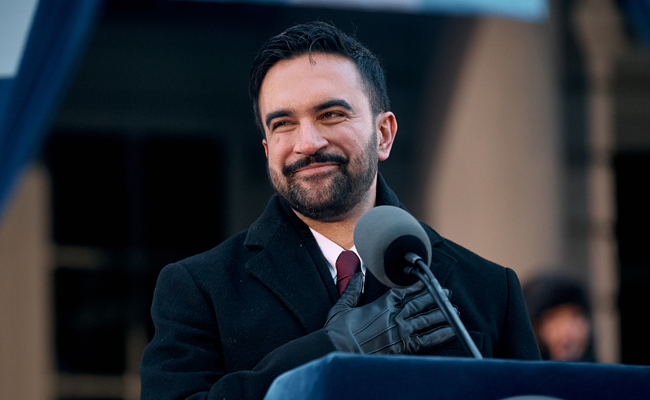
My fellow New Yorkers: Today begins a new era.
I stand before you moved by the privilege of taking this sacred oath, humbled by the faith that you have placed in me, and honored to serve as either your 111th or 112th Mayor of New York City. But I do not stand alone.
I stand alongside you, the tens of thousands gathered here in Lower Manhattan, warmed against the January chill by the resurgent flame of hope.
I stand alongside countless more New Yorkers watching from cramped kitchens in Flushing and barbershops in East New York, from cellphones propped against the dashboards of parked taxi cabs at LaGuardia, from hospitals in Mott Haven and libraries in El Barrio that have too long known only neglect.
I stand alongside construction workers in steel-toed boots and halal cart vendors whose knees ache from working all day.
I stand alongside neighbors who carry a plate of food to the elderly couple down the hall, those in a rush who still lift strangers’ strollers up subway stairs, and every person who makes the choice day after day, even when it feels impossible, to call our city home.
I stand alongside over one million New Yorkers who voted for this day nearly two months ago — and I stand just as resolutely alongside those who did not. I know there are some who view this administration with distrust or disdain, or who see politics as permanently broken.
And while only action can change minds, I promise you this: If you are a New Yorker, I am your mayor. Regardless of whether we agree, I will protect you, celebrate with you, mourn alongside you, and never, not for a second, hide from you.
I thank the labor and movement leaders here today, the activists and elected officials who will return to fighting for New Yorkers the second this ceremony concludes, and the performers who have gifted us with their talent.
Thank you to Governor Hochul for joining us. And thank you to Mayor Adams— Dorothy’s son, a son of Brownsville who rose from washing dishes to the highest position in our city — for being here as well. He and I have had our share of disagreements, but I will always be touched that he chose me as the mayoral candidate that he would most want to be trapped with on an elevator.
Thank you to the two titans who, as an Assembly member, I’ve had the privilege of being represented by in Congress: Nydia Velázquez and our incredible opening speaker, Alexandria Ocasio-Cortez. You have paved the way for this moment.
Thank you to the man whose leadership I seek most to emulate, who I am so grateful to be sworn in by today, Senator Bernie Sanders.
Thank you to my teams: from the Assembly, to the campaign, to the transition and, now, the team I am so excited to lead from City Hall.
Thank you to my parents, Mama and Baba, for raising me, for teaching me how to be in this world, and for having brought me to this city. Thank you to my family, from Kampala to Delhi. And thank you to my wife, Rama, for being my best friend, and for always showing me the beauty in everyday things.
Most of all, thank you to the people of New York.
A moment like this comes rarely. Seldom do we hold such an opportunity to transform and reinvent. Rarer still is it the people themselves whose hands are the ones upon the levers of change.
And yet we know that too often in our past, moments of great possibility have been promptly surrendered to small imagination and smaller ambition. What was promised was never pursued, what could have changed remained the same. For the New Yorkers most eager to see our city remade, the weight has only grown heavier, the wait has only grown longer.
In writing this address, I have been told that this is the occasion to reset expectations, that I should use this opportunity to encourage the people of New York to ask for little and expect even less. I will do no such thing. The only expectation I seek to reset is that of small expectations.
Beginning today, we will govern expansively and audaciously. We may not always succeed. But never will we be accused of lacking the courage to try.
To those who insist that the era of big government is over, hear me when I say this: No longer will City Hall hesitate to use its power to improve New Yorkers’ lives.
For too long, we have turned to the private sector for greatness, while accepting mediocrity from those who serve the public. I cannot blame anyone who has come to question the role of government, whose faith in democracy has been eroded by decades of apathy. We will restore that trust by walking a different path: one where government is no longer solely the final recourse for those struggling, one where excellence is no longer the exception.
We expect greatness from the cooks wielding a thousand spices, from those who stride out onto Broadway stages, from our starting point guard at Madison Square Garden. Let us demand the same from those who work in government. In a city where the mere names of our streets are associated with the innovation of the industries that call them home, we will make the words “City Hall” synonymous with both resolve and results.
As we embark upon this work, let us advance a new answer to the question asked of every generation: Who does New York belong to?
For much of our history, the response from City Hall has been simple: It belongs only to the wealthy and well-connected, those who never strain to capture the attention of those in power.
Working people have reckoned with the consequences. Crowded classrooms and public housing developments where the elevators sit out of order. Roads littered with potholes and buses that arrive half an hour late, if at all. Wages that do not rise and corporations that rip off consumers and employees alike.
And still, there have been brief, fleeting moments where the equation changed.
Twelve years ago, Bill de Blasio stood where I stand now as he promised to “put an end to economic and social inequalities” that divided our city into two.
In 1990, David Dinkins swore the same oath I swore today, vowing to celebrate the “gorgeous mosaic” that is New York, where every one of us is deserving of a decent life.
And nearly six decades before him, Fiorello La Guardia took office with the goal of building a city that was “far greater and more beautiful” for the hungry and the poor.
Some of these Mayors achieved more success than others. But they were unified by a shared belief that New York could belong to more than just a privileged few. It could belong to those who operate our subways and rake our parks, those who feed us biryani and beef patties, picanha and pastrami on rye. And they knew that this belief could be made true if only government dared to work hardest for those who work hardest.
Over the years to come, my administration will resurrect that legacy. City Hall will deliver an agenda of safety, affordability, and abundance, where government looks and lives like the people it represents, never flinches in the fight against corporate greed, and refuses to cower before challenges that others have deemed too complicated.
In so doing, we will provide our own answer to that age-old question — who does New York belong to? Well, my friends, we can look to Madiba and the South African Freedom Charter: New York “belongs to all who live in it.”
Together, we will tell a new story of our city.
This will not be a tale of one city, governed only by the one percent. Nor will it be a tale of two cities, the rich versus the poor.
It will be a tale of eight and a half million cities, each of them a New Yorker with hopes and fears, each a universe, each of them woven together.
The authors of this story will speak Pashto and Mandarin, Yiddish and Creole. They will pray in mosques, at shul, at church, at Gurdwaras and Mandirs and temples. And many will not pray at all.
They will be Russian Jewish immigrants in Brighton Beach, Italians in Rossville, and Irish families in Woodhaven — many of whom came here with nothing but a dream of a better life, a dream which has withered away.
They will be young people in cramped Marble Hill apartments where the walls shake when the subway passes. They will be Black homeowners in St. Albans whose homes represent a physical testament to triumph over decades of lesser-paid labor and redlining. They will be Palestinian New Yorkers in Bay Ridge, who will no longer have to contend with a politics that speaks of universalism and then makes them the exception.
Few of these eight and a half million will fit into neat and easy boxes. Some will be voters from Hillside Avenue or Fordham Road who supported President Trump a year before they voted for me, tired of being failed by their party’s establishment. The majority will not use the language that we often expect from those who wield influence. I welcome the change. For too long, those fluent in the good grammar of civility have deployed decorum to mask agendas of cruelty.
Many of these people have been betrayed by the established order. But in our administration, their needs will be met. Their hopes and dreams and interests will be reflected transparently in government. They will shape our future.
And if for too long these communities have existed as distinct from one another, we will draw this city closer together. We will replace the frigidity of rugged individualism with the warmth of collectivism. If our campaign demonstrated that the people of New York yearn for solidarity, then let this government foster it. Because no matter what you eat, what language you speak, how you pray, or where you come from, the words that most define us are the two we all share: New Yorkers.
And it will be New Yorkers who reform a long-broken property tax system. New Yorkers who will create a new Department of Community Safety that will tackle the mental health crisis and let the police focus on the job they signed up to do. New Yorkers who will take on the bad landlords who mistreat their tenants and free small business owners from the shackles of bloated bureaucracy. And I am proud to be one of those New Yorkers.
When we won the primary last June, there were many who said that these aspirations and those who held them had come out of nowhere. Yet one man’s nowhere is another man’s somewhere. This movement came out of eight and a half million somewheres — taxi cab depots and Amazon warehouses, D.S.A. meetings and curbside domino games. The powers that be had looked away from these places for quite some time — if they’d known about them at all — so they dismissed them as nowhere. But in our city, where every corner of these five boroughs holds power, there is no nowhere and there is no no one. There is only New York, and there are only New Yorkers.
Eight and a half million New Yorkers will speak this new era into existence. It will be loud. It will be different. It will feel like the New York we love.
No matter how long you have called this city home, that love has shaped your life. I know that it has shaped mine.
This is the city where I set land-speed records on my Razor scooter at the age of 12. Quickest four blocks of my life.
The city where I ate powdered doughnuts at halftime during A.Y.S.O. soccer games and realized I probably wouldn’t be going pro, devoured too-big slices at Koronet Pizza, played cricket with my friends at Ferry Point Park, and took the 1 train to the BX10 only to still show up late to Bronx Science.
The city where I have gone on hunger strike just outside these gates, sat claustrophobic on a stalled N train just after Atlantic Avenue, and waited in quiet terror for my father to emerge from 26 Federal Plaza.
The city where I took a beautiful woman named Rama to McCarren Park on our first date and swore a different oath to become an American citizen on Pearl Street.
To live in New York, to love New York, is to know that we are the stewards of something without equal in our world. Where else can you hear the sound of the steelpan, savor the smell of sancocho, and pay $9 for coffee on the same block? Where else could a Muslim kid like me grow up eating bagels and lox every Sunday?
That love will be our guide as we pursue our agenda. Here, where the language of the New Deal was born, we will return the vast resources of this city to the workers who call it home. Not only will we make it possible for every New Yorker to afford a life they love once again — we will overcome the isolation that too many feel, and connect the people of this city to one another.
The cost of child care will no longer discourage young adults from starting a family, because we will deliver universal child care for the many by taxing the wealthiest few.
Those in rent-stabilized homes will no longer dread the latest rent hike, because we will freeze the rent.
Getting on a bus without worrying about a fare hike or whether you’ll be able to get to your destination on time will no longer be deemed a small miracle, because we will make buses fast and free.
These policies are not simply about the costs we make free, but the lives we fill with freedom. For too long in our city, freedom has belonged only to those who can afford to buy it. Our City Hall will change that.
These promises carried our movement to City Hall, and they will carry us from the rallying cries of a campaign to the realities of a new era in politics.
Two Sundays ago, as snow softly fell, I spent 12 hours at the Museum of the Moving Image in Astoria, listening to New Yorkers from every borough as they told me about the city that is theirs.
We discussed construction hours on the Van Wyck Expressway and E.B.T. eligibility, affordable housing for artists and ICE raids. I spoke to a man named TJ who said that one day a few years ago, his heart broke as he realized he would never get ahead here, no matter how hard he worked. I spoke to a Pakistani Auntie named Samina, who told me that this movement had fostered something too rare: softness in people’s hearts. As she said in Urdu: logon ke dil badalgyehe.
142 New Yorkers out of eight and a half million. And yet, if anything united each person sitting across from me, it was the shared recognition that this moment demands a new politics, and a new approach to power.
We will deliver nothing less as we work each day to make this city belong to more of its people than it did the day before.
Here is what I want you to expect from the administration that this morning moved into the building behind me.
We will transform the culture of City Hall from one of “no” to one of “how?”
We will answer to all New Yorkers, not to any billionaire or oligarch who thinks they can buy our democracy.
We will govern without shame and insecurity, making no apology for what we believe. I was elected as a democratic socialist and I will govern as a democratic socialist. I will not abandon my principles for fear of being deemed radical. As the great Senator from Vermont once said, “What’s radical is a system which gives so much to so few and denies so many people the basic necessities of life.”
We will strive each day to ensure that no New Yorker is priced out of any one of those basic necessities.
And throughout it all we will, in the words of Jason Terrance Phillips, better known as Jadakiss or J to the Muah, be “outside” — because this is a government of New York, by New York, and for New York.
Before I end, I want to ask all of you, if you are able, whether you are here today or anywhere watching, to stand with me.
I ask you to stand with us now, and every day that follows. City Hall will not be able to deliver on our own. And while we will encourage New Yorkers to demand more from those with the great privilege of serving them, we will encourage you to demand more of yourselves as well.
The movement we began over a year ago did not end with our election. It will not end this afternoon. It lives on with every battle we will fight, together; every blizzard and flood we withstand, together; every moment of fiscal challenge we overcome with ambition, not austerity, together; every way we pursue change in working peoples’ interests, rather than at their expense, together.
No longer will we treat victory as an invitation to turn off the news. From today onward, we will understand victory very simply: something with the power to transform lives, and something that demands effort from each of us, every single day.
What we achieve together will reach across the five boroughs and it will resonate far beyond. There are many who will be watching. They want to know if the left can govern. They want to know if the struggles that afflict them can be solved. They want to know if it is right to hope again.
So, standing together with the wind of purpose at our backs, we will do something that New Yorkers do better than anyone else: We will set an example for the world. If what Sinatra said is true, let us prove that anyone can make it in New York — and anywhere else too. Let us prove that when a city belongs to the people, there is no need too small to be met, no person too sick to be made healthy, no one too alone to feel like New York is their home.
The work continues, the work endures, the work, my friends, has only just begun.
Thank you.
Let the Truth be known. If you read VB and like VB, please be a VB Supporter and Help us deliver the Truth to one and all.
Anbumani asks PM Modi to ban sale of cigarettes for those born after 2009
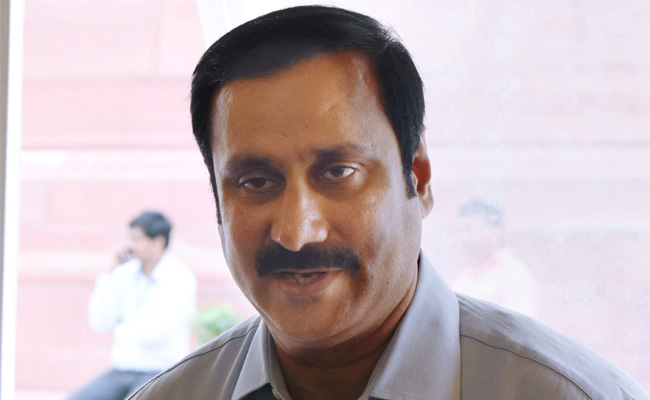
Chennai (PTI): PMK leader Anbumani Ramadoss on Saturday urged Prime Minister Narendra Modi to take legislative measures to prohibit smoking and the sale of cigarettes to individuals born on or after January 1, 2009, thereby creating a smoke-free generation.
Anbumani, former Union minister for health and family welfare, said, "Once implemented, it (ban on cigarettes) will ensure that future generations are legally prevented from ever accessing tobacco products", he said in a letter to Modi.
"I write to you with a deep sense of urgency and responsibility, drawing your kind attention to a critical public health issue that continues to endanger the lives of millions of Indians, particularly among the younger generation who are affected by cigarette smoking", he claimed.
Stating that India unfortunately bears a disproportionately high burden of tobacco-related morbidity and mortality, he said, adding that, according to global health estimates, nearly 267 million Indians, approximately one in five citizens, use tobacco.
"Each year, tobacco consumption directly accounts for over 1.35 million deaths, while exposure to second-hand smoke contributes to a total of approximately 2.3 million deaths annually", he said, adding, "these figures are alarming and reflect a public health crisis of immense magnitude".
He pointed out that Scientific evidence unequivocally establishes tobacco use as a leading cause of cancer and numerous non-communicable diseases, including cardiovascular ailments, chronic respiratory diseases such as COPD, and multiple forms of malignancies. "In India alone, tobacco is responsible for nearly 40–50 per cent of all cancer cases, with over 4.7 lakh deaths annually attributed to tobacco-induced cancers", he added.
"In this context, I strongly urge the Union government to consider enacting a transformative law similar to that of the United Kingdom, that permanently prohibits the sale and consumption of tobacco products for individuals born on or after a specified year (such as 2009). Such a generational ban would mark a decisive step towards eliminating tobacco use in India over time", he said.