Want friendly ties, talks with India: Imran Khan
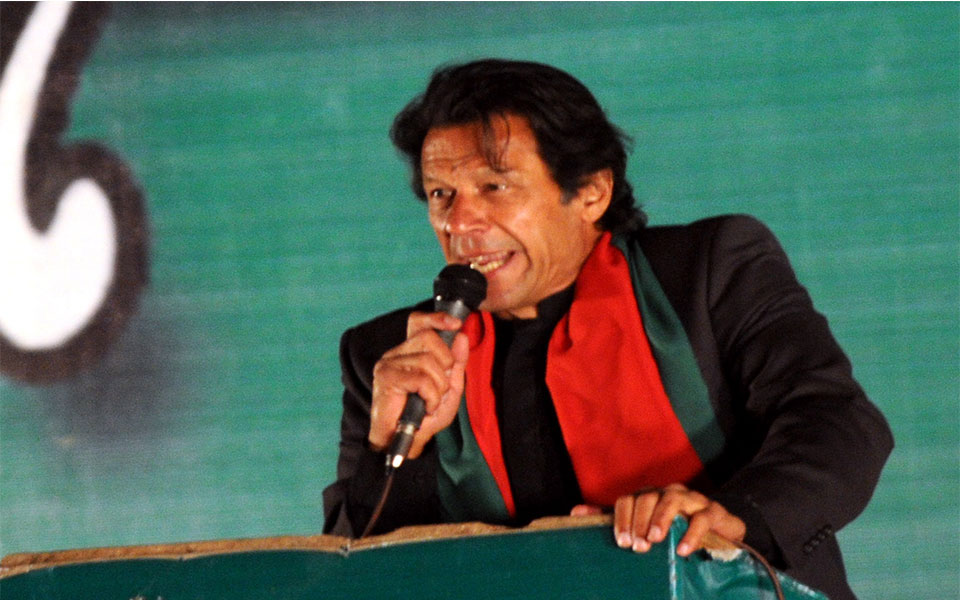
Islamabad, July 26 : Cricketer-turned-politician Imran Khan, who is set to be the new Pakistan Prime Minister, on Thursday said his government would seek good relations with India and would like leaders of the two countries to sit across the table and resolve all disputes, including the "core issue" of Kashmir.
"If Indian leadership is ready, we are ready to improve relationship. If you take one step, we are ready to take two. Now it is one sided blame on Pakistan. We have to resolve the main issue through dialogue. This is important for the sub-continent," Khan told the media here as results indicated that his Pakistan Tehreek-e-Insaf (PTI) was close to majority in the 272-member National Assembly.
At the same time, he blew hot over the Kashmir issue, alleging that there were human rights violations by security forces.
"Kashmiri people have suffered in the last 30 years," said Khan, known for his hardline towards India and is widely believed to be having the backing of the Pakistan Army.
He said there has been a blame game between India and Pakistan with New Delhi holding Islamabad responsible for all its problems. And Pakistan is blaming India for what is happening in Balochistan, he said.
"We are (back to ) square one. We are ready to improve relationship with India. Now it is a one way blame on Pakistan."
He said trade between India and Pakistan can be instrumental in eradicating poverty in the sub-continent which should be the focus of the two countries.
Khan lamented that the Indian media had projected him as a Bollywood villain. "I am a Pakistani who is most popular in India because I played there. I am a Pakistani who wants friendly relationship with India."
Khan said his government would take all efforts for bringing peace in Afghanistan with which Pakistan would like to have open border while trying to strengthen ties with Pakistan's all-weather friend China.
With the US, he said, his administration would like to have mutually beneficial ties. "This has been one way so far. We should have a balanced relationship."
Set to capture power after being in politics for 22 years, the firebrand politician said he would not indulge in political victimization but would implement the law against those who go against the law of the land.
He said he would root out corruption which was the bane of the country and he would himself be accoutable first.
"The National Accountability Bureau will be strengthened and the law will be same for everyone.
He said the Pakistan economy was the most challenged and dysfunctional with high fiscal and trade deficits and the value of rupee plunging deep.
Khan pledged austerity measures for the government and said he himself won't live in a "palace like" Prime Minister's residence but would prefer a house in the ministers enclave.
On his priorities as the head of the new government, Khan said governance system had collapsed in Pakistan and he would like to set it right first with all policies for poor and the common man and not for elites.
"All our policies will be for workers, farmers. We are not able to give proper healthcare and Pakistan has the highest maternal mortality rate."
Rejecting his rivals' charges that the just concluded elections were rigged in his favour, Khan said this was one of the cleanest polls Pakistan ever held.
"I want to tell those who are saying that elections are rigged that we are ready to investigate." he said.
Let the Truth be known. If you read VB and like VB, please be a VB Supporter and Help us deliver the Truth to one and all.
Tumakuru: Dalit family allegedly prevented from entering temple; accused arrested
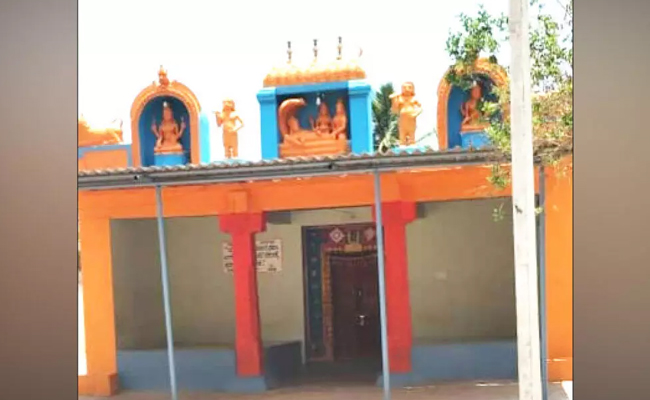
Tumakuru: Police in Turuvekere have arrested a 65-year-old man for allegedly obstructing a Dalit family from entering a temple and making caste-based remarks, officials said on Saturday.
The accused, identified as Rajanna, has been booked under provisions of the Scheduled Castes and Scheduled Tribes (Prevention of Atrocities) Act based on a complaint filed by Rangaramu T. of Thuyalahalli village.
According to the FIR, the incident took place on April 18 around 5:30 pm when Rangaramu T. and his family visited the Sri Ranganathaswamy temple in Mallur village to offer prayers. It states that the accused allegedly objected to their entry and made remarks referring to caste hierarchy and questioning their presence inside the temple premises.
The FIR further states that the accused made additional remarks asserting that such entry into the temple was not permitted and asked the family to leave. It also mentions that the complainant was subjected to mental harassment through these statements.
Following the complaint, DySP Om Prakash Gowda along with revenue officials and police visited the spot and conducted an inspection.
Further investigation is underway.