Release pastor or face tough sanctions: US to Turkey
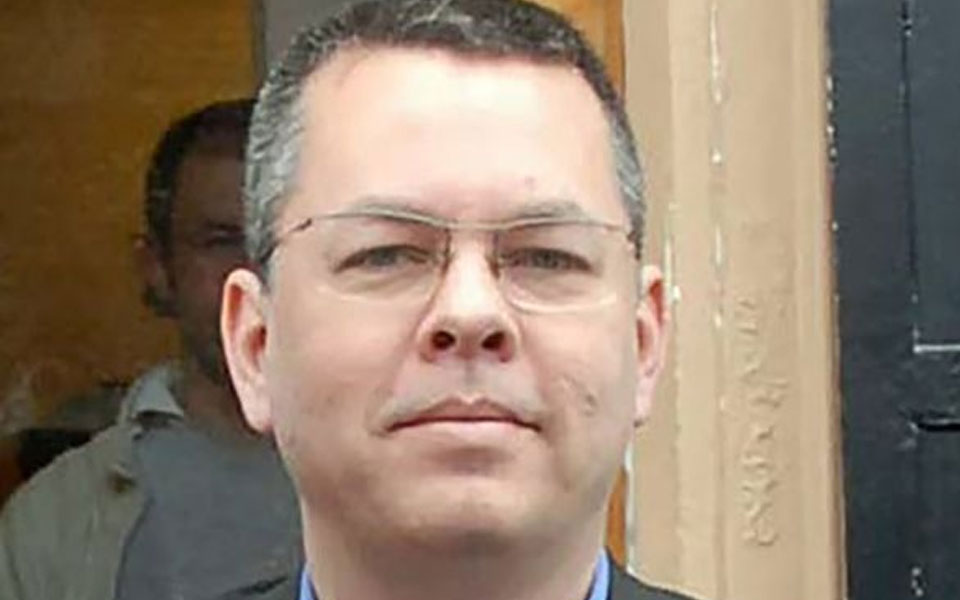
Washington, July 27 : US Vice President Mike Pence said on Thursday that his country will slap "significant economic sanctions" on Turkey unless it immediately releases a detained US pastor.
Pence said Turkey should take immediate action to free Andrew Brunson or "be prepared to face the consequences", Xinhua reported. US President Donald Trump also tweeted earlier that Ankara should release Brunson, calling the cleric's detention "a total disgrace".
The 50-year-old pastor, who was detained two years ago on spying charges, faces up to 35 years in prison if found guilty.
A Turkish court on Wednesday decided to move him from prison to house arrest under judicial control due to his health problems. However, he was not allowed to leave the country.
Turkish authorities accuse him of espionage and having links to the network led by US-based outlawed cleric Fethullah Gulen and the Kurdistan Workers' Party.
Ankara accuses Gulen and his network of being behind the failed coup against Turkish President Recep Tayyip Erdogan and his government in 2016, an accusation that Gulen has denied.
Let the Truth be known. If you read VB and like VB, please be a VB Supporter and Help us deliver the Truth to one and all.
Two held for 'firing' at BJP leader's house in Bengal

Kolkata (PTI): A day before the counting of votes for the West Bengal assembly elections, two persons were arrested on Sunday for allegedly being involved in a firing incident outside the residence of a BJP leader in North 24 Parganas district, police said.
BJP leader Kundan Singh lodged a police complaint, alleging that a few gunmen fired at his house in the Noapara constituency around Saturday midnight.
Based on the CCTV footage, the two accused were apprehended, a senior officer said.
BJP's Noapara candidate Arjun Singh, in a post on social media, claimed that around 12.05 am, two armed miscreants arrived on a motorcycle at the residence of Kundan Singh, a BJP functionary and secretary of the Barrackpore organisational district, with an "intent to kill him".
According to the BJP leader, the accused are residents of Garulia and are known criminals.
Their names as offenders had been submitted to the Election Commission, he said.
The police officer did not specify whether the two arrested persons were the same individuals named by Arjun Singh.
According to the complaint, one round of firing took place outside Kundan Singh's house, triggering panic in the area.
The BJP candidate also questioned the role of the police, claiming that one of the accused had been detained by the police on the polling day but was later released in the evening.
The Noapara assembly seat went to the polls on April 29.
Several BJP leaders alleged that attempts were being made to create an atmosphere of fear ahead of the counting and weaken the organisation of the opposition parties.
The counting of votes will take place on May 4. Polling for the West Bengal assembly elections was held on April 23 and April 29.
The BJP urged the Election Commission to intervene immediately to ensure peaceful counting.
TMC candidate Somnath Shyam rubbished Arjun Singh’s allegation, claiming that the BJP nominee had orchestrated the firing incident to divert attention from imminent defeat.
“Arjun Singh knows all the gangsters in the Barrackpore belt. Everyone knows about his links with the underworld. Let the police investigate the incident,” Shyam said.