Rescuers race against time in search for survivors in Japan after powerful quakes leave 62 dead
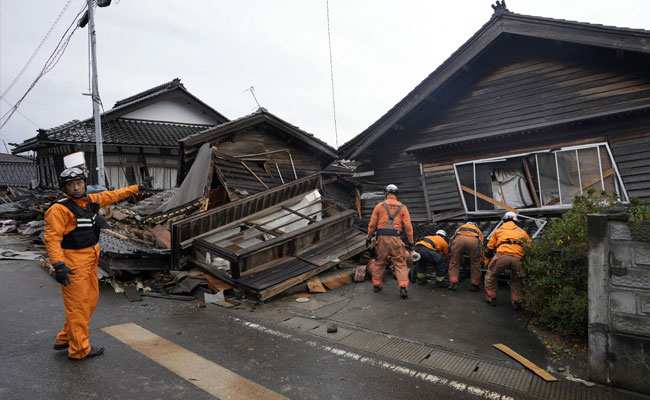
Suzu (Japan) (AP): Rescue workers and canine units urgently sifted through rubble in the winter cold Wednesday in what the prime minister called a race against time after powerful earthquakes in western Japan left at least 62 people dead and dozens believed trapped under collapsed buildings.
Ishikawa prefecture and nearby areas were rattled by a major 4.9 magnitude aftershock in the early hours among the dozens of aftershocks that have followed a magnitude 7.6 temblor two days ago.
The first 72 hours are especially critical, experts say, because the prospects for survival greatly diminishes after three days.
"More than 40 hours have passed. This is a race against time, and I feel that we are at a critical moment," Prime Minister Fumio Kishida told reporters. "We have received reports many people are still waiting for rescue under collapsed buildings."
Relief officials were delivering water, blankets, food and other supplies. Noto's narrow peninsula landscape has added to the challenges in reaching some communities. Water, power and cell phone service were still down in some areas.
"Hardly any of the homes are standing. They are either partially or totally destroyed," said Masuhiro Izumiya, the mayor of Suzu city, which suffered heavy damage.
Besides the military and firefighters, search dogs have joined the effort to search for dozens of people who are thought to be trapped, although the exact number is unclear.
Weather forecasts warned of heavy rainfall in Ishikawa, leading to worries about landslides and further damage to half-crumbled homes. Temperatures were also dropping lately to below freezing levels.
Of the deaths, 29 were counted in Wajima city, while 22 people died in Suzu, according to Ishikawa Prefectural authorities. Dozens of people have been seriously injured, including in nearby prefectures. Two additional deaths were still awaiting official confirmation in Wajima, meaning the overall toll would likely grow to 64 people.
Ensuring adequate water supplies and bathroom services to those who have evacuated were a priority, according to Ishikawa Gov. Hiroshi Hase.
He encouraged everyone to use masks, antiseptic and soap to guard against the spread of infectious diseases, another growing fear the region faces as life at evacuation centers drags on.
But residents on the coastline were already picking up the pieces, like Noto resident Kazuyuki Iwaike, who was deep in thought as he cleaned up his home. It was by sheer chance he had avoided death. He was not home when the tsunami struck.
"I always thought it was someone else's problem, thinking there is no way a tsunami would come," he said.
Officials warned that things were unpredictable and possibly bigger quakes could hit.
As a quake-prone nation with crisscrossing fault lines and many volcanoes, Japan has had its share of disasters, including a quake, tsunami and nuclear disaster in northeastern Japan in 2011.
Japan is also an organized, conformist and relatively crime-free society, where warning systems are systematically relayed as a public service. Disaster experts say that's helping save lives, but they warn people shouldn't let their guard down.
Boats lay overturned in water, roads were blocked by mounds of dirt, and shovels scooped scattered pillars and walls from flattened homes. A major fire turned an entire section of Wajima city into ashes.
Adding to the worries are the several nuclear plants in the region, although no major problems or rise in radiation levels have been reported. Shika nuclear plant in Ishikawa suffered partial electricity failure, but backup power kicked in, ensuring the critical cooling process continued.
On Monday, the Japan Meteorological Agency issued a major tsunami warning for Ishikawa and lower-level tsunami warnings for other coastal areas. The tsunami warnings were lifted Tuesday. The latest quakes have not come with tsunami warnings.
Australian Prime Minister Anthony Albanese joined President Joe Biden and other world leaders in expressing empathy for the Japanese.
"Our hearts go out to our friends in Japan," he said. "We will provide, and have offered, whatever support is requested by our friends in Japan."
Let the Truth be known. If you read VB and like VB, please be a VB Supporter and Help us deliver the Truth to one and all.
KSCA expresses disappointment over missing IPL playoffs, says it was ready to host matches in B’luru
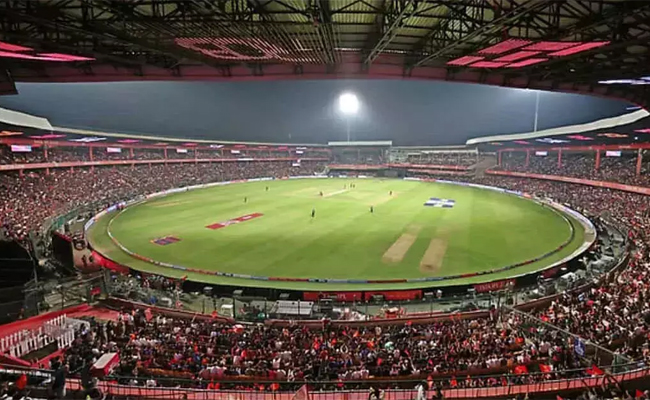
Bengaluru: The Karnataka State Cricket Association (KSCA) has issued a clarification stating that it was fully prepared to host the IPL playoffs and final matches in Bengaluru but the fixtures were allotted to other venues.
In a media note, KSCA said it was disappointed with the decision. The association stated that its president, former India cricketer Venkatesh Prasad, had been in touch with the Board of Control for Cricket in India (BCCI) and had formally conveyed the association’s readiness and interest in hosting the matches at the M. Chinnaswamy Stadium.
KSCA said the IPL matches held in Bengaluru this season were appreciated for smooth conduct, crowd management and overall experience for spectators. It said this reflected its ability to handle high-profile matches.
The association also stated that it had sent a detailed communication to the BCCI explaining its preparedness and the operational arrangements followed during the current IPL season. According to KSCA, these systems have been in place since the start of the Indian Premier League in 2008 and were followed consistently, including during previous playoff matches hosted in Bengaluru.
The clarification added that the communication sent to the BCCI was only meant to provide factual and operational details and to bring clarity on logistical and stakeholder-related requirements involved in hosting such matches.
KSCA said that although it had shown willingness and preparedness, the BCCI has decided to allocate the playoff matches to other venues. It added that the reasons for this decision have not been formally shared with the association, but it respects the authority of the board in taking such decisions.
The association further said it remains ready to host matches of national and international importance and will continue to cooperate with the BCCI, franchises, government authorities and other stakeholders for conducting cricket events.
The statement was issued by KSCA official spokesperson Vinay Mruthyunjaya, who also thanked the media and cricket fans for their continued support.