Researchers at China's Wuhan bio lab sought hospital care before COVID-19 outbreak: Report
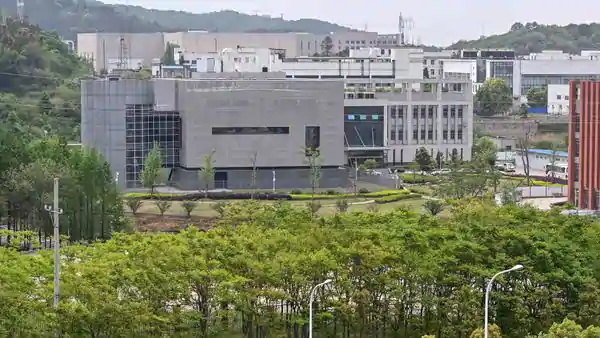
Beijing/Washington, May 24: Three researchers from the Wuhan Institute of Virology sought hospital care in November 2019, weeks before Beijing disclosed the COVID-19 pandemic, a US media report said, citing a previously undisclosed American intelligence document that could add weight to growing calls for a full scale probe of whether the coronavirus may have escaped from China's top bio lab.
The details of the reporting go beyond a State Department fact sheet, issued during the final days of the Trump administration, which said that several researchers at the Wuhan lab, a center for the study of coronaviruses and other pathogens, became sick in autumn 2019 "with symptoms consistent with both Covid-19 and common seasonal illness," the Wall Street Journal reported.
The origins of the COVID-19 remain a widely debated topic, with some scientists and politicians maintaining that the possibility of a lab leak of the deadly virus exists. The Wuhan Institute of Virology (WIV) is near the outbreak's known epicentre of Huanan Seafood Market in central China's Wuhan city, where the virus first emerged in late 2019 and became a pandemic.
Former US president Donald Trump was among those who supported the theory that the virus might have escaped from a bio lab in China.
"Three researchers from China's Wuhan Institute of Virology became sick enough in November 2019 that they sought hospital care, the paper said.
The disclosure of the number of Chinese researchers, the timing of their illnesses and their hospital visits come on the eve of a meeting of the World Health Organization's decision-making body, which is expected to discuss the next phase of an investigation into Covid-19's origins.
The paper said that current and former officials familiar with the intelligence about the lab researchers expressed differing views about the strength of the supporting evidence, with one person saying it was provided by an international partner and was potentially significant but still in need of further investigation and additional corroboration.
Another person described intelligence as stronger. The information that we had coming from the various sources was of exquisite quality. It was very precise. What it didn't tell you was exactly why they got sick, he said, referring to the researchers.
China, however, denied the WSJ report on Monday, with Foreign Ministry spokesman Zhao Lijian saying the WIV released a statement on March 23 that made it clear that there were zero COVID-19 infections at the institute.
"The report that you mentioned about three people getting sick, that is not true," Zhao said.
To this date none of the WIV's staff and graduate students have been affected with the virus, he said.
Zhao sought to refute the WSJ report citing the observations of the joint expert group of China and the World Health Organisation (WHO) who visited Wuhan, that it is extremely unlikely coronavirus has escaped from the bio lab.
Beijing has also been vehemently denying that the coronavirus broke out in Wuhan and took exception to Trump's reference to it as China virus or Wuhan virus . China asserts that the COVID-19 broke out in different places in the world and China only reported it first.
Zhao reiterated China's assertions that the US should open up its bio-lab at Fort Detrick in Maryland and 200 other such labs for WHO experts visits as China did.
Also Yuan Zhiming, director of the WIF, told the state-run Global Times that the WSJ report is an outright lie that came from nowhere .
"I've read it, it's a complete lie," Yuan said. "Those claims are groundless. The lab has not been aware of this situation [sick researchers in autumn 2019], and I don't even know where such information came from."
In a detailed article titled The origin of COVID: Did people or nature open Pandora's box at Wuhan' published in the prestigious Bulletin of the Atomic Scientists early this month, noted British science writer, editor and author Nicholas Wade raised several questions on the origin of the novel coronavirus that has disrupted lives the world over for more than a year and caused over three million deaths and wrecked global economies.
The evidence adds up to a serious case that the SARS2 virus could have been created in a lab, from which it then escaped, wrote Wade, who refers to SARS-CoV-2 virus as SARS2 in short.
Earlier this month, a group of leading UK and US scientists called for more investigation to determine the origin of the COVID-19 pandemic, including the theory of an accidental release from a lab in Wuhan.
In May 2020, the World Health Assembly requested that the WHO director-general work with partners to determine the origins of SARS-CoV-2.
A team of WHO experts, which probed the origin of the coronavirus, concluded in March that all hypotheses included the allegation that COVID-19 could have emanated from a bio lab "remained open".
WHO Director-General Dr Tedros Adhanom Ghebreyesus, while receiving the report of the international experts' team which visited Wuhan, said on March 30 that as far as the WHO is concerned, all hypotheses remain on the table .
"This report is a very important beginning, but it is not the end. We have not yet found the source of the virus, and we must continue to follow the science and leave no stone unturned as we do, he said.
Significantly, Tedros said the team has concluded that leak from the WIV as alleged by former US president Donald Trump is the least likely hypothesis but it requires further probe.
Let the Truth be known. If you read VB and like VB, please be a VB Supporter and Help us deliver the Truth to one and all.
Two injuries, one DNF, a DQ as India end messy World Relays campaign
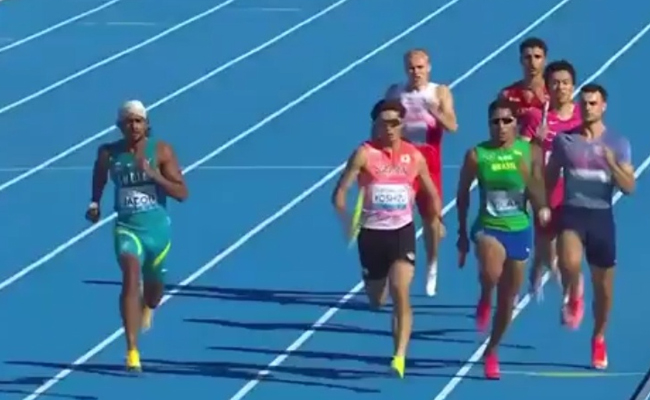
Gaborone (Botswana) (PTI): Amoj Jacob and Ragul Kumar got injured during the men's 4x400m and 4x100 races respectively as India ended their World Athletics Relays campaign in disappointment on the second day of competitions here on Sunday.
The Indian camp had high hopes of making the 2027 World Championships in the men's 4x400m relay but the team did not finish (DNF) the race as Jacob suffered cramps and pulled out of the race after taking the baton from the first leg runner Dharamveer Choudhary. Rajesh Ramesh and Vishal TK were to run in the third and fourth legs.
Those teams which could not qualify for the 2027 Beijing World Championships by reaching the final round of each of the six relay events on Saturday were given another chance in the second qualification round on Sunday.
The top two teams in each of the two heats (in all six relay events) booked the Beijing ticket on Sunday.
India will now have to try and qualify for the World Championships through the Top Lists of the World Athletics, which is a long and tedious process.
In the men's 4x100m race, third leg runner Ragul Kumar fell down the track after failing to hand over the baton inside the exchange zone to fourth leg runner Gurindervir Singh, which clearly showed the lack of coordination among the runners.
Harsh Santosh Raut and Animesh Kujur ran the first two legs.
The Indian quartet was disqualified and Kumar was seen being taken away from the Field of Play with the help of the volunteers.
It was a comedy of errors in the case of the women's 4x100m race, which saw the baton being dropped during an exchange between first leg runner Tamanna and second runner Nithya Gandhe, though the Indians finished the race in 53.09 seconds.
Gandhe started running quite a distance, but after realising that the baton was not in her hand, she turned and ran back to pick it up.
The only silver-lining for the Indian contingent was the national record time in the mixed 4x100m relay race, though the quartet of Ragul Kumar, Nithya Gandhe, Animesh Kujur and Sneha SS finished sixth in heat number two with a time of 41.35 seconds, bettering the previous national mark of 42.30 seconds set in March in Chandigarh.
The mixed 4x400m relay quartet of Theerthesh P Shetty, Kumari Saloni, Nihal William and Rashdeep Kaur ended at fifth in heat number one with a time of 3 minutes and 19.40 seconds.
On Saturday, all the five Indian relay teams had failed to make it to the respective final rounds and thus missed out on the 2027 World Championships berths.