Return to US immediately or risk getting stranded: immigration attorneys,companies tell H-1B workers
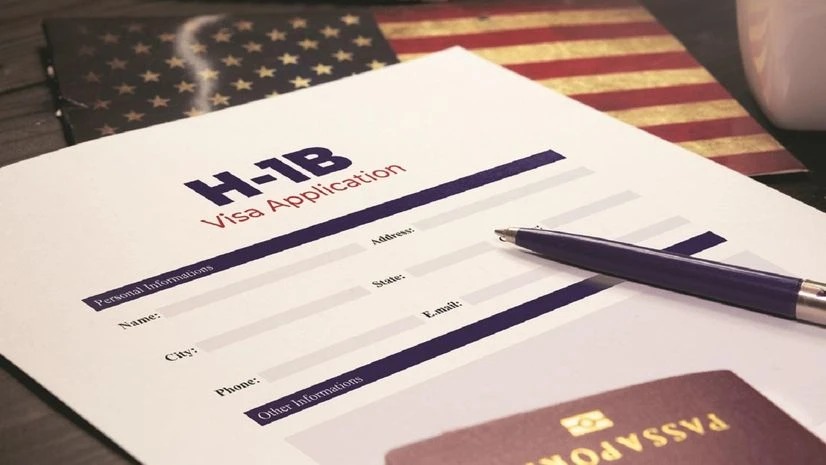
New York/Washington (PTI): Immigration attorneys and companies are cautioning H-1B visa holders against travelling outside the US amid President Donald Trump’s new plan to impose a USD 100,000 fee on the work visas, with many asking employees to return immediately to America or risk getting stranded.
In a significant development that will have an impact on Indian professionals working on H-1B visas in the US, Trump signed a proclamation Friday that restricts the entry into the United States of nonimmigrants working in a “speciality occupation” unless their H-1B petitions are accompanied or supplemented by a payment of USD 100,000. This proclamation will come into effect from 12:01 am September 21, 2025.
Immigration attorneys and companies are sounding the alarm for H-1B visa holders or their family members currently outside the US for work or vacation, asking them to return to the US before the proclamation kicks in on September 21, essentially telling those outside the country to return within the next 24 hours or risk being stranded and denied entry into the US.
“H-1B visa holders who are out of the US on business or vacation will get stranded unless they get in before midnight September 21. H-1Bs still in India may have already missed the deadline as there is no way a direct flight from India will get in time,” eminent New York-based immigration attorney Cyrus Mehta said in a post on X.
“There may still be a way for an H-1B visa holder who is in India to arrive in California before midnight September 21, 2025,” Mehta said.
Users on social media posted excerpts of an internal email by Microsoft that asked its employees on H1B visas and their dependents to avoid travelling outside the US and return immediately before the September 21 deadline. The tech giant is understood to have told its employees to remain in the US for the “foreseeable future" to "avoid being denied reentry”.
Dependents of H-1B visa holders, who can stay in the US on H-4 visas, are also being asked to stay put in the country, even though the proclamation does not mention anything about H-1B dependents.
Companies are asking their employees, who are abroad, to return to the US before the September 21 deadline.
Cato Institute Director of Immigration Studies David Bier said in a post on X that Indian H-1B workers have "contributed an unfathomable amount" to America, including hundreds of billions in taxes, tens of billions more in fees, trillions in services. “Among the most peaceful, intelligent, interesting people to grace our shores. And what do we give back? Demonisation & discrimination…”
“We have a set of laws mandating discriminatory treatment at every stage of the legal immigration process, particularly for Indians. They've been barred from adjusting to permanent residence for decades based on nothing more than their birthplace,” Bier said.
“The result is that these people are subject to a unique set of discriminatory policies that mandate their employers to advertise their jobs to others, require them to pay expensive fees and lawyers, prohibit easily changing job sites or job duties. It is unimaginable” he said adding that the kids of Indian workers “who came here with them as elementary school students are Americans in ever single way you can imagine, but the law tells them to leave when they reach adulthood or literally win the lottery to get to stay.... and be as discriminated against as your parents.”
“Now Trump comes along and signs an executive order that officially villainises this population, as job thieves, prosperity burglars, legal system cheats, security threats. Possibly the most law-abiding, hard-working, peaceful, productive population in all of US history!” Bier added in the X post.
Let the Truth be known. If you read VB and like VB, please be a VB Supporter and Help us deliver the Truth to one and all.
SC to hear on May 4 PIL seeking stringent guidelines for issuing Aadhaar to adolescents, adults
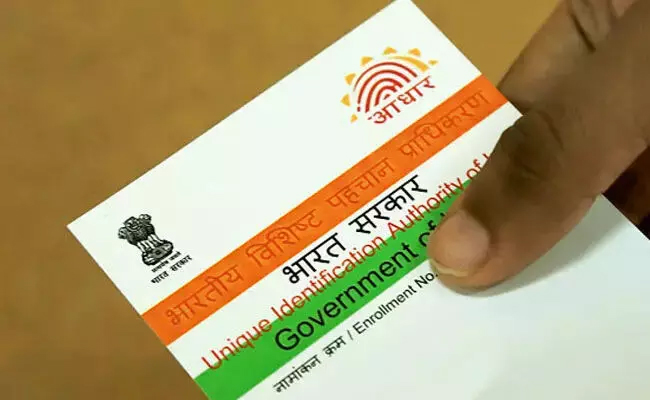
New Delhi (PTI): The Supreme Court is scheduled to hear on Monday a plea seeking a direction to the Unique Identification Authority of India to issue new Aadhaar cards only to citizens up to the age of six years, and frame stringent guidelines for its issuance to adolescents and adults to stop infiltrators from masquerading as Indian citizens.
As per the apex court's causelist of May 4, the plea would come up for hearing before a bench of Chief Justice Surya Kant and Justice Joymalya Bagchi.
The Public Interest Litigation (PIL) filed by lawyer Ashwini Upadhyay has also sought a direction to the authorities to install display boards at common service centres stating that the 12-digit unique identification number is only a "proof of identity" and not a proof of citizenship, address or date of birth.
Besides all the states and Union Territories, the plea has made the UIDAI -- which is the authority that issues Aadhaar -- and the Union ministries of home, law and justice, and electronics and information technology as parties.
The plea, filed through advocate Ashwani Dubey, said Aadhaar, originally intended as a proof of identity, has increasingly become a "foundational document" enabling individuals to obtain other identification documents, such as ration cards, domicile certificates and voter identity cards.
"The UIDAI has issued 144 crore Aadhaar and 99 percent Indians have been enrolled. Therefore, the petitioner is filing this writ petition as a PIL under Article 32, seeking a direction to UIDAI to issue new Aadhaar to children only and frame new stringent guidelines for adolescents and adults, so as to stop infiltrators from getting it and masquerading as Indian citizens," the plea said.
It said the need to file the plea arose when the petitioner came to know the manner in which infiltrators are able to procure Aadhaar through a verification process that is weak and can be easily manipulated.
"Foreigners apply for Aadhaar under the 'foreign' category. But infiltrators apply for Aadhaar under the 'Indian citizen' category and get it easily made. Thereafter, they obtain a ration card, birth and domicile certificate, driving licence, et cetera, essentially becoming indistinguishable from Indian citizens…," it said.
Besides seeking other directions, the plea has raised legal questions, including whether the Aadhaar Act 2016 has become "temporally unreasonable" for failing to keep up with the legislative intent of distinguishing foreigners from Indian citizens.
It said the alleged misuse of Aadhaar undermines targeted welfare delivery and leads to diversion of public resources.