Russia offers India help in leasing and building large-capacity ships to overcome G7's oil price cap
Moscow, (PTI): Russia has welcomed India's decision to not support the price cap on Russian oil announced by G7 and its allies and offered it cooperation on leasing and building large-capacity ships to overcome the ban on insurance services and tanker chartering in the European Union and Britain to continue buying discounted oil.
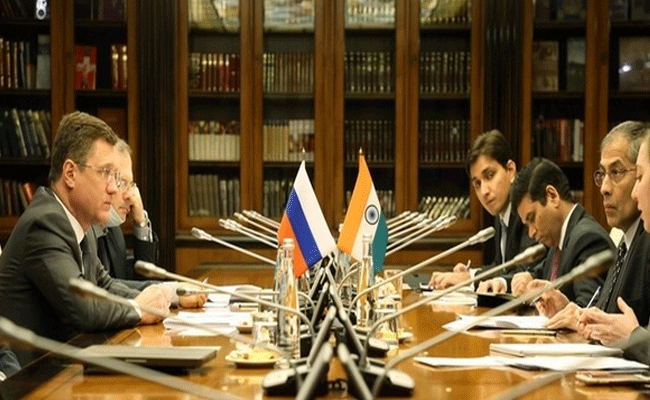
The offer came as Russian Deputy Prime Minister Alexander Novak held a meeting with the Indian Ambassador to Moscow, Pavan Kapoor, on Friday.
"The Deputy Prime Minister welcomed India's decision not to support the price cap on Russian oil, which was imposed on December 5 by the G7 countries and their allies," the Russian Foreign Ministry said in a statement.
India's appetite for Russian oil has swelled ever since it started trading on discount as the West shunned it to punish Moscow for its invasion of Ukraine.
Novak noted that even amid the energy crisis, Russia is responsibly fulfilling its contractual obligations for the supply of energy resources, diversifying energy exports to the countries in the East and South.
To avoid dependency on the ban on insurance services and tanker chartering in the European Union and Britain, Novak offered India cooperation on leasing and building large-capacity ships, the statement said.
The Indian government has been vehemently defending its oil trade with Russia, saying it has to source oil from where it is the cheapest.
The imports in November were made ahead of a price cap agreed by the EU on Russian seaborne oil.
But, the government has indicated that oil companies will continue to buy oil from Russia outside the price cap.
External Affairs Minister S Jaishankar on December 7 told the Rajya Sabha that Indian refiners will continue to look for the best deals in the interest of the country.
"We do not ask our companies to buy Russian oil. We ask our companies to buy oil (based on) what is the best option that they can get. Now, it depends on what the market throws up," he had said while replying to clarifications sought by MPs on his suo moto statement on foreign policy.
The companies will go after sources that are more competitive, Jaishankar added.
"Please do understand it's not just we buy oil from one country. We buy oil from multiple sources, but it is a sensible policy to go where we get the best deal in the interests of the Indian people, and that is exactly what we are trying to do," he said.
The executive body of the European Union has asked its 27 member countries to cap the price of Russian oil at USD 60 a barrel as part of the West's attempt to squeeze Moscow's oil revenues and limit its ability to wage war in Ukraine while keeping global prices and supplies steady.
From December 5, western shipping and insurance companies are prohibited from handling Russian oil sold above the price cap.
However, ships loaded with Russian oil before December 5 and unloaded at their destination before January 19, will not be subject to the price cap.
A top government official said India can continue to buy Russian oil if it can send ships, cover insurance and devise a mode of payment.
"The introduction of a price cap on Russian oil is an anti-market measure. It disrupts supply chains and could significantly complicate the situation in global energy markets," Novak said.
"Such non-market mechanisms disrupt the international trading system as a whole and set a dangerous precedent in the energy market. As a result, the problem of energy poverty is being aggravated not only in the developing world, but also in the developed countries of Europe," Novak said.
The two sides noted the record growth in trade between the two countries and expressed the desire to continue this interaction, increasing cooperation on trade in energy resources, such as oil, petroleum products, liquefied natural gas, coal and fertiliser.
In 2021, bilateral trade between Russia and India increased by 46.5 per cent, exceeding USD 13.5 billion, the Russian Foreign Ministry statement said.
In January-September 2022, trade exceeded the figure for all of last year, totalling USD 20.4 billion.
Over the first eight months of 2022, Russian oil exports to India grew to 16.35 million tonnes. Deliveries of oil products and coal also increased.
Meanwhile, Russia has for the second month in a row remained India's top oil supplier in November, surpassing traditional sellers Iraq and Saudi Arabia, according to data from energy cargo tracker Vortexa.
Russia, which made up for just 0.2 per cent of all oil imported by India in the year to March 31, 2022, supplied 9,09,403 barrels per day (bpd) of crude oil to India in November, the Russian Foreign Ministry statement said.
It now makes up for more than a fifth of India's oil supplies.
Novak has also invited Minister of Petroleum and Natural Gas and Housing and Urban Affairs of India Hardeep Singh Puri to take part in the international forum, Russian Energy Week 2023, which will be held from October 11-13 next year in Moscow.
Let the Truth be known. If you read VB and like VB, please be a VB Supporter and Help us deliver the Truth to one and all.
Remarks against St Francis Xavier: Right-wing speaker Gautam Khattar gets bail
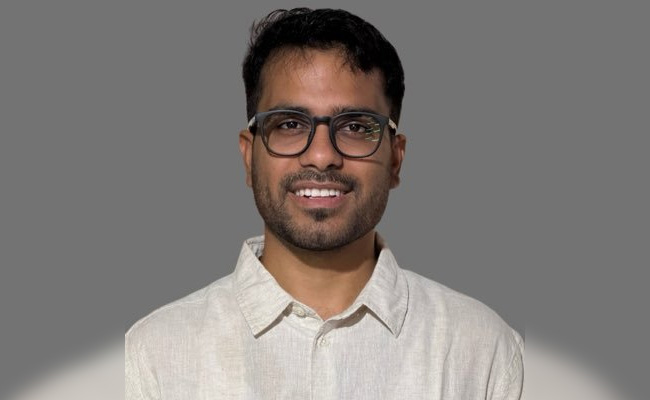
Panaji (PTI): A court in Goa on Saturday granted bail to right-wing speaker Gautam Khattar, who was arrested after he allegedly made derogatory comments against St Francis Xavier.
Judicial Magistrate First Class, Vasco, granted regular bail to Khattar, currently admitted to Goa Medical College and Hospital at Bambolim for treatment of chest pain after he was shifted from the District Hospital in Mapusa two days back.
A row erupted after a video of remarks by Khattar, the founder of Sanatan Mahasangh, at an event on April 18 in the presence of Swami Brahmeshanand, State Transport Minister Mauvin Godinho and BJP MLAs Sankulp Amonkar and Daji (Krishna) Salkar, went viral.
St Francis Xavier is revered as the patron saint of Goa.
The controversial remarks led to the Vasco Police registering an FIR against Khattar on charges of hurting religious sentiments and creating enmity between groups.
He was detained in Kullu, Himachal Pradesh, by local police. His custody was later handed over to the Goa Crime Branch, according to officials.