Russia to punish 'fake' war news, blocks Facebook, Twitter

Dusseldorf(AP): Russian President Vladimir Putin has intensified a crackdown on media outlets and individuals who fail to hew to the Kremlin line on the war in Ukraine, blocking Facebook and Twitter and signing into law a bill that criminalizes the intentional spreading of what Moscow deems to be fake reports.
The moves against the social media giants on Friday follow blocks imposed on the BBC, the US government-funded Voice of America and Radio Free Europe/Radio Liberty, German broadcaster Deutsche Welle, and Latvia-based website Meduza.
The government's sweeping action against the foreign outlets that publish news in Russian seeks to establish even tighter controls over what information the domestic audience sees about the invasion of Ukraine.
The state communications watchdog Roskomnadzor said it cut access to Twitter and Facebook in line with a decision by the prosecutor general's office. The watchdog has previously accused Twitter of failing to delete the content banned by Russian authorities and slowed down access to it.
The bill, quickly rubber-stamped by both houses of the Kremlin-controlled parliament and signed by Putin, imposes prison sentences of up to 15 years for those spreading information that goes against the Russian government's narrative on the war.
In response, multiple outlets said they would pause their work inside Russia to evaluate the situation. Among them, CNN said it would stop broadcasting in Russia while Bloomberg and the BBC said they would temporarily suspend the work of their journalists there.
Russian authorities have repeatedly decried reports of Russian military setbacks or civilian deaths in Ukraine as fake news. State media outlets refer to Russia's invasion of Ukraine as a special military operation rather than a war or an invasion.
Vyacheslav Volodin, the speaker of the lower house of parliament, said the measure "will force those who lied and made statements discrediting our armed forces to bear very grave punishment.
I want everyone to understand, and for society to understand, that we are doing this to protect our soldiers and officers, and to protect the truth, he added.
The law envisages sentences of up to three years or fines for spreading what authorities deem to be false news about the military, but the maximum punishment rises to 15 years for cases deemed to have led to severe consequences.
In blocking Facebook, Roskomnadzor cited its alleged discrimination of the Russian media and state information resources. The agency said in a statement that the restrictions introduced by Facebook owner Meta on the Russian news channel RT and other state-controlled media violate Russian law.
Nick Clegg, Meta's president of global affairs, tweeted in response to Russia's action that millions of ordinary Russians will find themselves cut off from reliable information, deprived of their everyday ways of connecting with family and friends and silenced from speaking out.
We will continue to do everything we can to restore our services so they remain available to people to safely and securely express themselves and organize for action, Clegg added.
The Russian media blocks on the five foreign media organisations are among the most influential and often critical foreign media publishing in Russian.
Roskomnadzor said those media had published false information on subjects including the methods of carrying out combat activities (attacks on civilians, strikes on civil infrastructure), the numbers of losses of the Russian Federation Armed Forces and victims among the civilian population.
BBC Director-General Tim Davie said the legislation appears to criminalize the process of independent journalism.
The safety of our staff is paramount and we are not prepared to expose them to the risk of criminal prosecution simply for doing their jobs, he said.
Davie said the BBC's Russian-language news service would continue to operate from outside Russia.
Earlier in the day, the BBC posted instructions on Twitter about how Russian readers could work around the block by using apps or the dark web."
Access to accurate, independent information is a fundamental human right which should not be denied to the people of Russia, millions of whom rely on BBC News every week. We will continue our efforts to make BBC News available in Russia, and across the rest of the world, the BBC said.
Earlier this week the BBC said it was bringing back shortwave radio transmission to Ukraine and parts of Russia so people can listen to its programs with basic equipment.
Some well-known media outlets within Russia have chosen to close rather than face heavy restrictions on what they can report. News website Znak said it was closing Friday morning, shortly after the parliament approved the draft bill.
On Thursday, Russia's top independent radio station Ekho Moskvy was closed and independent TV station Dozdh suspended operations after receiving a threat of closure from the authorities.
Let the Truth be known. If you read VB and like VB, please be a VB Supporter and Help us deliver the Truth to one and all.
Maharashtra sets up state vaccination task force to strengthen immunisation programme
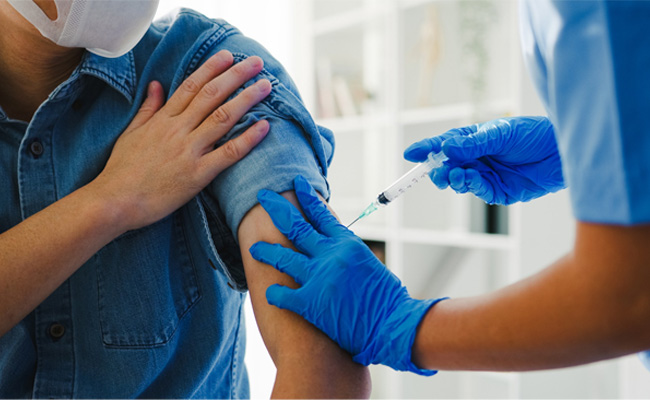
Mumbai (PTI): The Maharashtra government has set up a State Vaccination Task Force to strengthen the regular immunisation programme and review the progress of related campaigns, a health department official said on Monday.
The State Vaccination Task Force will comprise at least 29 members and will be headed by the administrative head of the health department, he informed.
The government has also constituted separate district-level and municipal vaccination task forces to improve implementation and address challenges at the grassroots level, he said.
Municipal task forces, chaired by respective civic commissioners, have been constituted in view of the vast urban population in Maharashtra and the role of civic bodies in implementing different health programmes.
The district-level task forces will function under the chairmanship of collectors.
"Complete immunisation of children at the appropriate age is an extremely simple, cost-effective and highly effective measure to reduce child mortality and the prevalence of diseases among kids. Immunisation is a powerful tool for reducing illness in children," maintained the official.
To ensure full vaccination of all children, the state government implements various campaigns from time to time as per the central government guidelines, he pointed out.
"Active participation and cooperation of other relevant government departments are essential (in making these campaigns successful)," according to the official.
The state-level body will review the regular immunisation programme, associated campaigns and vaccine-preventable diseases in detail. It will also conduct focused assessments of high-risk districts and municipal corporations, including vacancies at district, municipal and sub-district levels, availability of cold chain equipment, resource gaps and training requirements, he noted.
The state task force will review allocation and utilisation of funds for immunisation and ensure timely action by officers concerned based on reports from district and municipal task forces and state-level monitoring mechanisms, the official said.
It will also ensure active coordination and participation of other government departments in immunisation drives, while district and municipal task forces will carry out similar functions at their respective levels, the official added.