Russia will provide unspecified 'special' military equipment to Pakistan: Sergey Lavrov
Islamabad, Apr 7: Russia will provide unspecified "special" military equipment to Pakistan, Foreign Minister Sergey Lavrov said on Wednesday as the two bitter Cold War rivals agreed to step up cooperation to fight terrorism and conduct joint naval and land exercises.
Lavrov, the first Russian foreign minister to visit Pakistan in nearly a decade, made the remarks at a joint press conference with his Pakistani counterpart Shah Mahmood Qureshi after holding delegation-level talks during which they agreed to further promote bilateral cooperation in the field of economy, trade, security, including counter-terrorism and defence.
"We stand ready to strengthen the anti-terrorist potential of Pakistan, including by supplying Pakistan with special military equipment," Lavrov said, without giving the details of the Russian equipment.
"This is in the interest of all states of the region, he said, adding that both the sides have agreed to further conduct military exercises and drills.
Russia and Pakistan have been holding annually the joint exercise - DRUZHBA since 2016. In October 2016, they held their first-ever joint military exercise in Pakistan.
Russia in the past said India should not be worried about its relationship with Pakistan and Moscow is committed to developing ties with Islamabad as it is a member of the Shanghai Cooperation Organisation (SCO).
It had said the military drills with Pakistan were part of the counter-terror framework and such collaborations including experience sharing and capacity building is natural for all the SCO member states.
The SCO is an eight-nation bloc which is largely dominated by Russia and China, and is being increasingly seen as a counterweight to NATO. India and Pakistan became permanent members of the Shanghai Cooperation Organisation in 2017.
Lavrov also said that Russia was committed to promote bilateral cooperation with Pakistan in diverse fields including economy, trade and defence.
Pakistan's defence ties with Russia have moved past the bitter Cold War hostilities in recent years and the chill in the relations between Pakistan and the US has further pushed the country towards Russia and China.
Over the past few years, Russia has supplied Mi-35M combat and cargo helicopters to Pakistan, which has shown eagerness to build defence level ties with Moscow.
Later in the day, Lavrov, who arrived here from India on Tuesday on a two-day official visit with the objective to deepen cooperation in different fields, called on Pakistan Army chief General Qamar Javed Bajwa. They discussed matters of mutual interest including enhancing defence and security cooperation, regional security, particularly Afghan Peace Process.
"We have no hostile designs towards any country and will keep on working towards a cooperative regional framework based on sovereign equality and mutual progress," Gen Bajwa told Lavrov, according to a statement by the Army.
The powerful Army chief said that Pakistan values its relations with Russia and reciprocates the desire for enhanced bilateral military cooperation.
He also offered support for efforts to bring peace in Afghanistan. Pakistan welcomes all initiatives which can bring peace and stability in Afghanistan as the whole region will benefit from it, he said.
Lavrov met Bajwa on the last day of his two-day visit.
Let the Truth be known. If you read VB and like VB, please be a VB Supporter and Help us deliver the Truth to one and all.
Allahabad HC orders probe into 'reinstatement' of teacher in UP's Barabanki
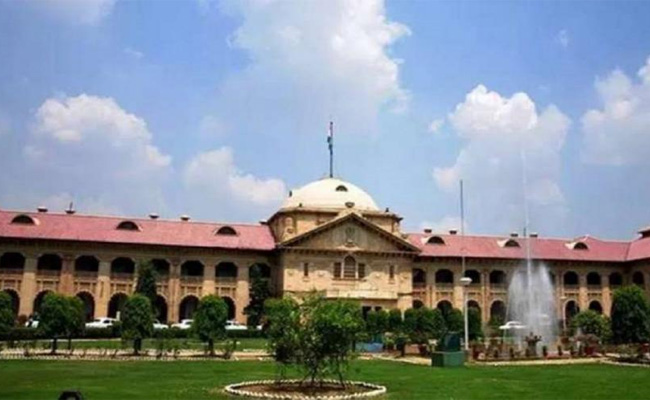
Lucknow (PTI): The Lucknow Bench of the Allahabad High Court on Friday ordered a probe by the special task force (STF) into alleged irregularities in the rejoining of a teacher at City Intermediate College in Barabanki, observing that the reinstatement appeared to be prima facie illegal.
The court also directed the recovery of the salary paid to the teacher during the disputed period.
A bench of Justice Rajeev Singh passed the order on a petition filed by the college management committee. The court expressed doubts over the roles of the District Inspector of Schools (DIOS), Barabanki, the college principal and the teacher concerned and hence, directed a detailed inquiry into the matter.
Taking note of alleged manipulation of records and misleading submissions, the court ordered the immediate transfer of the Barabanki DIOS to ensure a fair probe. It also directed the initiation of disciplinary proceedings against the then joint director of education of the Ayodhya division.
In its order, the court found that the teacher, Abhay Kumar, was initially appointed as an assistant teacher in 2018 but joined an Eklavya Model Residential School in Chhattisgarh as a lecturer in June 2024 without obtaining permission from the management. His subsequent request to retain the lien was rejected.
Despite this, he was allowed to rejoin the Barabanki College in September 2025 on the directions of the joint director of education and the DIOS, and was even paid the salary for October 2025. The court termed the rejoining "wholly illegal" and lacking any legal basis.
The bench also expressed concern over lapses in communication within the education department and directed the Uttar Pradesh chief secretary to ensure that official orders are communicated through email and WhatsApp as well, to prevent disputes.
The matter is next listed for hearing on May 28 when a compliance report is sought.