Russian 'spy whale' in Norway wasn't shot to death: Police
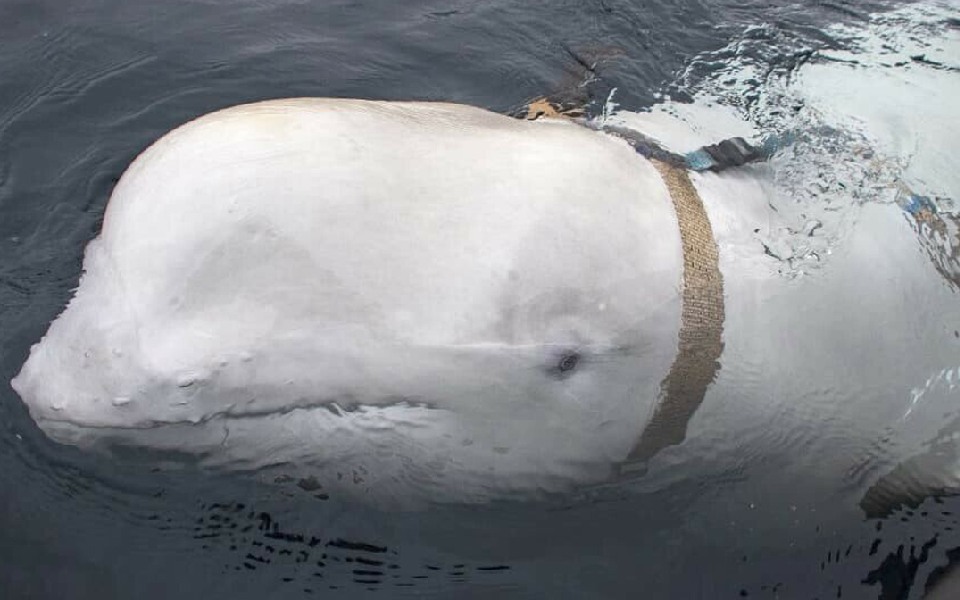
Copenhagen (Denmark), Sep 9: There's no evidence that a well-known beluga whale that lived off Norway's coast and whose harness ignited speculation it was a Russian spy was shot to death last month as claimed by animal rights groups, Norwegian police said on Monday.
The tame beluga, which was first spotted in 2019 not far from Russian waters with a harness reading “Equipment St. Petersburg", was found floating at the Risavika Bay in southern Norway on August 31.
Experts examined the carcass at a nearby harbour, after lifting it with a crane.
Animal advocate groups OneWhale and NOAH last week filed a police report saying that the animal's wounds suggested it was intentionally killed. OneWhale founder Regina Haug said when she saw the carcass, she “immediately knew he had been killed by gunshots”.
That's not the conclusion so far from veterinarians.
Police said that the Norwegian Veterinary Institute conducted a preliminary autopsy on the animal, which was become known as “Hvaldimir", combining the Norwegian word for whale — hval — and the first name of Russian President Vladimir Putin.
“There are no findings from the autopsy that indicate that Hvaldimir has been shot," police said in a statement.
Most of the animal's visible wounds were “completely superficial” with one of them “somewhat deeper” but not fatal or affecting vital organs, police said. An x-ray found no projectiles and no indication that the wounds could have been caused by gunshots, the statement said.
However, a stick about 35 centimeters (14 inches) long and 3 centimeters (1 inch) wide was found wedged in the animal's mouth, and its stomach was empty and its organs had broken down, police said. No further details were given.
“There is nothing in the investigations that have been carried out to establish that it is human activity that has directly led to Hvaldimir's death," said Preede Revheim, head of the North Sea and environment section of the police in South Western Norway.
Revheim said that police will not be actively investigating the case and that the final autopsy report will released later this month.
The two animal rights groups said on Monday they're not satisfied with the preliminary results and want the police investigation to continue, offering 50,000 kroner (USD 4,661) for any tips that could reopen the case.
The 4.2-metre (14-foot) long and 1,225-kilogram (2,700-pound) whale was first spotted by fishermen near the northern island of Ingoeya, not far from the Arctic town of Hammerfest.
Its harness, along with what appeared to be a mount for a small camera, led to media speculation that it was a "spy whale”. Over the years since 2019, it was seen in several Norwegian coastal towns and it became clear it was very tame and enjoyed interacting with people.
Experts say the Russian navy is known to have trained whales for military purposes. Media reports also have speculated that the whale might have been trained as a therapy animal.
Let the Truth be known. If you read VB and like VB, please be a VB Supporter and Help us deliver the Truth to one and all.
CM Siddaramaiah alleges ‘criminal conspiracy’ in Sringeri recount, vows legal action
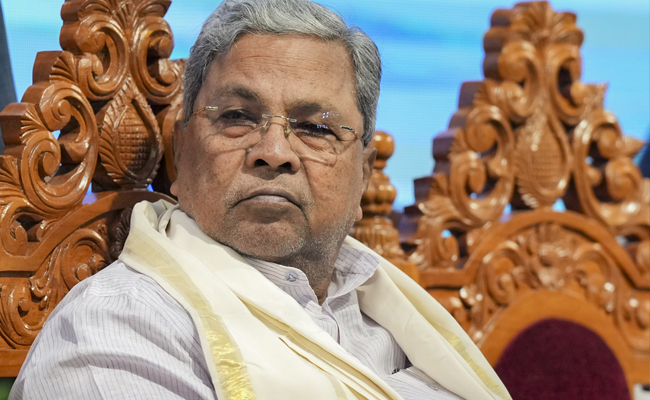
Bengaluru (PTI): Alleging a “criminal conspiracy” by BJP candidate D N Jeevaraj in the Sringeri Assembly poll recounting, Karnataka CM Siddaramaiah on Tuesday said the outcome was manipulated after valid postal ballot votes in favour of Congress leader T D Raje Gowda were tampered with during the recounting process.
Following a Karnataka High Court order on an election petition filed by Jeevaraj, challenging Raje Gowda’s election, the reverification and recounting were conducted on Saturday.
After the reverification and recount of postal ballots for the Sringeri Assembly constituency, votes polled in favour of Raje Gowda were reduced by 255, the returning officer said.
A report on the matter has been submitted to the Election Commission of India for further action, the officer added.
Congress leader Raje Gowda had won the 2023 Assembly polls from Sringeri by 201 votes, defeating his nearest rival Jeevaraj.
Addressing a press conference in Bengaluru, Siddaramaiah said the High Court had directed the recounting of postal ballots and that irregularities were noticed during the exercise conducted on May 2.
“This is a clear case of criminal conspiracy,” Siddaramaiah said, alleging that valid votes cast in favour of Raje Gowda were altered after being accepted by counting agents of all parties, including Congress, BJP, and JD(S).
He claimed that during the recounting of postal ballots, 255 votes were initially accepted as valid by all agents but were later tampered with by subordinate officials.
“There is a second mark on the votes polled in favour of Raje Gowda. They had accepted these as valid votes. Subsequently, another mark was made by officials. This is a clear case of criminal conspiracy,” he said.
When asked who was behind the alleged conspiracy, the CM replied, “It was hatched by Jeevaraj and others. It is planned.”
Siddaramaiah further alleged that the returning officer acted improperly by declaring the result despite the presence of an Election Commission observer during the recounting.
“Immediately after the counting, the returning officer announced the result. He should not have done so; this is against the law,” he said.
He pointed out that Raje Gowda had originally won by 201 votes, but after the recounting, the BJP candidate was declared the winner by 52 votes.
“The BJP has committed a criminal act of conspiracy. This is not vote chori but vote dacoity,” he alleged.
The CM said a police complaint had already been filed by Raje Gowda’s election agent, Sudhir Kumar, and emphasised the need for electoral integrity.
“We want transparency and free and fair elections. That is what our Constitution mandates,” he added.
Stating that the government would pursue legal remedies, Siddaramaiah said, “We are preparing an appeal challenging the returning officer’s announcement in a court of law.”
Responding to a separate query on elections in other states, the CM said there appeared to be an anti-incumbency factor in West Bengal, while results in Tamil Nadu were “surprising,” adding that Vijay’s party was emerging as the largest there.
Following the victory of party candidates in Bagalkote and Davanagere South, Siddaramaiah expressed confidence about future electoral prospects in Karnataka.
“Even in 2028, we will win the Assembly elections. We will come back,” the CM said.
Siddaramaiah added that he would order a forensic examination into the alleged tampering of postal ballots.