Russian strike on village kills 50, Ukrainian officials say, as Zelenskyy seeks more Western support
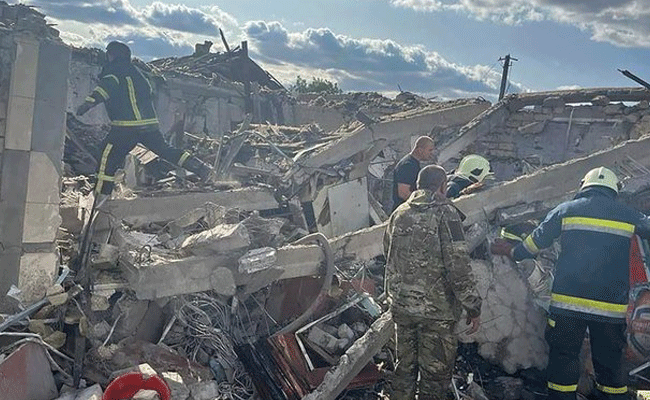
Kyiv (AP): A Russian rocket struck a village cafe and store in eastern Ukraine on Thursday and killed at least 50 civilians in one of the deadliest attacks in months, according to President Volodymyr Zelenskyy and other top officials in Kyiv.
The attack came as Zelenskyy attended a summit of about 50 European leaders in Spain to drum up support from Ukraine's allies.
He denounced the attack in the village of Hroza as a "demonstrably brutal Russian crime" and "a completely deliberate act of terrorism".
Presidential chief of staff Andrii Yermak and Kharkiv Gov Oleh Syniehubov said a 6-year-old boy was among the dead, adding that seven other people were wounded. Hroza, which had a population of about 500 before the war, is located in the northeastern Kharkiv region.
About 60 people were in the cafe were attending a wake after a funeral, said Internal Affairs Minister Ihor Klymenko, speaking on national TV.
According to preliminary information from Kyiv, the village was struck by an Iskander missile. Emergency crews were searching the rubble of damaged buildings.
Ukrainian prosecutors released pictures showing bloodied bodies and emergency workers combing through the building's smoldering debris.
Hroza and other parts of the eastern Kharkiv region were seized by Russia early in the war and recaptured by Ukraine in September 2022. The village is located only 30 km (19 miles) west of Kupiansk. Zelenskyy had visited the area Tuesday to meet with troops and inspect equipment supplied by the West.
On Thursday, Zelenskyy was at a summit of the European Political Community in Granada, Spain, where he asked for more Western support, saying that "Russian terror must be stopped."
"Russia needs this and similar terrorist attacks for only one thing: to make its genocidal aggression the new norm for the whole world," he said in a statement posted on his Telegram channel. "Now we are talking with European leaders, in particular, about strengthening our air defence, strengthening our soldiers, giving our country protection from terror. And we will respond to the terrorists."
"The key for us, especially before winter, is to strengthen air defence, and there is already a basis for new agreements with partners," he told the group, which was formed in the wake of Russia's full-scale invasion of Ukraine in February 2022.
Last winter, Russia targeted Ukraine's energy system and other vital infrastructure in a steady barrage of missile and drone attacks, triggering continuous power outages across the country. Ukraine's power system has shown a high degree of resilience and flexibility, helping alleviate the damage, but there have been concerns that Russia will again ramp up its strikes on power facilities as winter draws nearer.
Zelenskyy noted the Granada summit will also focus on "joint work for global food security and protection of freedom of navigation" in the Black Sea, where the Russian military has targeted Ukrainian ports after Moscow's withdrawal from a UN-sponsored grain deal designed to ensure safe grain exports from the invaded country's ports.
The UK Foreign Office cited intelligence suggesting that Russia may lay sea mines in the approach to Ukrainian ports to target civilian shipping and blame it on Ukraine.
"Russia almost certainly wants to avoid openly sinking civilian ships, instead falsely laying blame on Ukraine for any attacks against civilian vessels in the Black Sea," it said, adding that the U.K. was working with Ukraine to help improve the safety of shipping.
Speaking in Granada, Zelenskyy emphasized the need to preserve the European unity in the face of Russian disinformation and to remain strong amid what he described as a "political storm" in the United States.
Asked if he was worried that support for Ukraine could falter in the US Congress, the Ukrainian president stressed that his visit to Washington last month made him confident of strong backing by both the Biden administration and Congress.
Zelenskyy called for "additional air defense system for Ukraine, additional artillery and shells, additional long-range missiles and drones for our soldiers, as well as additional formats of support and security guarantees for nations threatened by Russia" to help protect Europe from potential aggression by Moscow.
Earlier Thursday, Russia targeted Ukraine's southern regions with drones. Ukraine's air force said that the country's air defences intercepted 24 out of 29 Iranian-made drones that Russia launched at the Odesa, Mykolaiv and Kirovohrad regions.
Andriy Raykovych, head of the Kirovohrad regional administration, said an infrastructure facility in the region was struck and emergency services were deployed to extinguish a fire, but there were no casualties.
In other Russian attacks in the past day, two civilians were killed by shelling in the southern city of Kherson and one died after a strike on the city of Krasnohorivka in the eastern Donetsk region. At least eight people were wounded, according to Ukraine's presidential office.
A Russian strike on a hospital in the city of Beryslav in the Kherson region ravaged the building and wounded two medical workers, according to the regional administration chief, Oleksandr Prokudin.
Ukraine, in turn, has struck back at Russia with regular drone attacks across the border.
In Russia's Kursk region that borders Ukraine, Gov Roman Starovoit said that Ukrainian drones attacked infrastructure facilities in several areas, resulting in power cuts. He also said that Ukrainian forces fired artillery at the border town of Rylsk, wounding a resident and damaging several houses.
Let the Truth be known. If you read VB and like VB, please be a VB Supporter and Help us deliver the Truth to one and all.
Remarks against St Francis Xavier: Right-wing speaker Gautam Khattar gets bail
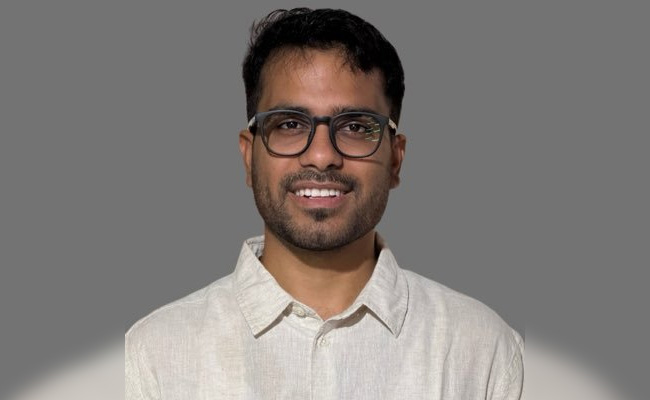
Panaji (PTI): A court in Goa on Saturday granted bail to right-wing speaker Gautam Khattar, who was arrested after he allegedly made derogatory comments against St Francis Xavier.
Judicial Magistrate First Class, Vasco, granted regular bail to Khattar, currently admitted to Goa Medical College and Hospital at Bambolim for treatment of chest pain after he was shifted from the District Hospital in Mapusa two days back.
A row erupted after a video of remarks by Khattar, the founder of Sanatan Mahasangh, at an event on April 18 in the presence of Swami Brahmeshanand, State Transport Minister Mauvin Godinho and BJP MLAs Sankulp Amonkar and Daji (Krishna) Salkar, went viral.
St Francis Xavier is revered as the patron saint of Goa.
The controversial remarks led to the Vasco Police registering an FIR against Khattar on charges of hurting religious sentiments and creating enmity between groups.
He was detained in Kullu, Himachal Pradesh, by local police. His custody was later handed over to the Goa Crime Branch, according to officials.