Sadiq Khan wins second term as London Mayor, hails overwhelming mandate
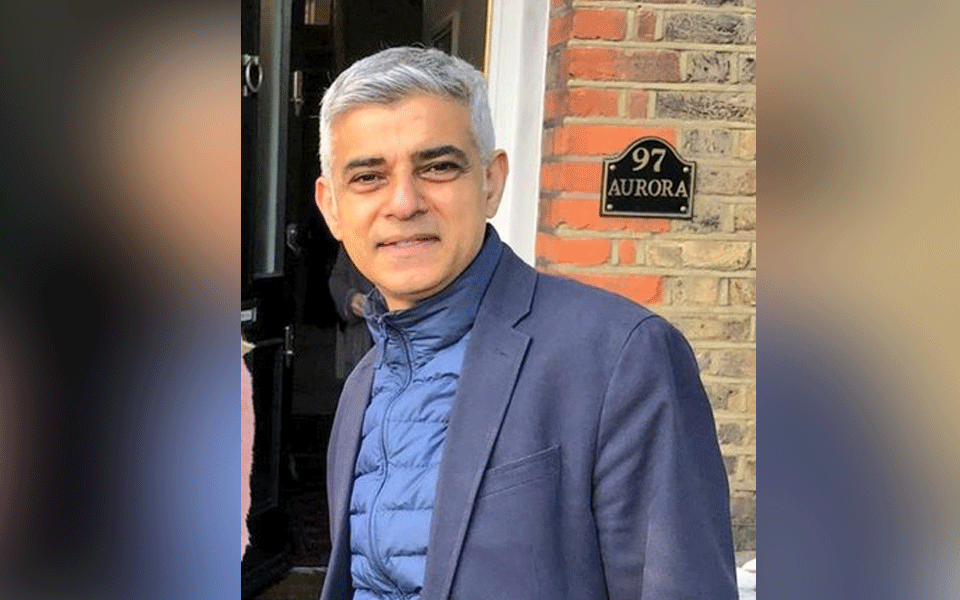
London: Sadiq Khan has been re-elected as Mayor of London for a second term after beating his closest rival with a vote share of 55.2 per cent versus 44.8 per cent in an election that was closer than expected.
Labour Party candidate Khan, 51, defeated his Conservative Party rival, Shaun Bailey, after winning a total of 1,206,034 votes as against 977,601 when both first and second preference votes from Thursday's mayoral election were fully counted overnight on Saturday.
The Pakistani-origin former Labour member of Parliament was the first Muslim mayor of a European capital city when he was first elected in 2016. The mayoral poll was due last year but was postponed by a year at the peak of the coronavirus pandemic in 2020.
"I am deeply humbled by the trust Londoners have placed in me to continue leading the greatest city on earth," said Khan.
"I promise to strain every sinew, help build a better and brighter future for London, after the dark days of the pandemic and to create a greener, fairer and safer city for all Londoners, to get the opportunities they need to fulfil their potential. I am proud to have won an overwhelming mandate today," he said, speaking at his City Hall office.
Khan reiterated his previous pledge to be a mayor for all Londoners and work to improve the lives of every single person in this city.
"The results of the elections around the UK shows our country, and even our city, remains deeply divided. The scars of Brexit have yet to heal. A crude culture war is pushing us further apart," he said.
"As we seek to confront the enormity of the challenge ahead, and as we endeavour to rebuild from this pandemic, we must use this moment of national recovery to heal those damaging divisions," he added.
Rival Bailey said he had been "written off" by pollsters, journalists and other politicians but Londoners didn't write me off".
His victory is one of the few positives for the Labour Party as the party held on to its dominance in the London Assembly as well. Labour also kept hold of its mayoralty in Greater Manchester, where Andy Burnham was re-elected in a landslide win.
However, overall the local election performance has been largely dismal for the Opposition party as it lost many of its strongholds. The Conservatives have gained control of around 12 councils and the Labour has lost control of seven and the Labour failed in its attempt to oust Conservative Andy Street as the popular mayor of the West Midlands.
UK Environment Secretary George Eustice said the Labour had been punished in Leave-voting areas by "wrangling" over Brexit in recent years. The Boris Johnson led Conservatives are also seen to have benefitted from the successful roll-out of vaccines against COVID-19.
The polls were seen as the first major leadership test for Labour leader Sir Keir Starmer, who took over from Jeremy Corbyn after a disastrous December 2019 general election defeat.
He reacted by dramatically dismissing his deputy leader Angela Rayner, who was also the party's local election campaign chair. Starmer, who said he takes full responsibility for his party's poll setback, is set to reshuffle his top team further.
Let the Truth be known. If you read VB and like VB, please be a VB Supporter and Help us deliver the Truth to one and all.
India-bound LPG tanker clears Hormuz
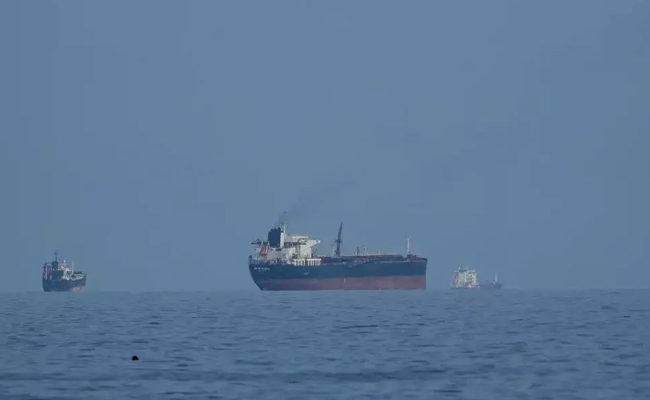
New Delhi (PTI): A tanker carrying liquefied petroleum gas (LPG) for India has sailed out of the Strait of Hormuz and is now headed towards the country, an official statement said on Sunday.
The Marshall Islands-flagged LPG carrier MT Sarv Shakti, loaded with 46,313 tonnes of LPG and staffed by 20 crew, including 18 Indians, cleared the key shipping chokepoint on May 2 and is expected to reach Visakhapatnam on May 13, it said.
The cargo -- enough to meet half a days requirement of the country -- will partly tide over supply constraints being faced since the start of the West Asia conflict more than two months back.
Ship-tracking data showed its position in Oman Gulf on Sunday evening.
The very large gas carrier has previously made runs between the Persian Gulf and Indian ports, has been chartered by state-owned Indian Oil Corporation (IOC).
Sarv Shakti is the first India-linked tanker to cross the war zone since a weeks-old US blockade of ships tied to Iran began, pushing transits through Hormuz back down to almost zero.
There are as many as 14 Indian flagged or India-owned vessels still stranded on the west side of the Strait of Hormuz.
The statement said no incident involving Indian-flagged vessels has been reported in the past 24 hours. The Ministry of Ports, Shipping and Waterways is working closely with the Ministry of External Affairs, Indian missions and maritime stakeholders to ensure crew welfare and uninterrupted operations.
The Directorate General of Shipping (DG Shipping) control room has handled 8,373 calls and more than 17,965 emails since activation, including 38 calls and 127 emails in the last 24 hours.
India has also facilitated the repatriation of more than 2,953 seafarers so far, including 31 in the past day from across the Gulf region.
Port operations across the country remain normal with no congestion reported, the statement added.