Safety, efficacy main concerns with Russia's COVID-19 vaccine: Nobel laureate Peter Doherty
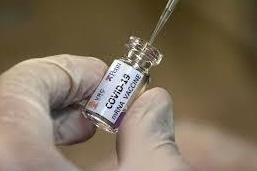
Kolkata: Echoing the scientific community's scepticism over Russia's COVID-19 vaccine rolled out for emergency use, Nobel laureate Peter Charles Doherty says his big worry is there could be refusals for other vaccines if doubts over its safety turn out to be true.
Russian President Vladimir Putin last week announced that his country has developed the world's first vaccine against COVID-19, which works "quite effectively" and forms "stable immunity" against the disease. He also disclosed that one of his daughters has already been given the vaccine, named Sputnik V.
"The main concern is if any major safety issues emerge, My bet is that they won't, but that's a guess and, if there is a safety issue, the big worry is that this could cause more vaccination refusal for other vaccines that are made using very different approaches," Doherty told PTI from Melbourne in an email interview.
Sputnik V has been developed by the Gamaleya Research Institute of Epidemiology and Microbiology along with the Russian Direct Investment Fund (RDIF). The vaccine has not been tested in Phase 3 or larger clinical trials.
The Nobel laureate, who is with the Department of Microbiology and Immunology at the Doherty Institute, University of Melbourne, also believes that India with its "great track record in low cost drug manufacturing" can be a major player.
"Given India's great track record in low cost drug and vaccine manufacture, we expect that India will be a major player. This is, after all, the fastest way to return global economic activity," said Doherty, who was awarded the Nobel Prize for Medicine in 1996 for his discovery of how the body's immune system distinguishes virus-infected cells from normal ones.
The Sputnik V vaccine consists of two shots that use different versions of adenoviruses -- virus types some of which cause the common cold -- that the manufacturers have engineered to carry the gene for the surface protein, or spike, of SARS-CoV-2 that causes COVID-19.
"We understand that the Russian vaccine is a prime/boost with two virus-vector products using Ad-26 and Ad-5. These adenoviruses both cause infections in humans and there could be an issue with pre-existing antibody diminishing vaccine efficacy," Doherty explained. This is a well-established strategy, and one major US group is also well ahead with an Ad-5 vectored vaccine, he said.
He said Russians are evidently in the process of doing a clinical trial, so it is to be seen how quickly they move forward from that. "The main issues with Sputnik V and, indeed, any SARS-CoV-2 vaccine, are safety and efficacy," he added.
Asked whether the world needed a drug to be invented at the moment rather than a vaccine to fight COVID-19, the Nobel laureate said, "A vaccine is a cheapest and quickest way forward but, if that doesn't work (and to treat people anyway) we need specific antiviral drugs.
"I understand that this work is being done, but there is little public information to date. Also, a possibility are monoclonal antibodies, like those being made by Regeneron in the USA."
Monoclonal antibodies are made by identical immune cells which are all clones belonging to a unique parent cell.
Doherty said he is also very aware that vaccines being prepared with the sponsorship of the Switzerland-based Coalition for Epidemic Preparedness Innovations (CEPI) will be made available to poorer countries.
"One of these is the University of Queensland (UQ) protein clamp vaccine developed by Professor Paul Young's group that should be going into Phase 2 clinical trials after a Phase 1 trial that was initiated in July, he said.
"Apart from being given to Australians and people in the Pacific states, a priority will be to deliver this to the poorer countries because this was developed under the auspices of the CEPI. The CSL (Commonwealth Serum Laboratories) company can make 100 million doses of the UQ vaccine a year in Australia," the 79-year-old said.
The WHO and major vaccine companies are also committed to the necessity that everyone across the globe should be offered vaccination, he added.
Vaccine testing typically begins with lab and animal model studies before going on to different stages of human trials.
The human testing phase comprises many phases. Phase 1 trials are small-scale, usually involving a few participants, to assess whether the vaccine is safe for humans. Phase 2 trials often involve several hundred subjects, and mainly evaluate the efficacy of the vaccine against the disease. The final, Phase 3, involves thousands of people to further assess the efficacy of the vaccine over a defined period of time, and can last several months.
Let the Truth be known. If you read VB and like VB, please be a VB Supporter and Help us deliver the Truth to one and all.
India should create strategic buffers to navigate 'most difficult' energy shock: CEA Nageswaran
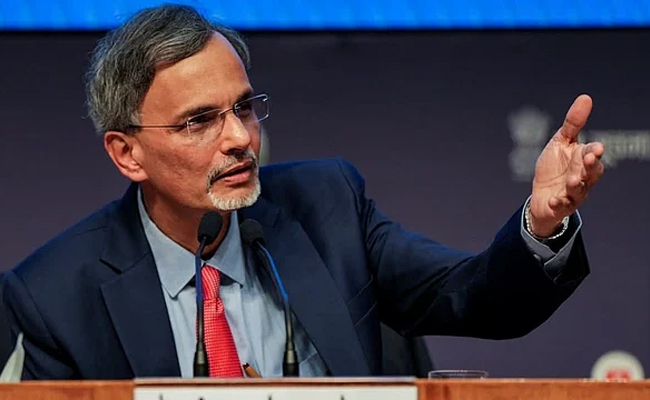
New Delhi (PTI): Chief Economic Advisor V Anantha Nageswaran on Saturday said India needs to create strategic buffers in the face of the "most difficult" energy shock that the country is facing amid the West Asia crisis.
Nageswaran also said the rising prices of fertiliser and petroleum products globally due to the crisis will make it challenging to achieve the 4.3 per cent fiscal deficit target for the current fiscal, while below normal monsoon and pass-through of higher energy prices could lead to "potential inflation spike".
He also said India has employment challenge emanating from AI, and there is a need to ensure that IT sector becomes more competitive and not lose jobs to AI, and instead create jobs that use AI within the IT sector or in other services.
Speaking at the ICPP Growth Conference organised by the Ashoka University, Nageswaran said the current account deficit (CAD) in the current fiscal could rise to over 2 per cent of GDP, from less than 1 per cent in FY'26.
"The ... priority for us is to create strategic buffers. This energy shock is the most difficult one compared to any other previous energy shock in terms of energy lost as a percentage of total global energy supply, not just oil, including gas.
"And we also need to use this occasion to think about other areas where we are vulnerable in terms of import dependence, nickel, tin, and copper. We need to build strategic buffers if we have to make a shot at manufacturing and becoming indispensable," Nageswaran said.
Since the beginning of the war in West Asia on February 28, crude oil prices soared to a four-year high of USD 126 per barrel on Thursday, from about USD 73 level before the war.
Stating that geopolitics will compel policymakers to be nimble and flexible and shed old model of thinking, Nageswaran said India is better prepared than many other countries to deal with the crisis because of the fiscal leeway that the country has due to lowering of fiscal deficit ratio to 4.4 per cent of GDP in FY'26.
Nageswaran said the West Asia conflict is more of a price shock than supply shock for India as the government is managing the supply side deftly.
"This particular conflict, which is going to be on a low simmer or a high flame situation, whatever it is, it is going to be there with us in some form or the other because the military conflict may be over, but the strategic conflict is well and truly alive. It will be so for some time," Nageswaran said.
He said the conflict has four channels of shock: price and supply shock, trade impact, sticky logistics costs and remittance shock.
India imports 60 per cent of its LPG usage and of that, 90 per cent flows through the now closed Strait of Hormuz.
Nageswaran said the pass-through of high global energy prices would have to be a "balancing act". He said some pass-through is already happening in commercial LPG, and the levy of export duty on diesel and ATF.
The government has cut excise duty on petrol and diesel to shield customers from the impact of the rise in petroleum prices. "We are coming around to arriving at a certain modus vivendi with respect to burden-sharing between the fiscal policy side, inflation, households and the oil marketing companies. So it has to be a balancing act," Nageswaran said.