Saudi detains three royal princes over 'coup plot': reports
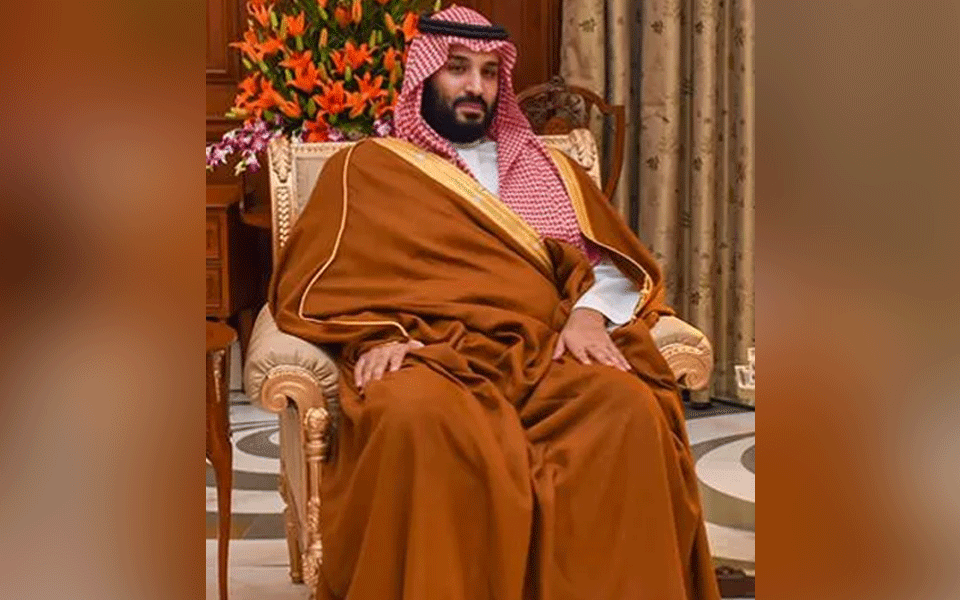
Riyadh: Saudi authorities have detained three princes including King Salman's brother and nephew on charges of plotting a coup, the US media reported Friday, signalling a further consolidation of power by the kingdom's de facto ruler.
The detentions cast aside the last vestiges of potential opposition to Crown Prince Mohammed bin Salman and come as the kingdom limits access to Islam's holiest sites in a highly sensitive move to contain the fast-spreading coronavirus.
Prince Ahmed bin Abdulaziz al-Saud, a brother of King Salman, and the monarch's nephew Prince Mohammed bin Nayef were accused of treason and taken from their homes early Friday by black-clad royal guards, the Wall Street Journal reported citing unnamed sources.
The Saudi royal court has accused the two men, once potential contenders for the throne, of "plotting a coup to unseat the king and crown prince" and could face lifetime imprisonment or execution, the newspaper said.
The New York Times also reported the detentions, adding that Prince Nayef's younger brother, Prince Nawaf bin Nayef, had also been detained.
Saudi authorities did not immediately respond to requests for comment.
The detentions mark the latest crackdown by Prince Mohammed, who has consolidated his grip on power with the imprisonment of prominent clerics and activists as well as princes and business elites.
Prince Mohammed has also faced a torrent of international condemnation over the murder of critic Jamal Khashoggi inside the kingdom's Istanbul consulate in October 2018.
Already viewed as the de facto ruler controlling all the major levers of government, from defence to the economy, the prince is widely seen to be stamping out traces of internal dissent before a formal transfer of power from his 84-year-old father King Salman.
"Prince Mohammed is emboldened -- he has already ousted any threats to his rise and jailed or murdered critics of his regime without any repercussion," Becca Wasser, a policy analyst at the US-based RAND Corporation, said of the latest crackdown.
"This is a further step to shore up his power and a message to anyone -- including royals -- not to cross him."
Prince Ahmed, said to be in his 70s, had returned to the kingdom from his base in London in the aftermath of the Khashoggi scandal, in what some saw as an effort to shore up support for the monarchy.
Just before his return in October 2018, the prince had courted controversy over remarks he made to protesters in London chanting against Saudi royals over the kingdom's involvement in the ongoing conflict in Yemen.
"What does the family have to do with it? Certain individuals are responsible... the king and the crown prince," he said, according to a widely-circulated online video of the incident.
The comment was seen by many as rare criticism of the kingdom's leadership and its role in Yemen, but Prince Ahmed dismissed that interpretation as "inaccurate".
Prince Mohammed had edged out Prince Nayef, the former crown prince and interior minister, in 2017 to become heir to the Arab world's most powerful throne.
At the time, Saudi television channels showed Prince Mohammed kissing the hand of the older prince and kneeling before him in a show of reverence.
Western media reports later said that the deposed prince had been placed under house arrest, a claim strongly denied by Saudi authorities.
The detentions come at a sensitive time as Saudi Arabia bars Muslim pilgrims from Islam's holiest sites to contain the novel coronavirus.
The kingdom has suspended the "umrah" year-round pilgrimage over fears of the disease spreading to Mecca and Medina, raising uncertainty over the upcoming hajj -- a key pillar of Islam.
The oil-rich kingdom is also grappling with the plunging price of crude, its major source of revenue.
Let the Truth be known. If you read VB and like VB, please be a VB Supporter and Help us deliver the Truth to one and all.
Sujit Nair raises concerns over speculation of DMK-AIADMK understanding to block TVK
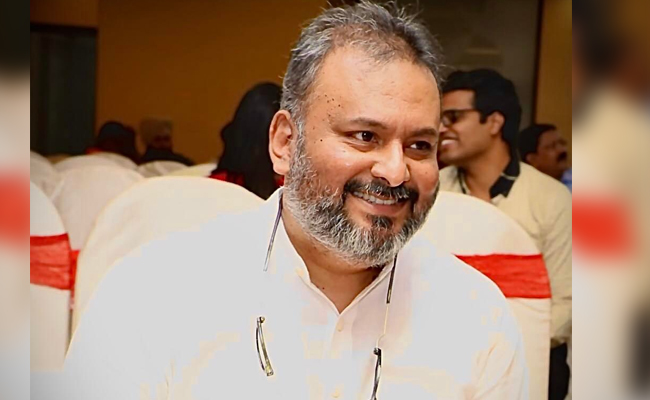
Chennai: Journalist and political commentator Sujit Nair has expressed concern over speculation that the Dravida Munnetra Kazhagam and the All India Anna Dravida Munnetra Kazhagam could explore a post-poll understanding to prevent Vijay-led Tamilaga Vettri Kazhagam from forming the government in Tamil Nadu.
In a social media post, Sujit Nair said the election verdict in Tamil Nadu reflected a clear public demand for political change and argued that the mandate should be respected irrespective of political preferences.
Referring to reports and political discussions surrounding a possible understanding between the DMK and AIADMK, he said he hoped such developments remained only speculative conversations and did not turn into reality.
Nair stated that if such an alliance were to take shape, it would raise serious questions about ideological politics in the country. He said TVK had emerged through a democratic electoral process and that the legitimacy to govern in a parliamentary democracy comes from the people’s verdict.
According to him, attempts to prevent an electoral winner from forming the government through unexpected political arrangements may be constitutionally valid, but many people could view them as politically opportunistic.
He further said that such a move could particularly affect the political image of the DMK, which has historically projected itself around ideology, social justice and opposition politics. Nair said that in ideological terms, the DMK appeared closer to TVK than to the AIADMK, and joining hands with its long-time political rival only to remain in power could weaken its broader political narrative.
He added that the same questions would apply to the AIADMK as well, as the party had spent decades positioning itself against the DMK and such an arrangement could create discomfort among its cadre and supporters.
Drawing a comparison with Maharashtra politics in 2019, Nair said he had expressed similar views when the Shiv Sena formed an alliance with the Indian National Congress and the Nationalist Congress Party after the Assembly elections.
He said post-poll alliances between long-standing political rivals often create a public perception that ideology and electoral mandates become secondary when political power equations come into play.
Nair also said such developments increase public cynicism towards politics and reinforce the belief among voters that ideology is often sidelined after elections.
He maintained that the Tamil Nadu verdict was emphatic and said respecting both the spirit and substance of the mandate was important for the credibility of democratic politics.