Saudi King reacts to Iranian President Ebrahim Raisi's death in helicopter crash
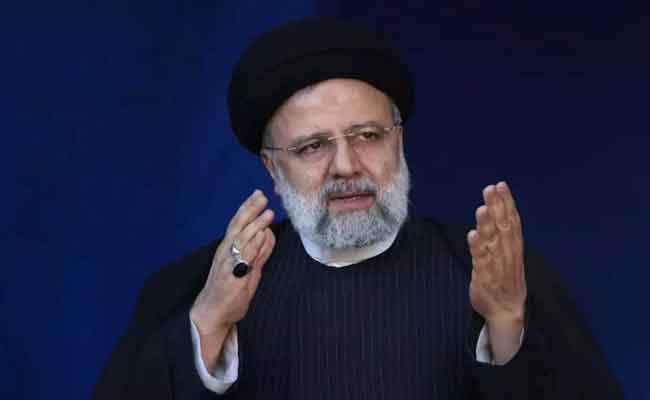
Tehran: Iranian President Ebrahim Raisi, considered a potential successor to the supreme leader, died in a helicopter crash in northern Iran, state media reported on Monday. He was 63.
The tragic incident occurred amidst heightened tensions in the Middle East, particularly due to the ongoing Israel-Hamas conflict. Last month, under the directive of Supreme Leader Ayatollah Ali Khamenei, Raisi had overseen an unprecedented drone-and-missile attack on Israel, further escalating regional unrest.
Raisi's death has prompted a wave of condolences from leaders around the world. Saudi King Salman bin Abdulaziz expressed his sympathy in a message to the new acting Iranian President Mohammad Mokhber. The Saudi Press Agency quoted King Salman saying, “As we send you and the brotherly people of the Islamic Republic of Iran our deepest and sincere condolences, let us ask God Almighty to cover them with His vast mercy and forgiveness, and to grant them peace. May his soul rest in peace. We belong to God and to Him we shall return.”
Egyptian President Abdel Fattah el-Sisi also extended his condolences following the deaths of Raisi and other Iranian officials in the crash. Syrian President Bashar al-Assad sent a cable to Khamenei, expressing "deep regret and condolences" over the incident. Al-Assad described Raisi’s death as a “great loss” and lauded his efforts to strengthen the strategic relations between Syria and Iran. He recalled Raisi’s visit to Syria as a significant milestone in their bilateral ties, praising the visions and ideas he had presented to enhance cooperation between their nations.
Iran has been a steadfast ally of al-Assad’s government since the 2011 uprising in Syria evolved into a full-scale civil war. Iranian support has been crucial in turning the tide of the conflict in favor of al-Assad’s regime.
Ebrahim Raisi’s presidency was marked by his uncompromising stance on political dissent and his loyalty to the principles of the Islamic Republic. The impact of his sudden demise will likely reverberate across the Middle East, affecting geopolitical dynamics at a critical juncture.
Let the Truth be known. If you read VB and like VB, please be a VB Supporter and Help us deliver the Truth to one and all.
BCI urges CJI to take action against Andhra HC judge for sending young lawyer to 24-hour custody
New Delhi (PTI): The Bar Council of India on Wednesday sought the urgent intervention of Chief Justice of India Surya Kant following a "deeply disturbing" incident where a judge of the Andhra Pradesh High Court reportedly sent a young advocate to
24-hour judicial custody over a procedural lapse.
The Bar Council of India (BCI) Chairperson and senior advocate Manan Kumar Mishra, in a formal representation, termed the conduct of Justice Tarlada Rajasekhar Rao "grossly inappropriate" and "damaging to the confidence of the Bar".
“I most respectfully request your Lordship to kindly take immediate institutional cognizance of the matter and call for the video recording of the proceedings, the order passed, and the surrounding circumstances.
“I further request that appropriate administrative action may kindly be considered, including withdrawal of judicial work from the learned Judge pending review, his immediate transfer to some far off High Court, and his nomination for appropriate judicial training/orientation on court management, judicial temperament, Bar-Bench relations, and proportional exercise of contempt/judicial authority,” Mishra wrote.
This representation is made to preserve the “dignity, moral authority and public confidence of the judiciary”, he said, adding, “Judges command the highest respect not by fear, but by fairness, patience, restraint and constitutional humility”.
The communication urged the CJI to intervene at the earliest to ensure that the faith of Bar, particularly young advocates, in the protective and corrective role of the judiciary is restored.
The controversy stems from proceedings on May 5.
According to the BCI, a video circulating online shows Justice Rao rebuking a young advocate who was unable to produce a specific order copy during a hearing.
The letter said that despite the advocate "repeatedly seeking pardon and mercy" and claiming he was in physical pain, the judge remained "unmoved".
The judge allegedly told the lawyer, "now you will learn," and mocked his experience before directing the Registrar and police personnel to take him into custody for 24 hours.
The BCI chairperson said that the judge’s actions lacked proportionality and fairness.
"The dignity of the court is not enhanced when a lawyer is made to beg for grace in open court and is still sent to custody for a procedural lapse," the letter said.
"A young lawyer... is an officer of the Court, still learning, still growing, and entitled to correction without humiliation," it added.
The bar body said that such actions create a "chilling effect" on the legal fraternity, particularly among junior members, and undermine the mutual respect required between the Bench and the Bar.