Saudi plans OIC foreign ministers' meeting on Kashmir
Islamabad: Saudi Arabia plans to convene a meeting of the foreign ministers of the Organisation of Islamic Cooperation on Kashmir, in an apparent move by Riyadh to please Pakistan which skipped a recent summit of Muslim nations in Malaysia seen by Riyadh as an attempt to create a new bloc to replace the dysfunctional OIC led by it.
Saudi Foreign Minister Prince Faisal bin Farhan conveyed this to his Pakistani counterpart Shah Mehmood Qureshi during a meeting with him at the Foreign Office on Thursday, Dawn reported, quoting a diplomatic source.
He was on a day-long visit to Islamabad to convey the Saudi leadership's gratitude to Pakistan for not participating in the recently held Kuala Lumpur summit of Muslim nations in view of the Gulf Kingdom's reservations, the paper reported.
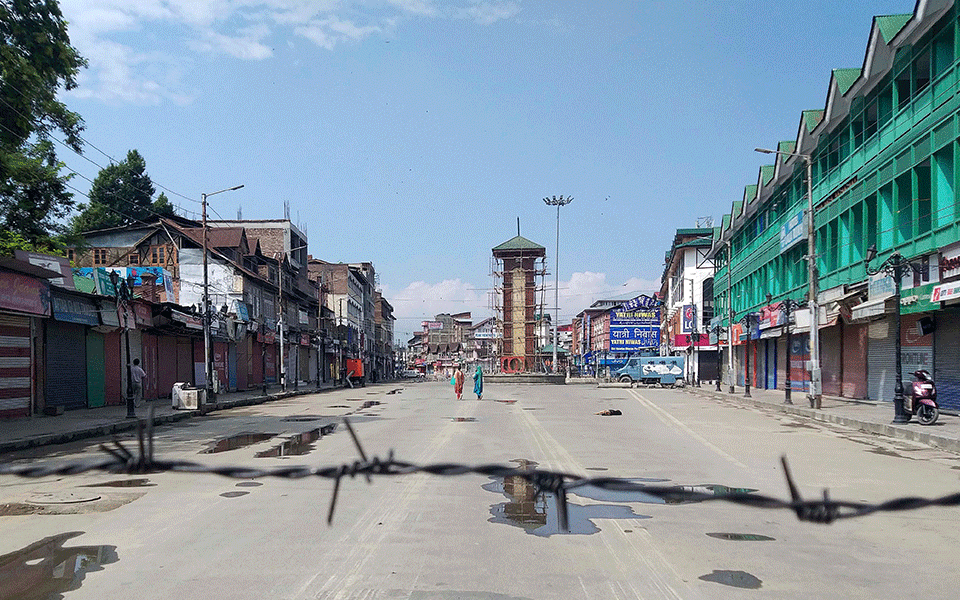
Qureshi briefed Prince Faisal on the situation in Kashmir in the aftermath of India's move to abrogate article 370 on August 5. "The two Foreign Ministers discussed OIC's role in the advancement of the cause of Kashmir," the Foreign Office said in a statement.
He also "highlighted the Indian Government's actions with regard to CAA (Citizenship Amendment Act 2019) and NRC (National Register of Citizens) and the systematic targeting of minorities in India, particularly Muslims," it said.
The OIC is a 57-member grouping of Muslim majority nations, including Pakistan. The body has usually been supportive of Pakistan and often sided with Islamabad on the Kashmir issue.
In a brief statement, the OIC last week said it was "closely following recent developments affecting Muslim minority in India."
Prince Faisal also called on Prime Minister Khan. The meeting was attended by Foreign Minister Qureshi, Foreign Secretary Sohail Mahmood, spy agency ISI chief Lt Gen Faiz Hameed and other senior officials.
Khan told the Saudi minister that alleged ceasefire violations by India along the Line of Control were "stoking tensions and imperiling regional peace and security".
The Kuala Lumpur summit had found strong support in Pakistan because of Saudi's growing trade ties with India and the OIC's failure to take strong stance on Muslim issues.
The day-long visit of the Saudi minister came after criticism of the alleged pressure applied by the Gulf Kingdom on Pakistan to skip the Kuala Lumpur summit.
The Summit from December 19-21 was seen by Saudis as an attempt to create a new bloc in the Muslim world that could become an alternative to the dysfunctional OIC led by the Gulf Kingdom.
Saudi Arabia and the United Arab Emirates have extended financial support to the government of Prime Minister Khan to deal with the balance of payment crisis last year.
Let the Truth be known. If you read VB and like VB, please be a VB Supporter and Help us deliver the Truth to one and all.
Women journalists face doubling of online abuse since 2020, AI intensifies harassment: report
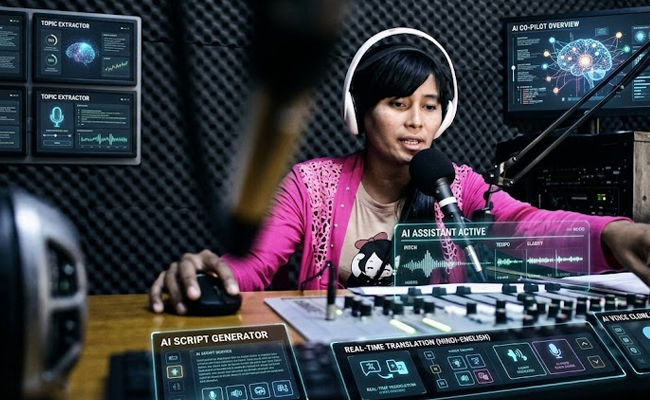
New Delhi: Incidents of online violence against women journalists have doubled since 2020, with growing use of artificial intelligence intensifying the scale and impact of abuse, according to a new report released ahead of World Press Freedom Day.
The study is titled “Tipping point: Online violence impacts, manifestations and redress in the AI age.” It is published by UN Women and its partners and highlights how digital harassment has become more invasive and technologically sophisticated.
The study is based on a 2025 global survey covering 641 respondents across 119 countries. The report found that women journalists and media workers are increasingly resorting to self-censorship due to online abuse. Around 45 per cent said they avoid expressing themselves on social media, which is a sharp rise from 2020. Nearly 22 per cent reported limiting their professional work for similar reasons.
The findings also indicate that 12 per cent of respondents have experienced non-consensual sharing of personal images, including intimate content, and six per cent reported being targeted by AI-generated “deepfakes.” One in three said they had received unsolicited sexual advances online.
The report highlights the psychological toll of such harassment, noting that nearly a quarter of women journalists surveyed had been diagnosed with anxiety or depression, while about 13 per cent reported post-traumatic stress disorder.
An environmental journalist from India, quoted in the report, described how coordinated online attacks and misinformation campaigns had led to fear and withdrawal from investigative reporting, and the repercussions extending to family members.
However, as the abuse has increased, so too has the number of women journalists reporting such incidents. The percentage of women journalists approaching law enforcement agencies has doubled from 11 per cent to 22 per cent in 2025 compared with 2020. The report also shows an increase in legal action against perpetrators, technology platforms, and employers.
However, the report points to significant gaps in legal protection. It presents data that fewer than 40 per cent of countries have laws addressing cyber harassment or stalking. Kalliopi Mingerou, who leads efforts to end violence against women at UN Women, said emerging technologies are amplifying existing threats. “AI is making abuse easier and more damaging,” she said, warning that the trend risks undermining democratic participation and hard-won rights.
The report can be accessed at https://www.unwomen.org/en/digital-library/publications/2026/04/tipping-point-online-violence-impacts-manifestations-and-redress-in-the-ai-age