Social media blocked in Sri Lanka after unrest

Colombo: The Sri Lankan government Monday blocked social media following rising tensions between the minority Muslims and majority Sinhalese in the wake of the Easter Sunday bombings which killed nearly 260 people.
The blockade comes a day after Sri Lankan police imposed curfew in the country's western coastal town of Chilaw where a mob attacked a mosque and some shops owned by Muslims in a dispute that started on a Facebook post by a Muslim shop owner.
The blockade of Facebook and WhatsApp has been imposed form mid night following violent incidents between the minority Muslim and majority Sinhalese communities, officials said.
Late in the evening on Sunday, the unrest spread to Kuliyapitiya where a mosque and a few Muslim owned shops came under attack, prompting the authorities to impose curfew in the northwest town.
"The curfew imposed in Kuliyapitya and Chilaw has been lifted," police spokesman Ruwan Gunasekera said.
The majority nationalist groups have been active on Facebook, reviving calls for boycotts of Muslim-owned businesses and spreading hate.
The voilence is a direct fallout from the Eastern Sunday's suicide bombings.
Nine suicide bombers, including a woman, carried out a series of devastating blasts that tore through three churches and three luxury hotels, killing 258 people and injuring over 500 others on April 21.
The Islamic State claimed responsibility for the attacks, but the government has blamed local extremist group, the National Thawheed Jama'ath (NTJ), for the bombings.
Sri Lanka has previously blocked social media several times after the Eastern Sunday bombings to prevent the spread of false news reports.
The Sunday curfews came as Catholic churches held teir first Sunday mass amid tight security.
Addressing a service here, Malcolm Cardinal Ranjith the Archbishop of Colombo, said everyone responsible for neglecting the intelligence and prior warnings on the attacks including the political leadership must be brought to book.
The security remained tight on Monday as another warning of a possible attack later in the day was doing rounds. The primary schools which did not open after the attacks resumed classes Monday with low attendance.
The attendance of classes above grade 5 was very low.
Parents had refused to send their children to schools despite repeated assurances from the security establishment that the threats of more attacks had been nullified.
Over 1,000 have been arrested since the attacks.
Sri Lanka's police say they have either killed or arrested all those responsible for the bombings but that the threat of global terrorism persists.
President Maithripala Sirisena has vowed to eliminate the militants and restore normality in the country.
Sri Lanka has a population of 21 million which is a patchwork of ethnicities and religions, dominated by the Sinhalese Buddhist majority.
Muslims account for 10 per cent of the population and are the second-largest minority after Hindus. Around seven per cent of Sri Lankans are Christians.
Let the Truth be known. If you read VB and like VB, please be a VB Supporter and Help us deliver the Truth to one and all.
Kohli's U-19 teammate Amanpreet Singh Gill dies at 36
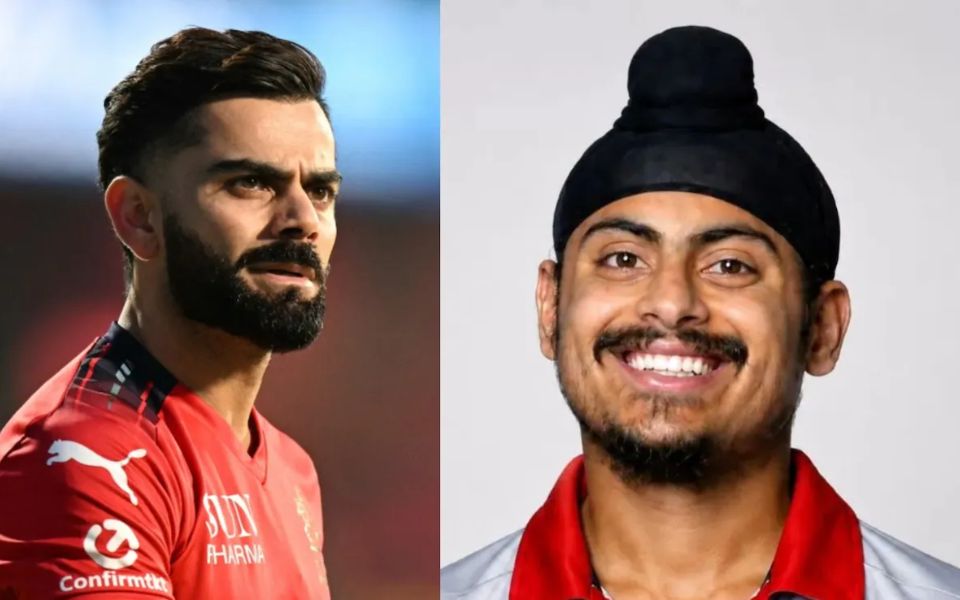
New Delhi (PTI): Former India U-19 and Punjab medium pacer Amanpreet Singh Gill died at the age of 36 in Chandigarh on Wednesday, leaving the cricket fraternity in mourning.
The cause of death is not yet known.
Gill, who was Virat Kohli's U-19 teammate, featured in six first-class matches for Punjab, picking up 11 wickets.
He was also part of the Punjab franchise (Kings XI Punjab) in the inaugural Indian Premier League season, and later served as a member of Punjab's senior selection committee.
"Punjab Cricket Association deeply mourns the sad demise of Amanpreet Singh Gill, former Punjab cricketer and Member, Senior Selection Committee Punjab,” the Punjab Cricket Association announced on X.
"Our heartfelt condolences to the bereaved family and loved ones. May Waheguru grant eternal peace to the departed soul and strength to the family in this difficult time."
Two-time World Cup-winning India all-rounder Yuvraj Singh also paid tribute to Gill.
"Deeply saddened to hear about Amanpreet Singh Gill’s passing. Shared the dressing room in our early days, he was a quiet, hardworking cricketer who loved the game. My heartfelt condolences to his family and loved ones. Rest in peace Om Shanti,” Singh posted on X.
Gill played five Youth ODIs and one Youth Test for India in 2007.
In the longer format, he claimed the wicket of former Sri Lanka all-rounder Thisara Perera.
However, he did not make the Virat Kohli-led India U-19 side that went on to win the 2008 World Cup.
“Deeply saddened by the passing of Amanpreet Singh Shergill, who proudly represented Punjab and was a part of the Punjab Kings family. Our heartfelt condolences to his family, friends, and the entire cricketing fraternity,” Punjab Kings posted on their official Instagram account.