Soleimani's body arrives in Iran as Trump issues new threats
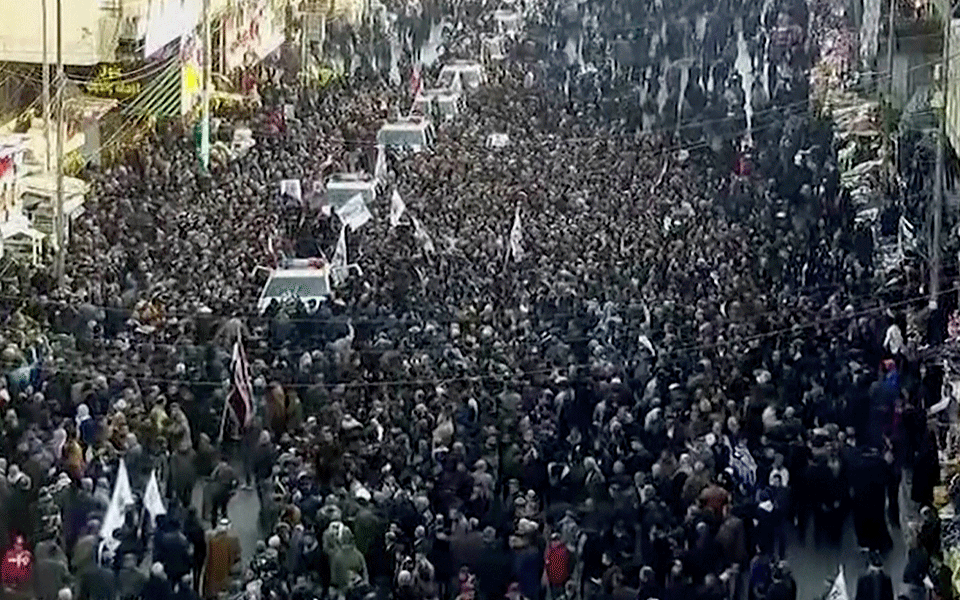
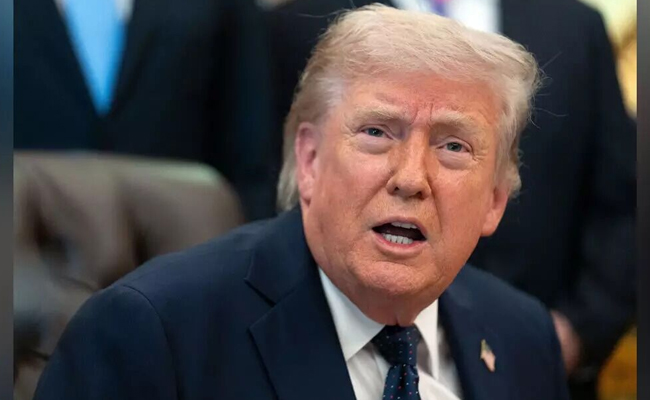
Tehran: The body of Gen. Qassem Soleimani, who was killed in a US drone strike, arrived on Sunday in Iran to throngs of mourners, as President Donald Trump threatened to bomb 52 sites in the Islamic Republic if Tehran retaliates by attacking Americans.
Soleimani's death on Friday in Iraq further heightens tensions between Tehran and Washington after months of trading attacks and threats that put the wider Middle East on edge.
The conflict is rooted in Trump pulling out of Iran's nuclear deal with world powers, an accord likely to further unravel as Tehran is expected to announce as early as Sunday it will break another set of limits.
Iran has promised "harsh revenge."
Already, a series of rockets launched in Baghdad late Saturday fell inside or near the Green Zone, which houses government offices and foreign embassies, including the US Embassy.
Trump wrote on Twitter afterward that the US had already "targeted 52 Iranian sites (representing the 52 American hostages taken by Iran many years ago), some at a very high level & important to Iran & the Iranian culture."
Trump did not identify the targets but added that they would be "HIT VERY FAST AND VERY HARD."
After thousands in Baghdad on Saturday mourned Soleimani and others killed in the strike, authorities flew the general's body to the southwestern Iranian city of Ahvaz, according to the state-run IRNA news agency.
An honour guard stood by early Sunday as mourners carried the flag-draped coffins of Soleimani and other Guard members off the tarmac.
Officials brought Soleimani's body to Ahvaz, a city that was a focus of fighting during the bloody, 1980-88 war between Iraq and Iran in which the general slowly grew to prominence. After that war, Soleimani joined the Guard's newly formed Quds, or Jersualem, Force, an expeditionary force that works with Iranian proxy forces in countries like Iraq, Lebanon and Yemen.
Authorities also plan to take Soleimani's body to Mashhad later Sunday, as well as Tehran and Qom on Monday for public mourning processions, then onto his hometown of Kerman for burial on Tuesday.
Soleimani was the architect of Iran's regional policy of mobilizing militias across Iraq, Syria and Lebanon, including in the war against the Islamic State group. He was also blamed for attacks on US troops and American allies going back decades.
Though it's unclear how or when Iran may respond, any retaliation was likely to come after three days of mourning declared in both Iran and Iraq. All eyes were on Iraq, where America and Iran have competed for influence since the 2003 US-led invasion.
After the airstrike early Friday, the US-led coalition has scaled back operations and boosted "security and defensive measures" at bases hosting coalition forces in Iraq, a coalition official said on condition of anonymity according to regulations.
Meanwhile, the US has dispatched another 3,000 troops to neighbouring Kuwait, the latest in a series of deployments in recent months as the standoff with Iran has worsened. Protesters held demonstrations in dozens of US cities Saturday over Trump's decisions to kill Soleimani and deploy more troops to the Mideast.
In a thinly veiled threat, one of the Iran-backed militia, Asaib Ahl al-Haq, or League of the Righteous, called on Iraqi security forces to stay at least a kilometer away from US bases starting Sunday night. However, US troops are invariably based in Iraqi military posts alongside local forces.
Iraq's government, which is closely allied with Iran, condemned the airstrike that killed Soleimani, calling it an attack on its national sovereignty.
Parliament is meeting for an emergency session Sunday, and the government has come under mounting pressure to expel the 5,200 American troops who are based in the country to help prevent a resurgence of the Islamic State group.
Also Saturday, NATO temporarily suspended all training activities in Iraq due to safety concerns, Canadian Defense Minister Harjit Sajjan said.
The US has ordered all citizens to leave Iraq and temporarily closed its embassy in Baghdad, where Iran-backed militiamen and their supporters staged two days of violent protests in which they breached the compound. Britain and France have warned their citizens to avoid or strictly limit travel in Iraq.
No one was hurt in the embassy protests, which came in response to US airstrikes that killed 25 Iran-backed militiamen in Iraq and Syria. The US blamed the militia for a rocket attack that killed a US contractor in northern Iraq.
Let the Truth be known. If you read VB and like VB, please be a VB Supporter and Help us deliver the Truth to one and all.
Mamata visits Bhabanipur EVM strong room, warns against counting irregularities
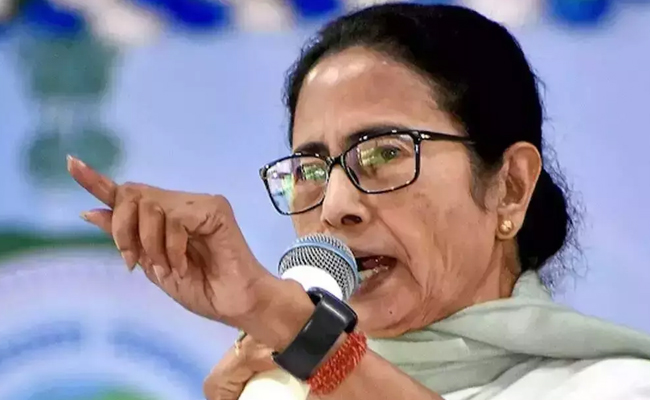
Kolkata (PTI): West Bengal Chief Minister and TMC supremo Mamata Banerjee early Friday warned against any attempt to tamper with the counting process, hours after she visited an EVM strong room in Bhabanipur, alleging possible malpractice.
Banerjee, who emerged around 12:07 am after spending nearly four hours at the counting centre for her Bhabanipur constituency housed in Sakhawat Memorial School in south Kolkata, said only one person would be allowed inside the designated counting area.
"Either the candidate or one agent can stay upstairs. I have also suggested installation of a CCTV camera for the media," she told reporters.
Stressing the need for transparency, she said, "It is essential to maintain transparency. People’s votes must be protected. I rushed here after receiving complaints. The central forces initially did not allow me to enter."
Sounding a stern note ahead of the May 4 counting, she added, "If there is any plan to tamper with the counting process, it will not be tolerated."
On Thursday evening, Banerjee had reached the Bhabanipur Assembly segment counting centre, which houses the strong room for EVMs used in the April 29 polling, citing suspicion of tampering with the machines.
She entered the premises along with her election agent and remained inside for hours, even as Kolkata Mayor and TMC candidate from the Kolkata Port segment Firhad Hakim reached the spot but could not meet her.
"I reached here upon learning that the chief minister has arrived. But I couldn’t meet her since she was already inside the premises, exercising her right as a candidate to visit strong rooms. I wasn’t allowed there. I will not be able to confirm what exactly is transpiring inside," Hakim said.
The development coincided with protests by TMC candidates Kunal Ghosh and Shashi Panja outside the Khudiram Anushilan Kendra in north Kolkata, where they staged a sit-in alleging irregularities and possible tampering of EVMs stored in strong rooms, leading to face-offs between TMC and BJP supporters.
Earlier in a video message, Banerjee had urged party leaders, workers and polling agents to maintain a 24-hour vigil on EVM strong rooms, alleging that the BJP could attempt to tamper with the machines before counting begins.
Her remarks come amid heightened political tension in the state following a fiercely contested Assembly election, with parties closely monitoring arrangements and raising concerns over transparency.