Some Israeli soldiers refuse to keep fighting in Gaza
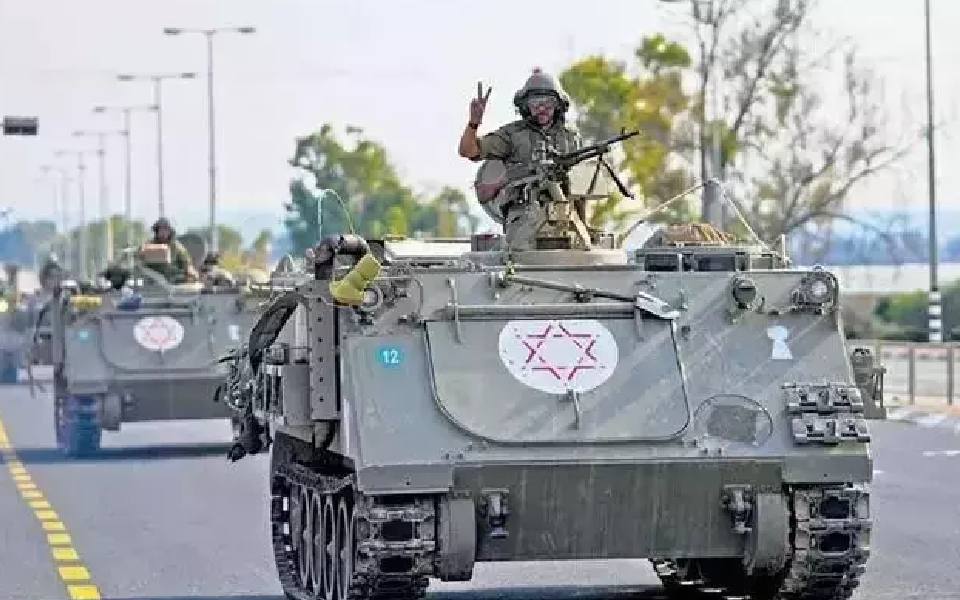
Jerusalem, Jan 13: Yotam Vilk says the image of Israeli soldiers killing an unarmed Palestinian teenager in the Gaza Strip is seared in his mind.
An officer in the armoured corps, Vilk said the instructions were to shoot any unauthorised person who entered an Israeli-controlled buffer zone in Gaza. He saw at least 12 people killed, he said, but it is the shooting of the teen that he can't shake.
“He died as part of a bigger story. As part of the policy of staying there and not seeing Palestinians as people,” Vilk, 28, told The Associated Press.
Vilk is among a growing number of Israeli soldiers speaking out against the 15-month conflict and refusing to serve anymore, saying they saw or did things that crossed ethical lines. While the movement is small — some 200 soldiers signed a letter saying they'd stop fighting if the government didn't secure a ceasefire — soldiers say it's the tip of the iceberg and they want others to come forward.
Their refusal comes at a time of mounting pressure on Israel and Hamas to wind down the fighting. Ceasefire talks are underway, and both President Joe Biden and President-elect Donald Trump have called for a deal by the January 20 inauguration.
Seven soldiers who've refused to continue fighting in Gaza spoke with AP, describing how Palestinians were indiscriminately killed and houses destroyed. Several said they were ordered to burn or demolish homes that posed no threat, and they saw soldiers loot and vandalise residences.
Soldiers are required to steer clear of politics, and they rarely speak out against the army. After Hamas stormed into Israel on October 7, 2023, Israel quickly united behind the war launched against the Hamas group. Divisions here have grown as the war progresses, but most criticism has focused on the mounting number of soldiers killed and the failure to bring home hostages, not actions in Gaza.
International rights groups have accused Israel of war crimes and genocide in Gaza. The International Court of Justice is investigating genocide allegations filed by South Africa. The International Criminal Court is seeking the arrests of Prime Minister Benjamin Netanyahu and former defence minister Yoav Gallant.
Israel adamantly rejects genocide allegations and says it takes extraordinary measures to minimize civilian harm in Gaza. The army says it never intentionally targets civilians, and investigates and punishes cases of suspected wrongdoing. But rights groups have long said the army does a poor job of investigating itself.
The army told AP it condemns the refusal to serve and takes any call for refusal seriously, with each case examined individually. Soldiers can go to jail for refusing to serve, but none who signed the letter has been detained, according to those who organised the signatures.
Soldiers' reactions in Gaza
When Vilk entered Gaza in November 2023, he said, he thought the initial use of force might bring both sides to the table. But as the war dragged on, he said he saw the value of human life disintegrate.
On the day the Palestinian teenager was killed last August, he said, Israeli troops shouted at him to stop and fired warning shots at his feet, but he kept moving. He said others were also killed walking into the buffer zone — the Netzarim Corridor, a road dividing northern and southern Gaza.
Vilk acknowledged it was hard to determine whether people were armed, but said he believes soldiers acted too quickly.
In the end, he said, Hamas is to blame for some deaths in the buffer zone — he described one Palestinian detained by his unit who said Hamas paid people USD 25 to walk into the corridor to gauge the army's reaction.
Some soldiers told AP it took time to digest what they saw in Gaza. Others said they became so enraged they decided they'd stop serving almost immediately.
Yuval Green, a 27-year-old medic, described abandoning his post last January after spending nearly two months in Gaza, unable to live with what he'd seen.
He said soldiers desecrated homes, using black markers meant for medical emergencies to scribble graffiti, and looted homes, looking for prayer beads to collect as souvenirs.
The final straw, he said, was his commander ordering troops to burn down a house, saying he didn't want Hamas to be able to use it. Green said he sat in a military vehicle, choking on fumes amid the smell of burning plastic. He found the fire vindictive — he said he saw no reason to take more from Palestinians than they'd already lost. He left his unit before their mission was complete.
Green said he understands Israeli anger over October 7 but hopes his act of refusal encourages all sides to break the cycle of violence.
The soldiers' refusal as an act of protest
Soldiers for the Hostages — the group behind the letter troops signed — is trying to garner momentum, holding an event this month in Tel Aviv and gathering more signatures. A panel of soldiers spoke about what they'd seen in Gaza. Organisers distributed poster-size stickers with a Martin Luther King Jr. quote: “One has a moral responsibility to disobey unjust laws.”
Max Kresch, an organiser, said soldiers can use their positions to create change. “We need to use our voice to speak up in the face of injustice, even if that is unpopular,” he said.
But some who fought and lost colleagues call the movement a slap in the face. More than 830 Israeli soldiers have been killed in the war, according to the army.
“They are harming our ability to defend ourselves,” said Gilad Segal, a 42-year-old paratrooper who spent two months in Gaza at the end of 2023. He said everything the army did was necessary, including the flattening of houses used as Hamas hideouts. It's not a soldier's place to agree or disagree with the government, he argued.
Ishai Menuchin, spokesperson for Yesh Gvul, a movement for soldiers refusing to serve, said he works with more than 80 soldiers who have refused to fight and that there are hundreds more who feel similarly but remain silent.
Effects on soldiers
Some of the soldiers who spoke to AP said they feel conflicted and regretful, and they're talking to friends and relatives about what they saw to process it.
Many soldiers suffer from “moral injury,” said Tuly Flint, a trauma therapy specialist who's counselled hundreds of them during the war. It's a response when people see or do something that goes against their beliefs, he said, and it can result in a lack of sleep, flashbacks and feelings of unworthiness. Talking about it and trying to spark change can help, Flint said.
One former infantry soldier told AP about his feelings of guilt — he said he saw about 15 buildings burned down unnecessarily during a two-week stint in late 2023. He said that if he could do it all over again, he wouldn't have fought.
“I didn't light the match, but I stood guard outside the house. I participated in war crimes,” said the soldier, speaking on condition of anonymity over fears of retaliation. “I'm so sorry for what we've done.”
Let the Truth be known. If you read VB and like VB, please be a VB Supporter and Help us deliver the Truth to one and all.
Put petty politics aside; it's not about one party, but India: Rahul on TMC's loss in polls
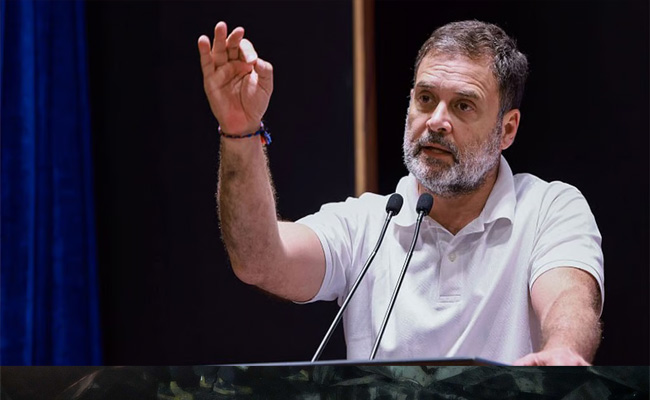
New Delhi (PTI): Congress leader Rahul Gandhi on Tuesday termed the BJP's victory in Bengal and Assam assembly polls a "theft" of the mandate, and a big step forward in the saffron party's mission to "destroy" Indian democracy.
Gandhi also came out in support of the TMC, which has been trounced by the BJP in the polls, and urged those gloating over the loss of Mamata Banerjee's party to put petty politics aside.
"Some in the Congress, and others, are gloating about TMC's loss.They need to understand this clearly - the theft of Assam and Bengal's mandate is a big step forward by the BJP in its mission to destroy Indian democracy," Gandhi said in a post on X.
"Put petty politics aside. This is not about one party or another. This is about India," he said in his post.
The BJP ousted Trinamool Congress from power in Bengal and captured power for the third time in a row in Assam in results of assembly polls declared on Monday.