Sotrovimab: Abu Dhabi first in the world to receive new Covid treatment drug
This report was first published in khaleejtimes.com and has been posted here without any alterations or editing. To read the original report, CLICK HERE
The world’s newest anti-viral treatment for Covid-19, Sotrovimab, is now available for early treatment of certain categories Covid-19 patients in the UAE following a landmark agreement between the Abu Dhabi Department of Health, the country’s leading group purchasing organization (GPO) Rafed, and global innovative biopharmaceutical company GlaxoSmithKline (GSK). With the arrival of the first shipment in Abu Dhabi airport, Abu Dhabi become the first city globally to receive this drug.
Sotrovimab is a monoclonal antibody treatment delivered through intravenous therapy. Sotrovimab can be used to treat adults and children above the age of 12 who meet certain criteria and are at risk of progressing to severe Covid-19, as per protocols that have been developed by the National Scientific Committee. Studies have shown the medicine to prevent hospitalization and death in 85 per cent of early selected treatment cases and can work on all known variations to date, a statement issued on Wednesday said.
Following USA Food and Drug Agency Emergency use authorization approval, the UAE Ministry of Health and Prevention (MoHAP) issued its endorsement of the new GSK medicine following a national assessment. Abu Dhabi Department of Health & Rafed executed its agreement with the manufacturer to ensure deliveries as early as June and July, enabling patients in the UAE to be among the first in the world to access the new therapy.
Treatment protocol
The National Scientific Committee in MoHAP & Abu Dhabi Department of Health have worked on the treatment protocols that will guide doctors in defining at risk patients and ensuring that they have access to Sotrovimab according to their risk profile and eligibility criteria.
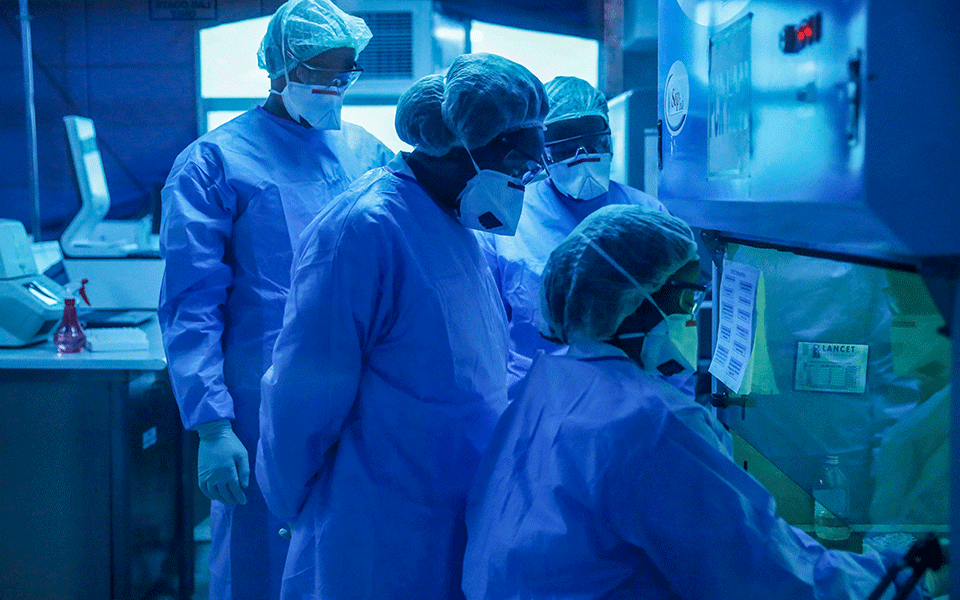
Abu Dhabi-based Rafed will facilitate the procurement, storage and distribution of Sotrovimab via the Rafed Distribution Center - the Region’s largest specialised cold-storage facility. The Center is part of the Hope Consortium, and is a milestone collaboration by healthcare, logistics and supply chain entities designed to facilitate the ongoing evolution of Abu Dhabi’s medical and life science offering to combat the pandemic, nationally and internationally
HE Dr. Jamal Mohamed Kaabi, Undersecretary for the Abu Dhabi Department of Health, said: “Abu Dhabi continues in its efforts to maintain its number one city position globally in terms of resilience and safety in Covid-19 times. This medicine is at the forefront of pharmaceutical advancement and is a powerful tool in our fight to end this pandemic.
"We look forward to implement the eligibility criteria for emergency use of Sotrovimab as part of Abu Dhabi’s commitment to lead an all-encompassing Covid -19 response in prevention, treatment and care.”
Rashed Al Qubaisi, CEO of Rafed said: “Sotrovimab represents a massive breakthrough in the fight against COVID-19."
As the Department of Health – Abu Dhabi finalises a coherent framework to determine eligibility for Sotrovimab treatment, Etihad Cargo, the cargo and logistics arm of the Etihad Aviation Group and Hope Consortium, have transported the first batch of Sotrovimab into the UAE utilizing its IATA CEIV-certified PharmaLife product.
Tony Douglas, Group Chief Executive Officer, Etihad Aviation Group, said: “This achievement further elevates Abu Dhabi’s leading position in the fight against Covid-19, and firmly illustrates the combined capabilities of those entities at the forefront of the capital’s mission.
After receiving positive scientific opinion by the European Medicines Agency’s (EMA) Committee for Human Medicinal Products - GSK had submitted an Emergency Use Authorization (EUA) application to the US Food and Drug Administration and the UAE Ministry of Health and Prevention and got approval from both.
“We have been working very closely with the Department of Health and Rafed since the interim results of the clinical trials with Sotrovimab were available” said Gizem Akalin, Managing Director and Vice President, GSK Gulf. “The DOH and Rafed have been agile and passionate about accelerating patient access to promising new treatments to confront Covid-19”.
Let the Truth be known. If you read VB and like VB, please be a VB Supporter and Help us deliver the Truth to one and all.
Two injuries, one DNF, a DQ as India end messy World Relays campaign
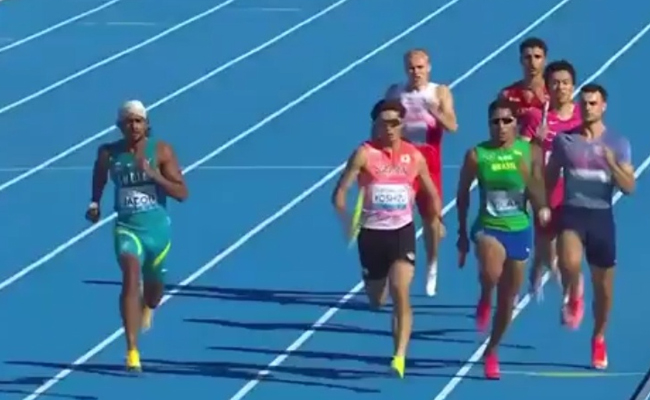
Gaborone (Botswana) (PTI): Amoj Jacob and Ragul Kumar got injured during the men's 4x400m and 4x100 races respectively as India ended their World Athletics Relays campaign in disappointment on the second day of competitions here on Sunday.
The Indian camp had high hopes of making the 2027 World Championships in the men's 4x400m relay but the team did not finish (DNF) the race as Jacob suffered cramps and pulled out of the race after taking the baton from the first leg runner Dharamveer Choudhary. Rajesh Ramesh and Vishal TK were to run in the third and fourth legs.
Those teams which could not qualify for the 2027 Beijing World Championships by reaching the final round of each of the six relay events on Saturday were given another chance in the second qualification round on Sunday.
The top two teams in each of the two heats (in all six relay events) booked the Beijing ticket on Sunday.
India will now have to try and qualify for the World Championships through the Top Lists of the World Athletics, which is a long and tedious process.
In the men's 4x100m race, third leg runner Ragul Kumar fell down the track after failing to hand over the baton inside the exchange zone to fourth leg runner Gurindervir Singh, which clearly showed the lack of coordination among the runners.
Harsh Santosh Raut and Animesh Kujur ran the first two legs.
The Indian quartet was disqualified and Kumar was seen being taken away from the Field of Play with the help of the volunteers.
It was a comedy of errors in the case of the women's 4x100m race, which saw the baton being dropped during an exchange between first leg runner Tamanna and second runner Nithya Gandhe, though the Indians finished the race in 53.09 seconds.
Gandhe started running quite a distance, but after realising that the baton was not in her hand, she turned and ran back to pick it up.
The only silver-lining for the Indian contingent was the national record time in the mixed 4x100m relay race, though the quartet of Ragul Kumar, Nithya Gandhe, Animesh Kujur and Sneha SS finished sixth in heat number two with a time of 41.35 seconds, bettering the previous national mark of 42.30 seconds set in March in Chandigarh.
The mixed 4x400m relay quartet of Theerthesh P Shetty, Kumari Saloni, Nihal William and Rashdeep Kaur ended at fifth in heat number one with a time of 3 minutes and 19.40 seconds.
On Saturday, all the five Indian relay teams had failed to make it to the respective final rounds and thus missed out on the 2027 World Championships berths.