South Korea launches 5G networks early to secure world first
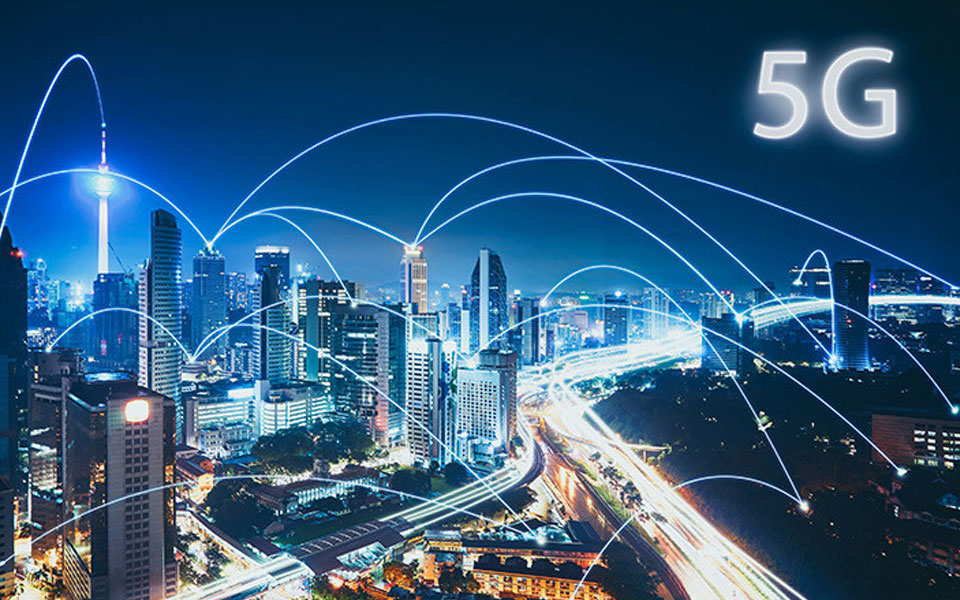
Seoul: South Korea launched the world's first nationwide 5G mobile networks two days early, its top mobile carriers said Thursday, giving a handful of users access in a late-night scramble to be the first providers of the super-fast wireless technology.
Three top telecom providers - SK Telecom, KT and LG Uplus - began their 5G services at 11 pm local time Wednesday, despite previously announcing the launch date would be April 5.
Hyper-wired South Korea has long had a reputation for technical prowess, and Seoul had made the 5G rollout a priority as it seeks to stimulate stuttering economic growth.
Along with the US, China and Japan, South Korea had been racing to claim the title as the world's first provider of the ultra-fast network.
But speculation that US mobile carrier Verizon might start its 5G services early forced South Korean providers to hastily organise a late-night launch, Yonhap news agency reported.
In the event, Verizon began rolling out its 5G services in Chicago and Minneapolis on Wednesday in the US, a week ahead of schedule.
But according to Yonhap, the South Korean launches came two hours earlier.
"SK Telecom today announced that it has activated 5G services for six celebrities representing Korea as of 11 pm April 3, 2019," the country's biggest mobile operator said in a news release Thursday.
The celebrities - including two members of K-pop band EXO and Olympic ice-skating heroine Kim Yu-na - were "the world's first 5G smartphone subscribers", it said.
Both KT and LG Uplus said they also went live at the same time, with a total of three specially-selected users: KT offered it to the wife of a technician setting up its network on the disputed island of Dokdo, while LG Uplus provided it to a television personality and her racing-driver husband.
For general customers, the services will be available from Friday - the original launch date - when Samsung Electronics rolls out the Galaxy S10 5G, the world's first available smartphone with the technology built in.
Verizon's network will work with Lenovo's Moto Z3 smartphone fitted with a special accessory, while rival US carrier AT&T launched a 5G-based system in parts of 12 cities in December - although it is only accessible to invited users through a free hotspot device, rather than paying customers with mobiles.
Qatari firm Ooredoo said it offers 5G services in and around Doha - but does not have devices available to use them - while Japan is also expected to roll out a limited deployment in 2019 before full services start in time for next year's Tokyo Olympics.
Experts say 5G will bring smartphones near-instantaneous connectivity - 20 times faster than 4G - allowing users to download entire movies in less than a second.
The technology is crucial for the future development of devices such as self-driving vehicles and is expected to bring about 565 billion in global economic benefits by 2034, according to the London-based Global System for Mobile Communications, an industry alliance.
The implications of the new network have pitted Washington against Beijing - whose firms dominate 5G technology -- in an increasingly bitter standoff.
The US has pressed its allies and major economies to avoid 5G solutions from Chinese-owned telecom giant Huawei, citing security risks that technological backdoors could give Beijing access to 5G-connected utilities and other components.
Chinese entities, including 1,529 5G patents registered by Huawei, own a total of 3,400 patents - more than a third of the total, according to data analysis firm IPlytics.
South Korea comes next, with its companies holding 2,051 patents, while US firms have 1,368 together.
Neither KT nor SK Telecom use Huawei technology in their 5G networks, but it is a supplier to LG UPlus, the companies told AFP.
Let the Truth be known. If you read VB and like VB, please be a VB Supporter and Help us deliver the Truth to one and all.
Women journalists face doubling of online abuse since 2020, AI intensifies harassment: report
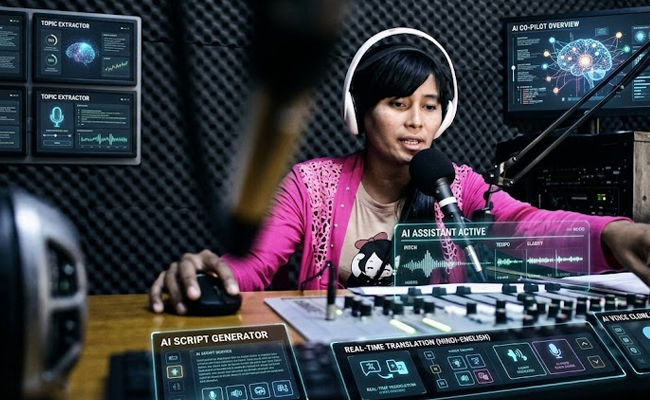
New Delhi: Incidents of online violence against women journalists have doubled since 2020, with growing use of artificial intelligence intensifying the scale and impact of abuse, according to a new report released ahead of World Press Freedom Day.
The study is titled “Tipping point: Online violence impacts, manifestations and redress in the AI age.” It is published by UN Women and its partners and highlights how digital harassment has become more invasive and technologically sophisticated.
The study is based on a 2025 global survey covering 641 respondents across 119 countries. The report found that women journalists and media workers are increasingly resorting to self-censorship due to online abuse. Around 45 per cent said they avoid expressing themselves on social media, which is a sharp rise from 2020. Nearly 22 per cent reported limiting their professional work for similar reasons.
The findings also indicate that 12 per cent of respondents have experienced non-consensual sharing of personal images, including intimate content, and six per cent reported being targeted by AI-generated “deepfakes.” One in three said they had received unsolicited sexual advances online.
The report highlights the psychological toll of such harassment, noting that nearly a quarter of women journalists surveyed had been diagnosed with anxiety or depression, while about 13 per cent reported post-traumatic stress disorder.
An environmental journalist from India, quoted in the report, described how coordinated online attacks and misinformation campaigns had led to fear and withdrawal from investigative reporting, and the repercussions extending to family members.
However, as the abuse has increased, so too has the number of women journalists reporting such incidents. The percentage of women journalists approaching law enforcement agencies has doubled from 11 per cent to 22 per cent in 2025 compared with 2020. The report also shows an increase in legal action against perpetrators, technology platforms, and employers.
However, the report points to significant gaps in legal protection. It presents data that fewer than 40 per cent of countries have laws addressing cyber harassment or stalking. Kalliopi Mingerou, who leads efforts to end violence against women at UN Women, said emerging technologies are amplifying existing threats. “AI is making abuse easier and more damaging,” she said, warning that the trend risks undermining democratic participation and hard-won rights.
The report can be accessed at https://www.unwomen.org/en/digital-library/publications/2026/04/tipping-point-online-violence-impacts-manifestations-and-redress-in-the-ai-age