South Korea maintains Kim Jong Un health rumors are untrue
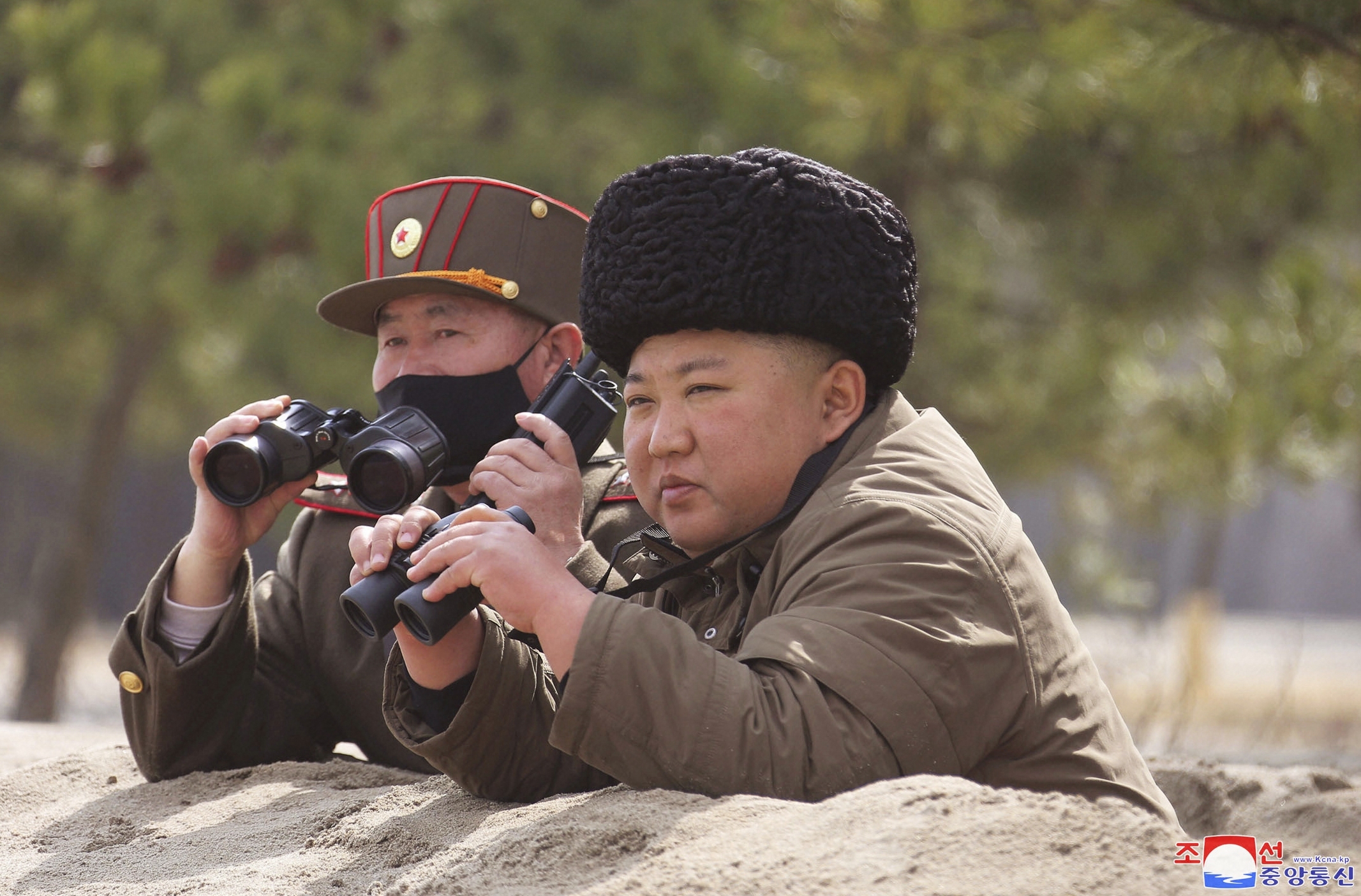
Seoul: A top South Korean official said his country remains confident there have been no unusual developments in North Korea, suggesting that rumors about the possible ill health of leader Kim Jong Un are untrue.
Unification Minister Kim Yeon-chul told a closed-door forum in Seoul on Sunday that South Korea has enough intelligence to confidently say that there are no unusual developments in rival North Korea that would back up speculation about Kim Jong Un's health, according to his ministry.
The minister said he would not reveal what specific intelligence led to that conclusion, but stressed that it had undergone a complex analysis.
The rumors about Kim's health began to swirl after he missed the April 15 commemoration of the 108th birthday of his grandfather, North Korea founder Kim Il Sung. Kim Jong Un is the third generation of his family to rule North Korea, and he hadn't missed the event, one of the most important in the North, since assuming power after his father Kim Jong Il's death in late 2011.
The unification minister's comments are a reiteration of earlier South Korean statements that Kim Jong Un appeared to be handling state affairs normally and that no unusual activities had been detected in North Korea. Those comments failed to dispel the rumors about Kim, which have been fed by the silence of North Korea's state media about their leader's whereabouts.
As the absolute leader of a country with a nuclear weapons program, Kim's health is matter of intense interest both regionally and globally. If something were to happen to Kim, some experts say it could lead to instability in North Korea.
South Korea's presidential office earlier said it has information that Kim has been staying out of Pyongyang, North Korea's capital, and that there had been no emergency readiness order issued by the North's military or the ruling Workers' Party that likely would have been made if Kim were truly in serious condition.
On Monday, South Korean President Moon Jae-in repeated an offer to conduct some inter-Korean cooperation projects such as a joint anti-coronavirus quarantine campaign.
Moon also said he will strive for mutual prosperity based on confidence between Chairman Kim and me and our firm resolve to (achieve) peace. Monday is the second anniversary of Moon's first summit with Kim at the Korean border village of Panmunjom.
Satellite photos released Saturday by 38 North, a website specializing in North Korea studies, showed that a train likely belonging to Kim has been parked at his compound on the country's east coast since last week.
The train's presence does not prove the whereabouts of the North Korean leader or indicate anything about his health, but it does lend weight to reports that Kim is staying at an elite area on the country's eastern coast, 38 North said. (AP)
Let the Truth be known. If you read VB and like VB, please be a VB Supporter and Help us deliver the Truth to one and all.
Man arrested with Rs 2.54-crore heroin in Mumbai

Mumbai (PTI): Police have arrested a man and seized over 500 grams of heroin worth Rs 2.54 crore in the illicit market from him in Mumbai, officials said on Friday.
The police's Anti-Narcotics Cell (ANC) made the drug seizure in Santacruz in the western suburbs. The operation was conducted by the Kandivali unit of the ANC on Thursday as part of a special crackdown against drug trafficking in the area, they said.
Acting on specific inputs, an ANC team conducted a raid in Santacruz (East) and intercepted a man. During a search, the team recovered 508 grams of high-grade heroin from his possession, an official said.
The seized contraband, a highly addictive, opioid drug derived from morphine, is estimated to be worth Rs 2.54 crore in the international market, he informed.
Following the seizure, a case was registered against the man under relevant sections of the Narcotic Drugs and Psychotropic Substances (NDPS) Act, 1985, and he was formally placed under arrest in the early hours of Friday.
The police are currently investigating the source of the drug and trying to identify the intended recipients of the consignment, he said.