South Korean prosecutors detain ex-defence chief over martial law imposition
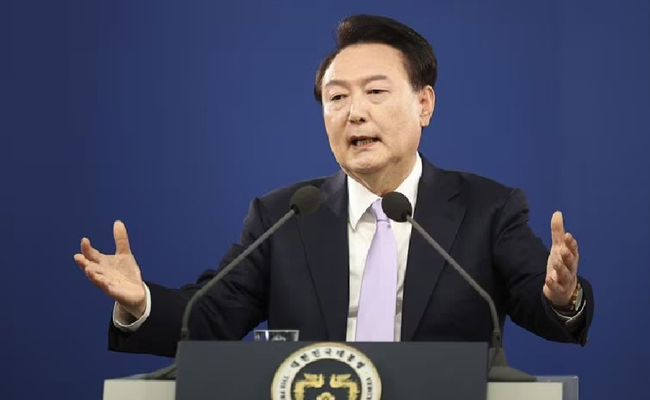
Seoul (AP): South Korean prosecutors on Sunday detained a former defence minister who allegedly recommended last week's brief but stunning martial law imposition to President Yoon Suk Yeol, making him the first figure detained over the case.
The development came a day after Yoon avoided an opposition-led bid to impeach him in parliament, with most ruling party lawmakers boycotting a floor vote to prevent the two-thirds majority needed to suspend his presidential powers. The main opposition Democratic Party said it will prepare a new impeachment motion against Yoon.
On Sunday, ex-Defence Minister Kim Yong Hyun was taken into custody at a Seoul detention facility after undergoing an investigation by prosecutors, a law enforcement official said, requesting anonymity in line with privacy rules.
The official gave no further details. But South Korean media reported that Kim voluntarily appeared at a Seoul prosecutors' office, where he had his mobile phone confiscated and was detained. The reports said police searched Kim's former office and residence on Sunday.
Repeated calls to Seoul prosecutors' offices and police agency were unanswered.
Senior prosecutor Park Se-hyun said in a televised statement Sunday that authorities launched a 62-member special investigation team on the marital law case. Park, who will head the team, said the probe would “leave no suspicions”.
Yoon accepted Kim's resignation offer on Thursday after opposition parties submitted a separate impeachment motion against him.
Kim is a central figure in Yoon's martial law enforcement, which led to special forces troops encircling the National Assembly building and army helicopters hovering over it. The military withdrew after the parliament unanimously voted to overturn Yoon's decree, forcing his Cabinet to lift it before daybreak Wednesday.
In Kim's impeachment motion document, the Democratic Party and other opposition parties accused him of proposing martial law to Yoon. Vice Defence Minister Kim Seon Ho told parliament that Kim Yong Hyun ordered the deployment of troops to the National Assembly.
The Democratic Party called Yoon's martial law imposition “unconstitutional, illegal rebellion or a coup”. It has filed complaints with police against at least nine people, including Yoon and Kim, over the alleged rebellion.
In a statement Wednesday, Kim said that “all troops who performed duties related to martial law were acting on my instructions, and all responsibility lies with me”.
Prosecutor General Shim Woo Jung told reporters on Thursday the prosecution plans to investigate the rebellion charges against Yoon following complaints. While the president mostly has immunity from prosecution while in office, that does not extend to allegations of rebellion or treason.
The Defence Ministry said it has suspended three top military commanders over their alleged involvement in the martial law imposition. They were among those facing the opposition-raised rebellion allegations.
On Saturday, Yoon issued an apology over the martial law decree, saying he won't shirk legal or political responsibility for the declaration. He said he would leave it to his party to chart a course through the country's political turmoil, “including matters related to my term in office”.
Since taking office in 2022 for a single five-year term, Yoon has struggled to push his agenda through an opposition-controlled parliament and grappled with low approval ratings amid scandals involving himself and his wife. In his martial law announcement on Tuesday night, Yoon called parliament a “den of criminals” bogging down state affairs and vowed to eliminate “shameless North Korea followers and anti-state forces.”
The declaration of martial law was the first of its kind in more than 40 years in South Korea. The turmoil has sparked alarm among key diplomatic partners like the US and Japan.
The scrapping of Yoon's impeachment motion is expected to intensify protests calling for his ouster and deepen political chaos in South Korea, with a survey suggesting a majority of South Koreans support the president's impeachment. Yoon's martial law declaration drew criticism from the conservative ruling party, but it is determined to oppose Yoon's impeachment apparently because it fears losing the presidency to liberals.
Ruling People Power Party leader Han Dong-hun said Sunday the PPP will work with the government to determine Yoon's early and orderly exit from office in a way that minimises confusion, but he didn't say when that would happen. He also claimed Yoon will not be involved in state affairs, including foreign policy.
Yoon's presidential office didn't immediately respond. The Democratic Party criticised Han Dong-hun's comments, saying that the exclusion of an incumbent president from state affairs isn't supported by the constitution. The party said authorities should immediately arrest Yoon and all others implicated in the case.
The presidential office said Sunday that Yoon accepted the resignation offer by Safety Minister Lee Sang-min, who has also faced an opposition-led impeachment motion over his alleged role in the martial law enforcement.
In a parliamentary hearing on Friday, Lee, one of Yoon's closest associates, defended Yoon's martial law decree, saying the president exercised his powers “within the boundaries of constitutional processes and law”.
Let the Truth be known. If you read VB and like VB, please be a VB Supporter and Help us deliver the Truth to one and all.
EC role, Hindu vote consolidation among factors for BJP win in Bengal polls: J-K CM Omar
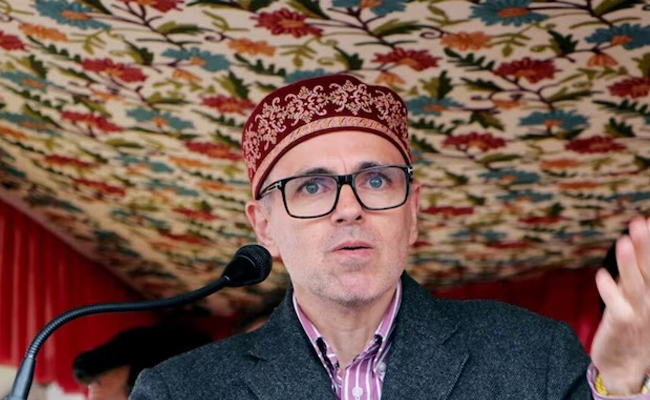
Srinagar (PTI): Jammu and Kashmir Chief Minister Omar Abdullah on Tuesday attributed the BJP's West Bengal win to a "significant role" played by the Election Commission (EC), alongside a consolidation of Hindu votes and a fractured minority mandate.
Abdullah also said the INDIA bloc needs to define its role in the political landscape of the country and make it clear whether the opposition alliance was limited to the parliamentary elections or extended to the state elections as well.
Talking to PTI Videos, Abdullah hinted that the EC has compromised its neutrality by conducting the Special Intensive Revision (SIR) in West Bengal and linked it to the BJP's gains in the state, claiming large-scale deletion of legitimate voters.
On the performance of the BJP in the just concluded assembly elections, Abdullah said the saffron party has almost nothing to show in southern states.
"So then you look at West Bengal and Assam. Yes, the BJP improved its tally in Assam. There are various reasons for that. You know as well as I do, what those are. West Bengal, I think we need to look at the results very carefully," he said.
"The easiest explanation for the West Bengal result is the serious curtailing of voter list," Abdullah said.
"Voters found their names deleted. People who served in uniform and fought for this country on the borders, who were considered Indian citizens all their lives, were suddenly held to a higher standard and not allowed to vote. Something is not right," he said.
While alleging that the EC played a "significant part" in the results, the chief minister admitted the outcome was multifaceted and noted a consolidation of over 60 per cent of the Hindu vote towards the BJP and a "significant fracture" in the minority vote, particularly in seats where Muslims constitute over 50 per cent of the population.
"There is no doubt that the role of the Election Commission played a significant part in the results but we will also have to look at the other factors," he said.
He said the results of West Bengal cannot be compared to those in other states. "The situation was unique to West Bengal. The SIR that was done, the way in which the voter lists were changed, the sort of minute scrutiny that the Election Commission subjected West Bengal to, the role of the central investigative agencies.
"All of these are situations that at least in recent electoral history of India are unique to West Bengal. So to suggest that we can learn lessons from West Bengal and implement them in other parts of the country, I think would not be correct," he said.
Abdullah had recently said that if the West Bengal results throw a surprise, the role of EC will come under scrutiny.
However, during Tuesday's interview, the chief minister said he still maintains that electronic voting machines (EVMs) do not lead to vote theft.
"What we saw in West Bengal...I know there are a lot of people who believe that the EVMs themselves are flawed. I am not a proponent of that conspiracy theory.
"But I do believe that the Election Commission has done itself no favours in the way in which it has gone about both the process of delimitation and the process of finalisation of electoral rolls," he said and cited the example of delimitation exercise in Jammu and Kashmir or Assam.
"These are clear examples of how the process was done to benefit one party or in the case of Jammu and Kashmir, one party and its allies. And the results speak for themselves. You created seven new seats in Jammu and Kashmir and out of those six seats were won by the BJP. You redrew assembly constituencies to benefit one particular party or its allies. And the same is true for West Bengal as well," he said.
Referring to the INIDA bloc, he said the election results were no new message for the alliance.
"We need to decide what the INDIA bloc is for. Is it only for Parliament or for state elections as well?" he asked.
"What happened in West Bengal is unfortunate. The Congress and TMC fought against each other. Now the Congress agrees with Mamata Banerjee that 100 seats were stolen, but the fact is they fought each other," he said.
Despite the friction, Abdullah reaffirmed the "pre-eminent position" of the Congress within the opposition alliance, dismissing the idea of any other party assuming the mantle.
"The Congress is the only party other than the BJP with a pan-India presence. All of us acknowledge this," he stated.
"To suggest someone else can assume a leadership role would be incorrect. Kharge Sahib is the president of the Congress, and by virtue of that, he assumes leadership of the INDIA bloc meetings. That is the way it should be," the chief minister said.
Abdullah said any 'Common Minimum Programme' would depend on whether the opposition alliance decides to fight state assembly elections collectively, noting that he would share his specific views with the bloc internally rather than through the media.