Sri Lanka not averse to using Indian rupee as common currency: President Wickremesinghe
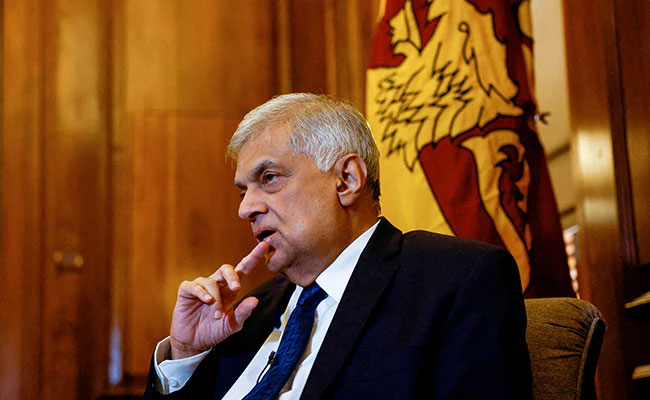
Colombo (PTI): Sri Lanka would want to see the Indian rupee used as much as the US dollar, President Ranil Wickremesinghe has said, days ahead of his first official visit to New Delhi.
Wickremesinghe, also the cash-strapped country's finance minister, made this remark while addressing the Indian CEO Forum here this week.
"Just as East Asia, including countries like Japan, Korea and China, witnessed significant growth 75 years ago, it is now India's turn, along with the Indian Ocean region," Wickremesinghe said.
Wickremesinghe is expected to visit New Delhi next week, his first since becoming president a year ago amidst unprecedented economic and political turmoil in the island nation.
Wickremesinghe's comments were in response to the chair of the Forum, T S Prakash, who in his address had called for the enhanced use of the Indian rupee in the Sri Lankan economy.
"It makes no difference to us if India (the Indian rupee) becomes a common currency. We will have to figure out how to go about it. We must become more open to the outside world", Wickremesinghe said.
"The world is evolving and India is undergoing rapid development, particularly under Prime Minister Modi's leadership", he added.
He also said that Sri Lanka benefits from its proximity to India, coupled with a rich history, cultural heritage and longstanding trading relationships spanning 2,500 years, The Daily Mirror newspaper quoted him as saying.
Wickremesinghe has steered the island nation out of the economic crisis and said the economy is recovering despite its slowness.
"Once we complete debt restructuring our focus will shift towards a comprehensive growth agenda. This entails a massive overhaul of our economy, legal framework and systems aligning our path with that of India," he said. Wickremesinghe
The 74-year-old Sri Lankan politician was elected through parliament to fill in the rest of the term of the ousted president Gotabaya Rajapaksa.
Sri Lanka-India relationship history points to that it was unusual that Wickremesinghe's tour to Delhi had taken a year to happen, analysts noted.
India had thrown a lifeline to the last days of the Rajapaksa presidency with an economic assistance package that amounted to 4 billion dollars.
Sri Lanka used the Indian credit lines to import essentials and fuel as the country was gripped in forex shortages which triggered massive street protests.
Meanwhile, the High Commissioner of India in Sri Lanka Gopal Bagle who was at the July 13 event, said that the Indian government and the Indian business community have helped the island nation in recuperating from the last year's financial crisis.
"Even during the initial crisis, Indian businessmen began doing business in Sri Lanka to demonstrate to the rest of the world that the country's financial status is stable," Bagle was quoted as saying by the Sri Lankan media.
Let the Truth be known. If you read VB and like VB, please be a VB Supporter and Help us deliver the Truth to one and all.
RS Chairman accepts merger of 7 AAP MPs with BJP
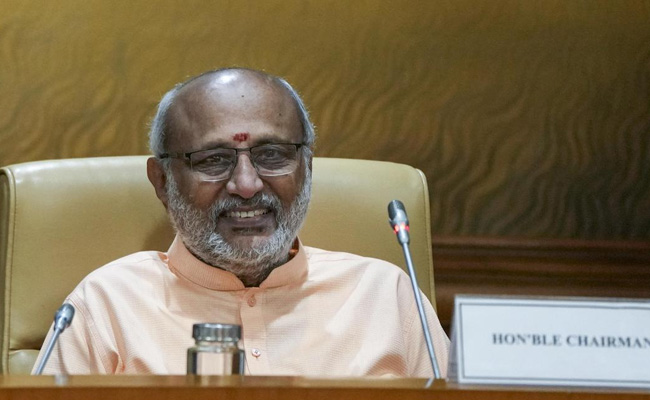
New Delhi (PTI): Rajya Sabha Chairman C P Radhakrishnan on Monday officially accepted the merger of seven Aam Aadmi Party (AAP) MPs with the BJP, reducing the strength of Arvind Kejriwal's party in the Upper House to three.
After this transition, the BJP's strength in the Upper House has increased to 113.
Raghav Chadha, Ashok Mittal, Harbhajan Singh, Sandeep Pathak, Vikramjit Sahney, Swati Maliwal, and Rajinder Gupta are the seven MPs who have merged.
ALSO READ: J-K: Six held with drugs, assets worth Rs 73 lakh attached in Udhampur
The Rajya Sabha website now shows that the seven MPs are part of the BJP list of members.
The seven MPs had on Friday petitioned the Rajya Sabha Chairman to be treated as BJP MPs after the merger and the same has been accepted, sources said.
The AAP had on Sunday moved a petition before the RS Chairman seeking the termination of the membership of the seven MPs, who had switched sides.
Aam Aadmi Party MP Sanjay Singh said he has submitted a petition to Chairman Radhakrishnan seeking the disqualification of the seven party MPs in the Upper House, who recently quit the AAP and announced their merger with the BJP.
On Friday last, the AAP suffered a jolt when the seven Rajya Sabha MPs quit and announced merger with the BJP, alleging that the Kejriwal-led party had strayed from its principles, values and core morals.