Sri Lanka Prez Gotabaya Rajapaksa sent resignation letter to Parliament Speaker through email:Report
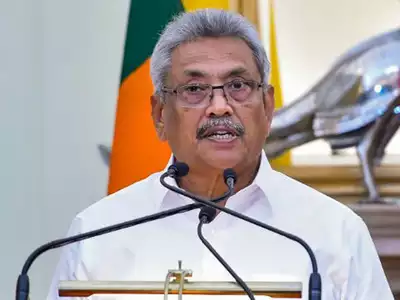
Colombo, Jul 14: Sri Lanka's embattled President Gotabaya Rajapaksa on Thursday sent his resignation letter through an email to Parliament Speaker Mahinda Yapa Abeywardenaon whose office is checking the legality of the document, according to media reports here.
The Speaker said that he has received the resignation letter from President Rajapaksa and his office was checking the legality of the letter, Hiru news portal reported.
Citing sources, it said that the 73-year-old leader has emailed his signed resignation letter to the Speaker from Singapore.
The Speaker wants to see the original signature. The original will be brought to Colombo from Singapore in the next available flight by a diplomatic officer, sources added.
In an unusual move, Maldivian Majlis (Parliament) Speaker Mohamed Nasheed earlier announced that Sri Lankan President Rajapaksa has resigned.
"Sri Lankan President GR has resigned. I hope Sri Lanka can now move forward. I believe the President would not have resigned if he were still in Sri Lanka, and fearful of losing his life. I commend the thoughtful actions of the Govt of Maldives. My best wishes to the people of Sri Lanka," Nasheed, the former president who had negotiated Rajapaksa's escape to the Maldives, said in a tweet.
The development comes on a day when anti-government protesters announced to vacate some of the administrative buildings, including the President's House and the PM Office, they have been occupying since April 9 demanding Rajapaksa's ouster.
With Rajapaksa's resignation Prime Minister Ranil Wickremesinghe will be the President, Colombo Gazette reported.
Wickremesinghe, who is currently the Acting President, has already told the Speaker to call on party leaders to name a new Prime Minister through consensus.
On Saturday, Rajapaksa had announced to step down on July 13 after thousands of protesters stormed his official residence, blaming him for the unprecedented economic crisis that has brought the country to its knees.
He, however, fled to the Maldives without resigning from his office. From the Maldives, he went to Singapore on Thursday.
Singapore's Foreign Ministry has said that President Rajapaksa has been allowed to enter the city-state on a private visit. The Foreign Ministry said that Rajapaksa has not asked for asylum.
Rajapaksa was the first person with the army background to be elected as Sri Lanka's President in 2019.
Prime Minister Ranil Wickremesinghe, who is now Acting President, has already said he was willing to resign and make way for an all-party government to take over.
Under the Sri Lankan Constitution, if both the president and prime minister resign, the Speaker of parliament will serve as acting president for a maximum of 30 days.
The Parliament will elect a new president within 30 days from one of its members, who will hold the office for the remaining two years of the current term.
Sri Lanka, a country of 22 million people, is under the grip of an unprecedented economic turmoil, the worst in seven decades, leaving millions struggling to buy food, medicine, fuel and other essentials.
In several major cities, including Colombo, hundreds are forced to stand in line for hours to buy fuel, sometimes clashing with police and the military as they wait.
The country, with an acute foreign currency crisis that resulted in foreign debt default, had announced in April that it is suspending nearly USD 7 billion foreign debt repayment due for this year out of about USD 25 billion due through 2026. Sri Lanka's total foreign debt stands at USD 51 billion.
Let the Truth be known. If you read VB and like VB, please be a VB Supporter and Help us deliver the Truth to one and all.
3 women die after giant tree falls on them in Odisha’s Koraput
Koraput (PTI): Three women died and another was injured after a giant tree fell on them following thunderstorms in Odisha’s Koraput district, police said on Tuesday.
The incident took place on Monday evening when they were in a market at Pedabayalu in Nandapur block near the Andhra-Odisha border.
The tree was uprooted due to strong winds amid rain and thunderstorms, a police officer said.
Two women died on the spot and another in hospital, he said.
Nandapur BDO Durga Prasad Dora and MLA Rama Chandra Kadam visited the spot, and assured the victims’ families of government support.