Sri Lankan Muslim ministers rejoin government after Easter Sunday bombings
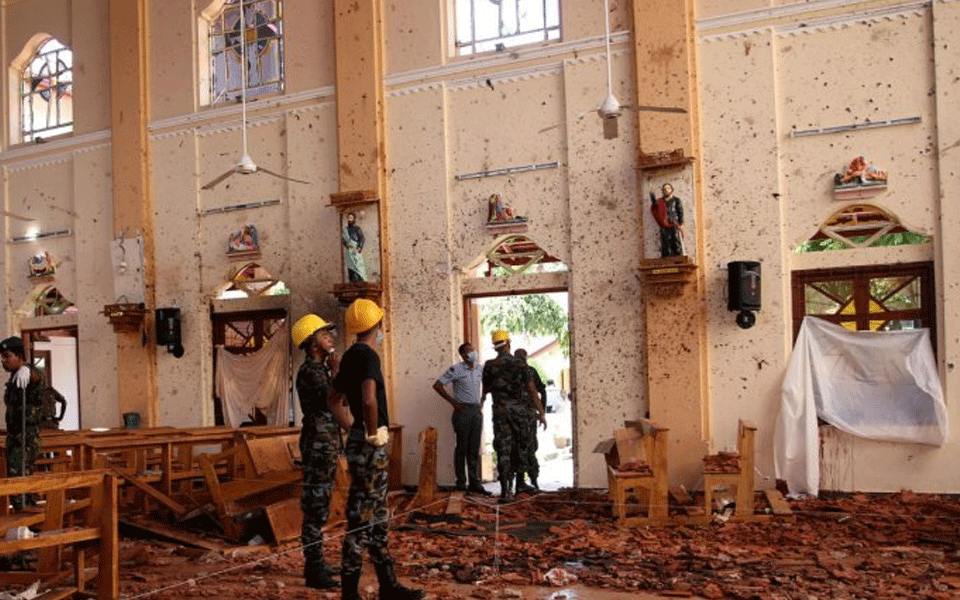
Colombo: Four Sri Lankan Muslim ministers, who resigned following the Easter Sunday bombings that killed 258 people, have rejoined the government after investigators found no link in their alleged involvement with a local islamist extremist group.
Two senior Muslim leaders Rauff Hakeem - the leader of the main Muslim party Sri Lanka Muslim Congress (SLMC) and Rishad Badiyudeen, the leader of the All Ceylon Makkal Congress - were sworn in by President Maithripala Sirisena last night.
Along with them, two more Muslims, a state minister and a deputy minister rejoined the government.
The ministers were among nine government legislators, several of them cabinet ministers, who resigned in early June after a Buddhist lawmaker demanded their sacking and accused them of terror links.
Badiyudeen was targeted by the Opposition which demanded his resignation over his alleged close links to local islamist extremist group National Thawheed Jammath (NTJ).
Nine suicide bombers attacked three churches and as many luxury hotels on April 21 in one of Sri Lanka's worst terror attacks, killing 25 people and injuring hundreds others.
The ISIS terror group claimed the attacks, but the government blamed the NTJ for the bombings. "We want the government response to the issues faced by the Muslim community," said Hakeem on his return.
The Opposition said they again would move a no trust motion against Badiyudeen.
"We will present the no confidence motion against Badiyudeen," said Shehan Semasinghe, an opposition legislator.
Prime Minister Ranil Wickremesinghe said since police investigations against the Muslim ministers over their alleged links to NTJ had drawn a blank, they were free to re-join the government.
The 9 per cent Muslim minority votes will be crucial for the two national parties in this election year. The next presidential election must be held before December 8 this year.
The minorities Tamils and Muslims in large numbers sided with the current government in 2015, helping it defeat former president Mahinda Rajapaksa and bring an end to his 10-year rule.
In the wake of the bombings, the majority Sinhala community mobs attacked Muslim-owned properties in towns north of the capital killing one Muslim man and leaving hundreds of homes, shops and mosques vandalised.
The Muslim ministers quit their posts after two Muslim provincial governors resigned following protests by thousands of people, including majority Buddhist community monks, in the pilgrim city of Kandy.
They demanded their sacking for allegedly supporting Islamist extremists responsible for the Easter suicide bombings.
Muslims account for about 10 per cent of the population and are the second-largest minority after Hindus. Around seven per cent of Sri Lankans are Christians.
Let the Truth be known. If you read VB and like VB, please be a VB Supporter and Help us deliver the Truth to one and all.
Confident we are going to win Kerala: Shashi Tharoor
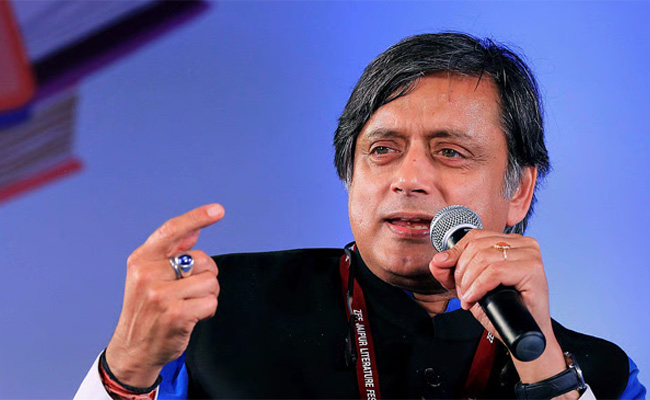
New Delhi (PTI): Congress leader Shashi Tharoor on Thursday expressed confidence in the victory of the United Democratic Front (UDF) in Kerala, saying the Congress-led alliance will win more than 75 seats out of the total 140 in the state.
Tharoor, who hails from Kerala, said he was not surprised to see the results of the exit polls, most of which predicted a victory for the UDF that has been out of power for 10 years in the state.
"We have been on the ground. I have campaigned in 59 constituencies across 12 districts out of 14. I was very confident we are going to win.
"Everything that I have picked up from not just my party colleagues and workers but also from other observers, media and others have always convinced me that we were going to score a comfortable win of above 75 seats. And all the (exit) polls have confirmed the same thing," he told reporters here.
The Thiruvananthapuram MP said he was not surprised to see the results of the exit polls but in general he was not a big fan of exit polls in India.
"Because ours is not purely a homogenous society. We have to take into account gender issue, caste issue, class issue, regional disparities. You never get a convincingly large enough sample to give an accurate poll and now there is the additional complication that we have heard about in West Bengal this year that many people are unwilling to answer the questions of the pollsters," he said.
The Congress leader said normally, it used to be below 10 per cent that people said that they would not answer.
"Even if you are a reputable exit pollster, in Bengal, one polling company has said 60 per cent of people refused to answer. So, what is the worth of a poll where 60 per cent of your respondents have not answered," he said.
Several exit polls on Wednesday predicted a comeback by the Congress-led UDF in Kerala after 10 years, dethroning the CPI(M)-led Left Democratic Front (LDF).
Polling for the 140-member Kerala assembly was held on April 9. Results of assembly elections in West Bengal, Tamil Nadu, Assam, Puducherry, besides Kerala, will be announced on May 4.