Sri Lankan President Gotabaya Rajapaksa under fire for imposing emergency
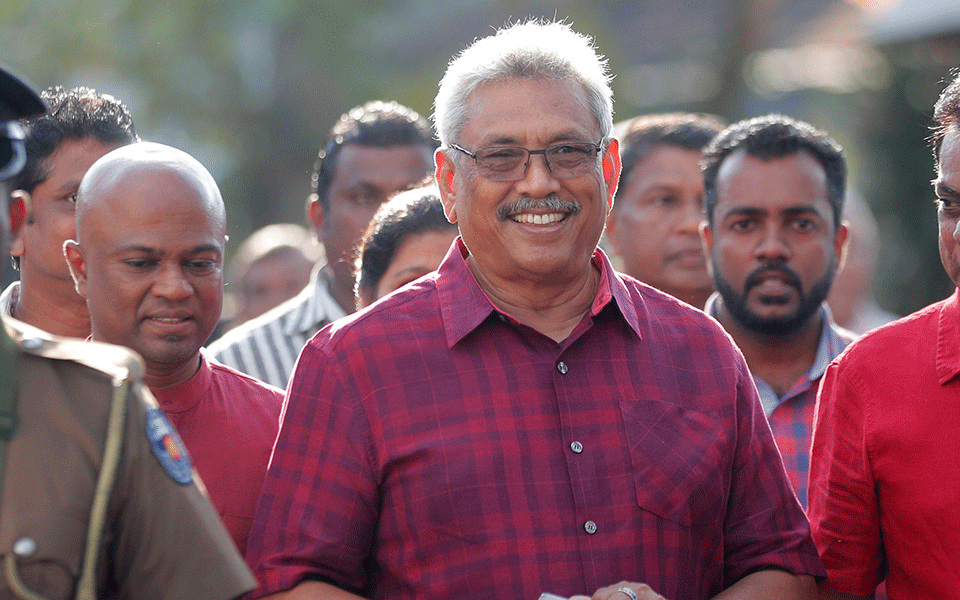
Colombo(PTI): Embattled Sri Lankan President Gotabaya Rajapaksa has faced flak from the Opposition and foreign envoys for his decision to impose a state of emergency for a second time in just over a month which gives security forces power to crack down on peaceful protests.
President Rajapaksa declared a state of emergency with effect from Friday midnight amid growing countrywide anti-government protests over the unprecedented economic crisis.
The state of emergency gives the police and the security forces sweeping power to arbitrarily arrest and detain people.
The country's human rights body, the main lawyers' body, the Opposition and even some members of the diplomatic community criticised the government for its move.
The Human Rights Commission of Sri Lanka said it was deeply concerned about the promulgation of an emergency.
We urge the government to explain to the public the reasons for this proclamation since protests have been largely peaceful and within the ambit of normal police operations, it said in a statement.
We hope that freedom of speech and assembly, the rights associated with arrest and detention as well as other fundamental rights and freedoms will not be affected or derogated from during the period of the emergency, said the statement.
The Bar Association of Sri Lanka (BASL) in a statement issued said it was "gravely concerned" about the declaration of a State of Emergency by the President.
As was stated earlier on April 2, 2022, when the President declared a State of Emergency for a brief period of time, the BASL remains of the view that a declaration of a state of emergency is not the answer to the present situation in the country including the spate of public protests and strikes which have occurred, the BASL said.
They have stressed that the state of emergency must not be used to stifle peaceful protests and dissent or to make arbitrary arrests and detentions. The protests in turn must not be violent and must remain peaceful at all times.
The main Opposition party Samagi Jana Balawegaya's leader Sajith Premadasa too questioned the move and urged for the resignation of the president.
The Canadian High Commissioner in Colombo David McKinnon tweeted, Over the past weeks, the demonstrations across Sri Lanka have overwhelmingly involved citizens enjoying their right to peaceful freedom of expression, and are a credit to the country's democracy. It's hard to understand why it is necessary, then, to declare a state of emergency.
The US Ambassador Julie Chung said she was concerned by another state of emergency. The voices of peaceful citizens need to be heard .
The declaration of emergency came after an urgent Cabinet meeting held on Friday.
The decision came amidst weeks of protests demanding the resignation of the President and the government, blaming the powerful Rajapaksa clan for mishandling the island nation's economy, already hit by the pandemic.
Earlier on Friday, student activists warned to lay a siege to Parliament as trade unions launched a crippling island-wide strike to demand the resignation of President Gotabaya Rajapaksa and his government over their inability to tackle the economic meltdown which has caused unprecedented hardships to the public.
Rajapaksa's decision was to ensure public security and maintain essential services to ensure the smooth functioning of the country, the presidential media division said.
Rajapaksa had declared an emergency on April 1 also after a mass protest opposite his private residence. He had revoked it on April 5.
Since April 9, the protesters have been staying near the presidential secretariat in the Gota go home gama' or Gotabaya Go home village and since April 26 the Mynah go home village' or Mahinda Go Home Village'.
Sri Lanka is currently in the throes of unprecedented economic turmoil since its independence from Britain in 1948. The crisis is caused in part by a lack of foreign currency, which has meant that the country cannot afford to pay for imports of staple foods and fuel, leading to acute shortages and very high prices.
Thousands of demonstrators have hit the streets across Sri Lanka since April 9, as the government ran out of money for vital imports; prices of essential commodities have skyrocketed and there are acute shortages in fuel, medicines and electricity supply.
Despite mounting pressure, President Rajapaksa and his elder brother and Prime Minister Mahinda Rajapaksa have refused to quit.
Let the Truth be known. If you read VB and like VB, please be a VB Supporter and Help us deliver the Truth to one and all.
EAM Jaishankar meets Jamaican PM, gifts over 10 BHISHM Cubes
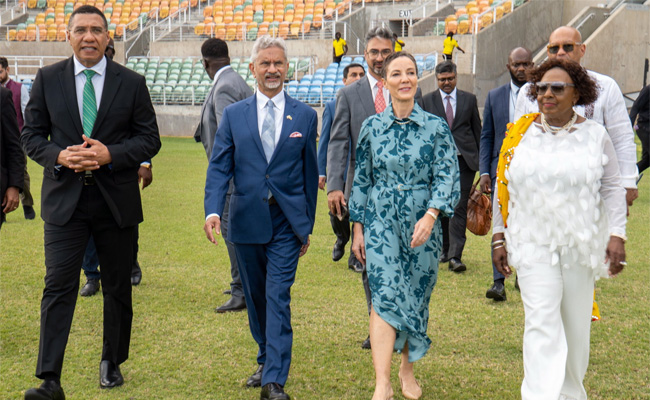
Kingston (PTI): External Affairs Minister S Jaishankar on Monday met Jamaican Prime Minister Andrew Holness and discussed ways to further deepen "political, economic and people-to-people cooperation."
Jaishankar also conveyed greetings from Prime Minister Narendra Modi to Holness.
"Pleased to call on Prime Minister @AndrewHolnessJM in Kingston. Conveyed the greetings of PM @narendramodi," Jaishankar posted on X.
"Discussed deepening our political, economic and people-to-people cooperation. Value his commitment towards further strengthening India-Jamaica relations," the post further read.
Also, the external affairs minister handed over 10 BHISHM (Bharat Health Initiative for Sahyog Hita & Maitri) Cubes as a gift to Jamaica.
"Formally handed over 10 BHISHM Cubes as a gift from India to Jamaica, in the presence of PM @AndrewHolnessJM, Health Minister @christufton and FM @kaminajsmith," Jaishankar posted on X.
"The BHISHM Cube mobile hospital system, designed for rapid deployment, will help Jamaica during disasters and emergencies. The gift of these cubes is a statement of friendship, a commitment to disaster preparedness, and an outcome of innovation," the post said.
Jaishankar arrived in Kingston on Saturday evening, marking the first leg of his nine-day tour of Jamaica, Suriname, and Trinidad and Tobago, aimed at further strengthening India's strategic and cultural ties with the Caribbean nations.
Earlier in the day, he interacted with the Indian diaspora and discussed India's ongoing transformation in infrastructure, human development and technology-driven governance and entrepreneurship with them.
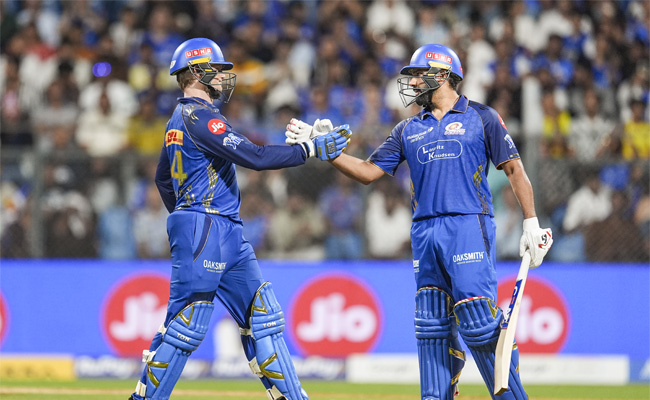
He also highlighted the cricket bond between both countries as India gifted a scoreboard to Jamaica.
A scoreboard was dedicated at Sabina Park in Kingston. It is the home of the Jamaica cricket team and is the only Test cricket ground in the Caribbean island nation.
The minister expressed hope that the new scoreboard would witness many memorable innings, including those symbolising the enduring friendship between the two countries.
Cricket has long been a strong cultural bridge between India and Jamaica, which is part of the West Indies cricket team.
Jamaican players, including Chris Gayle, Courtney Walsh and Michael Holding, have played a major role in shaping the legacy of West Indies cricket in the international arena, contributing to its dominance in earlier decades and its continued global appeal.