Sri Lankan President Rajapaksa invites Opposition to join unity govt
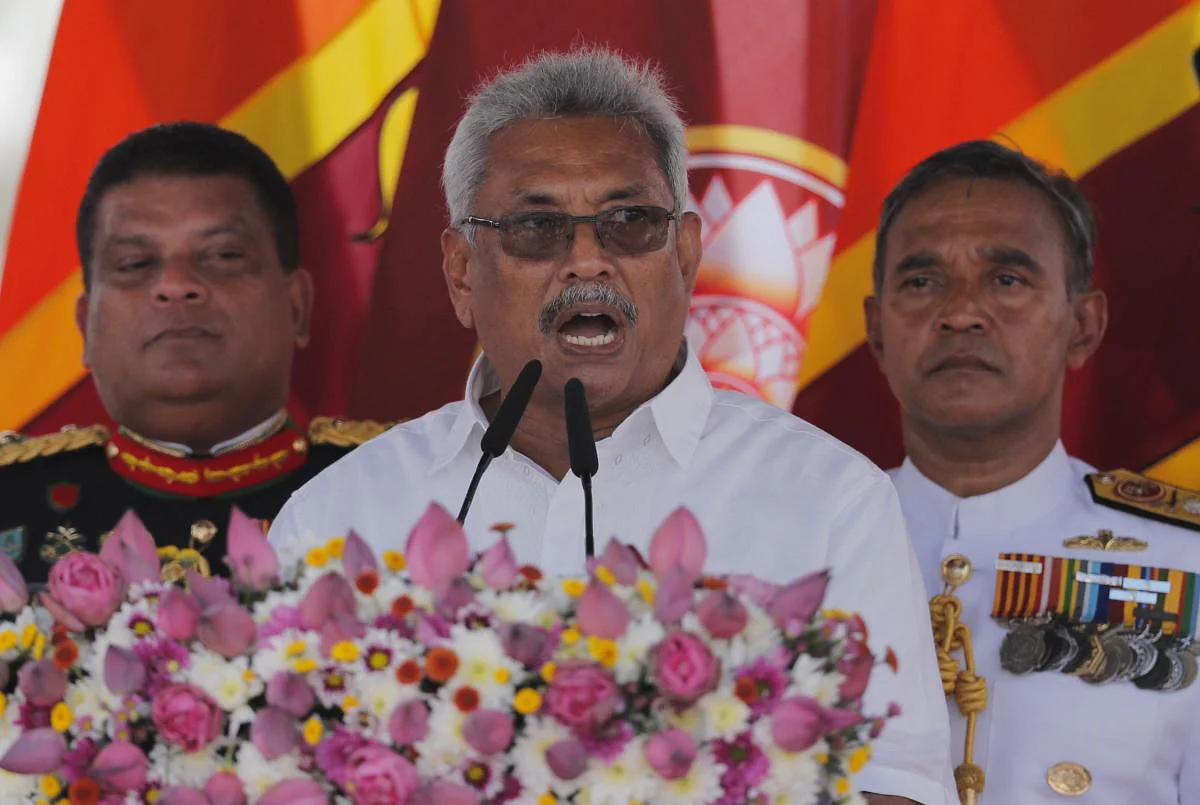
Colombo, Apr 4: Sri Lankan President Gotabaya Rajapaksa on Monday invited all political parties to join a unity Cabinet as part of the government's bid to tackle the raging public anger against the ongoing hardships caused by the island nation's worst economic crisis.
According to an official statement, President Gotabaya Rajapaksa has invited all political parties to find solutions for the national crisis that has emerged.
On Sunday night, all 26 Cabinet Ministers submitted letters of resignation.
Speaking to reporters, Education Minister and Leader of the House Dinesh Gunawardena said the ministers handed over their resignations to Prime Minister Mahinda Rajapaksa. He provided no reason for the mass resignation.
The government's invitation to all the Opposition parties came as mass public agitations mounted against the ruling Rajapaksa family for its mishandling of the economic situation triggered by the foreign exchange crisis and the balance of payment issues.
The public thronged the streets asking the president to resign. The protests triggered the imposition of curfew after a state of emergency was declared by the President.
When the protests intensified, the government clamped a social media ban for 15 hours on Sunday.
The people defied the curfew to protest against long queues for fuel and gas and long hours without electricity.
Governor of the Central Bank Ajith Nivard Cabraal has also announced his resignation.
In the context of all Cabinet ministers resigning, I have today submitted my resignation as Governor, Cabraal said.
He was blamed for his rigid stance on Sri Lanka seeking an economic bailout through an International Monetary Fund (IMF) structural adjustment facility.
Despite his opposition, the government in the last fortnight approached the international lender for support.
During his governorship, the Central Bank was accused of printing large volumes of money, triggering inflation.
The country is grappling with what is said to be its worst economic crisis since independence from the UK in 1948. It is caused in part by a lack of foreign currency, which is used to pay for fuel imports.
People are languishing in long queues for fuel, cooking gas and endure power cuts lasting multiple hours.
Sri Lanka is currently experiencing its worst economic crisis in history. With long lines for fuel, cooking gas, essentials in short supply and long hours of power cuts, the public has been suffering for weeks.
Rajapaksa has defended his government's actions, saying the foreign exchange crisis was not his making and the economic downturn was largely pandemic driven with the island nation's tourism revenue and inward remittances waning.
Let the Truth be known. If you read VB and like VB, please be a VB Supporter and Help us deliver the Truth to one and all.
Maharashtra sets up state vaccination task force to strengthen immunisation programme

Mumbai (PTI): The Maharashtra government has set up a State Vaccination Task Force to strengthen the regular immunisation programme and review the progress of related campaigns, a health department official said on Monday.
The State Vaccination Task Force will comprise at least 29 members and will be headed by the administrative head of the health department, he informed.
The government has also constituted separate district-level and municipal vaccination task forces to improve implementation and address challenges at the grassroots level, he said.
Municipal task forces, chaired by respective civic commissioners, have been constituted in view of the vast urban population in Maharashtra and the role of civic bodies in implementing different health programmes.
The district-level task forces will function under the chairmanship of collectors.
"Complete immunisation of children at the appropriate age is an extremely simple, cost-effective and highly effective measure to reduce child mortality and the prevalence of diseases among kids. Immunisation is a powerful tool for reducing illness in children," maintained the official.
To ensure full vaccination of all children, the state government implements various campaigns from time to time as per the central government guidelines, he pointed out.
"Active participation and cooperation of other relevant government departments are essential (in making these campaigns successful)," according to the official.
The state-level body will review the regular immunisation programme, associated campaigns and vaccine-preventable diseases in detail. It will also conduct focused assessments of high-risk districts and municipal corporations, including vacancies at district, municipal and sub-district levels, availability of cold chain equipment, resource gaps and training requirements, he noted.
The state task force will review allocation and utilisation of funds for immunisation and ensure timely action by officers concerned based on reports from district and municipal task forces and state-level monitoring mechanisms, the official said.
It will also ensure active coordination and participation of other government departments in immunisation drives, while district and municipal task forces will carry out similar functions at their respective levels, the official added.