Sri Lankans vote in crucial Presidential election, Wickremesinghe seeks another term
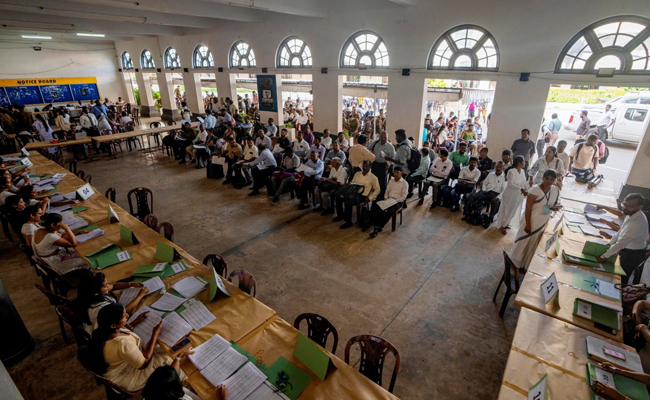
Colombo (PTI): Millions of Sri Lankans are casting their votes on Saturday in the crucial presidential election -- the island nation's first major electoral exercise since its worst economic meltdown in 2022.
The election will be a test for incumbent President Ranil Wickremesinghe who has claimed credit for putting the country on the road to recovery.
Analysts said this election is the most keenly contested of all presidential elections since 1982 with 38 candidates in the fray.
Some 17 million people are eligible to vote at over 13,400 polling stations. Over 200,000 officials have been deployed to conduct the election which will be guarded by 63,000 police personnel.
Voting started at 7 am and will continue till 4 pm. Results are expected by Sunday. Buddhist Temple halls, schools and community centres have been converted into polling stations.
Officials estimated 30 per cent voter turnout by noon.
The Police Elections Bureau said that voting was proceeding peacefully, with no reports of violence so far.
"At 4 pm, we will try to start postal vote counting and at 6 pm we would like to start normal counting. All the election management systems are okay...Within two or three hours (after the counting of votes starts), we can display the results," said Colombo City Deputy Election Commissioner MKSKK Bandaramapa.
Wickremesinghe, 75, is seeking re-election for a five-year term as an independent candidate, riding on the success of his efforts to pull the country out of the economic crisis, which many experts hailed as one of the quickest recoveries in the world.
As Sri Lanka sank into economic collapse in 2022, a popular uprising led its then-president, Gotabaya Rajapaksa, to flee the country.
Wickremesinghe was appointed as president by Parliament a week after Rajapaksa was chased out of power.
"It's a turning point for Sri Lanka to get away from conventional politics which destroyed the country and the conventional economy which destroyed the country... and a new social system, and a political system," Wickremesinghe said after casting his vote in Colombo.
Under Wickremesinghe, the rupee has stabilised, inflation has slowed to near zero from over 70 per cent during the peak of the economic crisis, economic growth has turned to positive from contraction, and government revenue has jumped sharply after new taxes and an increase in value added tax (VAT).
The three-cornered electoral battle will see Wickremesinghe facing stiff competition from Anura Kumara Dissanayake, 56, of the National People's Power (NPP), and Sajith Premadasa, 57, of the Samagi Jana Balawegaya (SJB) and the main Opposition leader.
Though Wickremesinghe's recovery plan tied to rigid reforms linked to the International Monetary Fund (IMF) bailout was hardly popular, it has helped Sri Lanka recover from successive quarters of negative growth.
Sri Lanka's crisis has proven an opportunity for Dissanayake, who has seen a surge of support due to his pledge to change the island's "corrupt" political culture.
This time, the minority Tamil issue is not on the agenda of any of the three main contenders in this election. Instead, the nation's battered economy and its recovery have taken centre stage with all three front runners vowing to stick with the IMF bail-out reforms.
Dissanayake and Premadasa want to tinker with the IMF programme to give more economic relief to the public.
If no candidate receives more than 50 per cent of the votes, a second preferential vote count will be conducted.
Voters in Sri Lanka elect a single winner by ranking up to three candidates in order of preference. If a candidate receives an absolute majority, they will be declared the winner. If not, a second round of counting will commence, with second and third-choice votes then taken into account.
No election in Sri Lanka has ever progressed to the second round of counting, as single candidates have always emerged as clear winners based on first-preference votes. This year could be different.
Analysts fear that many voters would not be familiar with marking the second and third choices. This could lead to a higher number of rejected votes.
Let the Truth be known. If you read VB and like VB, please be a VB Supporter and Help us deliver the Truth to one and all.
CM Siddaramaiah alleges ‘criminal conspiracy’ in Sringeri recount, vows legal action
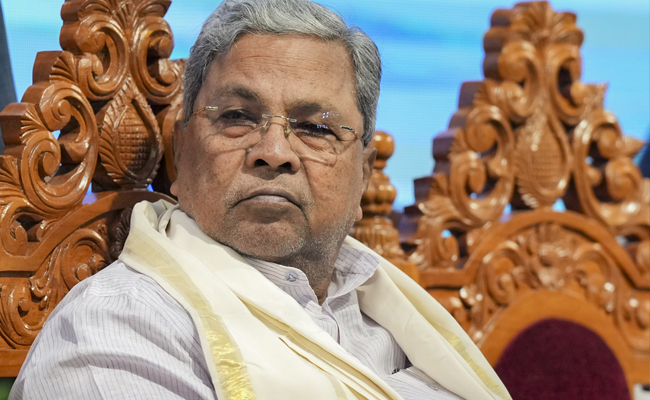
Bengaluru (PTI): Alleging a “criminal conspiracy” by BJP candidate D N Jeevaraj in the Sringeri Assembly poll recounting, Karnataka CM Siddaramaiah on Tuesday said the outcome was manipulated after valid postal ballot votes in favour of Congress leader T D Raje Gowda were tampered with during the recounting process.
Following a Karnataka High Court order on an election petition filed by Jeevaraj, challenging Raje Gowda’s election, the reverification and recounting were conducted on Saturday.
After the reverification and recount of postal ballots for the Sringeri Assembly constituency, votes polled in favour of Raje Gowda were reduced by 255, the returning officer said.
A report on the matter has been submitted to the Election Commission of India for further action, the officer added.
Congress leader Raje Gowda had won the 2023 Assembly polls from Sringeri by 201 votes, defeating his nearest rival Jeevaraj.
Addressing a press conference in Bengaluru, Siddaramaiah said the High Court had directed the recounting of postal ballots and that irregularities were noticed during the exercise conducted on May 2.
“This is a clear case of criminal conspiracy,” Siddaramaiah said, alleging that valid votes cast in favour of Raje Gowda were altered after being accepted by counting agents of all parties, including Congress, BJP, and JD(S).
He claimed that during the recounting of postal ballots, 255 votes were initially accepted as valid by all agents but were later tampered with by subordinate officials.
“There is a second mark on the votes polled in favour of Raje Gowda. They had accepted these as valid votes. Subsequently, another mark was made by officials. This is a clear case of criminal conspiracy,” he said.
When asked who was behind the alleged conspiracy, the CM replied, “It was hatched by Jeevaraj and others. It is planned.”
Siddaramaiah further alleged that the returning officer acted improperly by declaring the result despite the presence of an Election Commission observer during the recounting.
“Immediately after the counting, the returning officer announced the result. He should not have done so; this is against the law,” he said.
He pointed out that Raje Gowda had originally won by 201 votes, but after the recounting, the BJP candidate was declared the winner by 52 votes.
“The BJP has committed a criminal act of conspiracy. This is not vote chori but vote dacoity,” he alleged.
The CM said a police complaint had already been filed by Raje Gowda’s election agent, Sudhir Kumar, and emphasised the need for electoral integrity.
“We want transparency and free and fair elections. That is what our Constitution mandates,” he added.
Stating that the government would pursue legal remedies, Siddaramaiah said, “We are preparing an appeal challenging the returning officer’s announcement in a court of law.”
Responding to a separate query on elections in other states, the CM said there appeared to be an anti-incumbency factor in West Bengal, while results in Tamil Nadu were “surprising,” adding that Vijay’s party was emerging as the largest there.
Following the victory of party candidates in Bagalkote and Davanagere South, Siddaramaiah expressed confidence about future electoral prospects in Karnataka.
“Even in 2028, we will win the Assembly elections. We will come back,” the CM said.
Siddaramaiah added that he would order a forensic examination into the alleged tampering of postal ballots.