Strong earthquake shakes Indonesia's main island, killing 1 and damaging dozens of homes
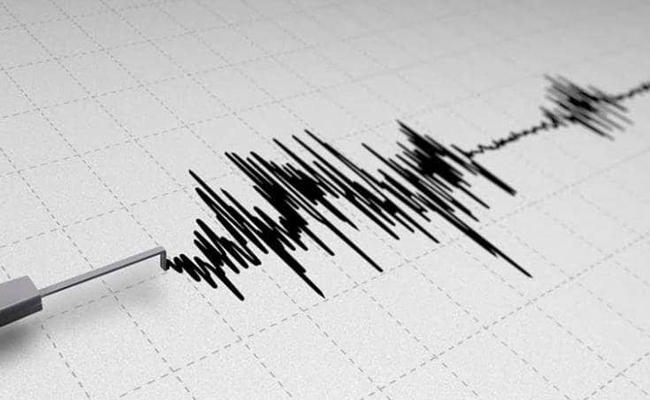
Yogyakarta (Indonesia) (AP): A strong undersea earthquake shook parts of Indonesia's densely populated main island of Java, causing panic as it killed at least one person, injured two others and damaged dozens of houses.
The US Geological Survey said Friday's magnitude 5.8 quake was centred 84 kilometres southwest of Bambanglipuro, a village in Bantul regency of the special province of Yogyakarta. It occurred at a depth of 86 kilometres.
Abdul Muhari, spokesperson for Indonesia's National Disaster Management Agency, said a 67-year-old woman in Bantul died when she fell while fleeing in panic and at least two other residents were injured.
The quake damaged at least 93 houses as well as other buildings, such as schools, health centres, houses of worship and government facilities, in Yogyakarta and its neighbouring provinces of Central Java and East Java, Muhari said.
Television reports showed local residents in Yogyakarta and Central Java provinces panicking as houses and buildings swayed for several seconds. Some places ordered evacuations, sending streams of people into the streets.
Indonesia's Meteorology, Climatology and Geophysical Agency said there was no danger of a tsunami but warned of possible aftershocks. The agency measured a preliminary magnitude of 6.4 for the quake. Variations in early measurements of quakes are common.
Yogyakarta is an ancient centre of Javanese culture and the seat of royal dynasties going back centuries. It is home to the ninth century Borobudur nine stone tiers stacked like a wedding cake and adorned with hundreds of Buddha statues and relief panels and the towering Hindu temple complex of Prambanan, both of which are UNESCO World Heritage sites. Mount Merapi, the country's most active volcano, is also in the province.
In 2006, a magnitude 6.4 earthquake in Yogyakarta killed more than 6,200 people and injured more than 130,000, but caused only minor damage to the two temples.
The country of more than 270 million people is frequently struck by earthquakes, volcanic eruptions and tsunamis because of its location on the arc of volcanoes and fault lines in the Pacific Basin known as the "Ring of Fire".
In 2004, an extremely powerful Indian Ocean quake set off a tsunami that killed more than 230,000 people in a dozen countries, most of them in Indonesia's Aceh province.
Let the Truth be known. If you read VB and like VB, please be a VB Supporter and Help us deliver the Truth to one and all.
Trump says suspect was armed with multiple weapons at WH correspondents' dinner

Washington (PTI): President Donald Trump is addressing reporters at the White House after he and other top leaders of the United States were evacuated from an annual dinner of White House correspondents on Saturday night after a shooting incident outside the ballroom.
Trump said the suspect was armed with multiple weapons before stopped by Secret Service. One officer was shot, but he was protected by a bulletproof vest.
“He was shot from very close distance with a very powerful gun, and the vest did the job,” Trump said.