Sudan group says renewed tribal clashes kill 168 in Darfur

Cairo (AP): A Sudanese aid group says that tribal clashes on Sunday between Arabs and non-Arabs in the war-ravaged Darfur region have killed 168 people.
Adam Regal, spokesman for the General Coordination for Refugees and Displaced in Darfur, says fighting in the Kreinik area of West Darfur province also wounded 98 others.
He says the clashes first erupted Thursday with the killing of two people by an unknown assailant in Kreinik, around 30 km (18 miles) east of Genena, the provincial capital of West Darfur.
He says the militias known as janjaweed attacked the area early Sunday with heavy weapons, and burned down and looted houses in the area.
The clashes eventually reached Genena, where militias and armed groups attacked wounded people while they were being treated at the city's main hospital, according to Salah Saleh, a doctor and former medical director at the hospital.
Authorities have deployed more troops to the region since the fighting on Thursday left eight dead and at least 16 others wounded.
Sudan's Darfur region has seen bouts of deadly clashes between rival tribes in recent months as the country remains mired in a wider crisis following last year's coup, when top generals overthrew a civilian-led government.
The October coup has upended the country's fragile path to democracy after a popular uprising led the military to overthrow longtime autocrat Omar al-Bashir in April 2019.
Let the Truth be known. If you read VB and like VB, please be a VB Supporter and Help us deliver the Truth to one and all.
Congress using hijab issue to pacify minority anger, alleges Karnataka LoP R Ashoka
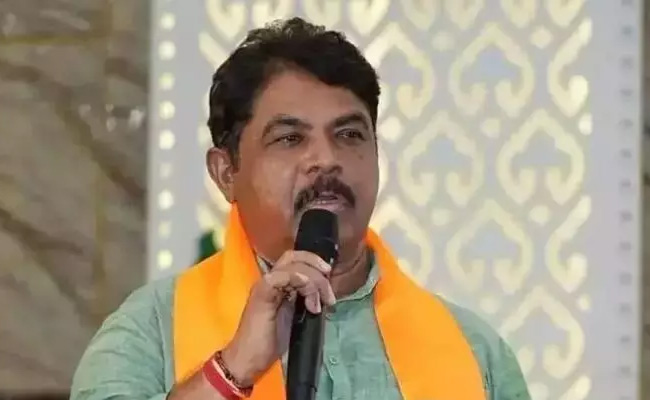
Bengaluru: Leader of Opposition in the Assembly R. Ashoka has accused the Congress government of using the hijab issue to placate what he described as discontent among minority voters after the Davanagere by-election.
In a post on X on Wednesday, Ashoka alleged that the state government, instead of addressing issues such as price rise, corruption, farmers’ distress and law and order, was attempting to retain its minority vote base by reviving the hijab issue.
Referring to the 2022 dress code introduced by the BJP government, which prohibited hijab in schools and colleges, Ashoka said the Karnataka High Court had upheld the policy and emphasised the importance of discipline in educational institutions.
He questioned the Congress government’s move to revisit the issue and asked whether setting aside the court-backed policy to benefit one community could be described as secularism.
Ashoka further alleged that while the government was willing to permit hijab, it continued to prohibit saffron shawls.
He accused the government of dividing students on religious lines rather than treating schools and colleges as spaces of equality.
Drawing a comparison with Mamata Banerjee’s government in West Bengal, Ashoka claimed that excessive appeasement politics had harmed the state and warned that the Congress in Karnataka could face a similar political response.
He said voters in Karnataka would teach the Congress a lesson for what he termed “vote-bank politics” and for compromising constitutional and judicial principles.