Sugar prices are rising worldwide after bad weather tied to El Nino damaged crops in Asia
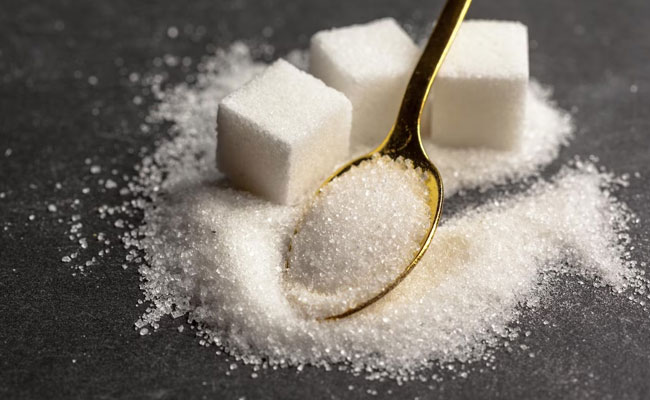
Bangkok (AP): Skyrocketing sugar prices left Ishaq Abdulraheem with few choices. Increasing the cost of bread would mean declining sales, so the Nigerian baker decided to cut his production by half.
For scores of other bakers struggling to stay afloat while enduring higher costs for fuel and flour, the stratospheric sugar prices proved to be the last straw, and they closed for good.
Sugar is needed to make bread, which is a staple for Nigeria's 210 million people, and for many who are struggling to put food on the table, it offers a cheap source of calories. Surging sugar prices an increase of 55 per cent in two months means fewer bakers and less bread.
"It is a very serious situation," Abdulraheem said.
Sugar worldwide is trading at the highest prices since 2011, mainly due to lower global supplies after unusually dry weather damaged harvests in India and Thailand, the world's second- and third-largest exporters.
This is just the latest hit for developing nations already coping with shortages in staples like rice and bans on food trade that have added to food inflation. All of it contributes to food insecurity because of the combined effects of the naturally occurring climate phenomenon El Nino, the war in Ukraine and weaker currencies. Wealthier Western nations can absorb the higher costs, but poorer nations are struggling.
The United Nations Food and Agriculture Organisation is predicting a 2 per cent decline in global sugar production in the 2023-24 season, compared with the previous year, translating to a loss of about 3.5 million metric tons (3.8 million U.S. tons), said Fabio Palmeri, an FAO global commodities market researcher. Increasingly, sugar is being used for biofuels like ethanol, so global reserves of sugar are at their lowest since 2009.
Brazil is the biggest sugar exporter, but its harvest will only help plug gaps later in 2024. Until then, import-dependent countries like most of those in sub-Saharan Africa remain vulnerable.
Nigeria, for instance, buys 98 per cent of its raw sugar from other countries. In 2021, it banned imports of refined sugar that ran counter to a plan to build up domestic sugar processing and announced a USD 73-million project to expand sugar infrastructure. But those are longer-term strategies. Abuja traders like Abba Usman are facing problems now.
The same 50-kilogram (110-pound) bag of sugar that Usman bought a week ago for USD 66 now costs USD 81. As prices rise, his customers are dwindling.
"The price keeps increasing every day, and we don't know why," Usman said.
It's partly due to the El Nino, a natural phenomenon that shifts global weather patterns and can cause extreme weather conditions ranging from drought to flooding. Scientists believe climate change is making El Nino stronger.
India endured its driest August in over a century, and crops in the western state of Maharashtra, which accounts for over a third of its sugarcane production, were stunted during the crucial growing phase.
India's sugar production is likely to decline by 8 per cent this year, according to the Indian Sugar Mills Association. The world's most populated nation is also the biggest consumer of sugar and is now restricting sugar exports.
In Thailand, El Nino effects early in the growing season altered not just the quantity but also the quality of the harvest, said Naradhip Anantasuk, leader of the Thailand Sugar Planters Association.
He expects only 76 million metric tons (84 million US tons) of sugarcane to be milled in the 2024 harvest season, compared with 93 million metric tons (103 million US tons) this year.
A report by US Department of Agriculture predicted a 15 per cent dip in output in Thailand in October.
Thailand reversed a hike in sugar prices within days, imposing price controls for the first time since 2018. Anantasuk said this would discourage farmers from growing sugar by capping their income.
"It's like preventing the industry from growing, preventing an open competition," he said.
Wholesale prices had been allowed to rise to help farmers cope with higher costs partly due to government demands that they not burn their fields, which makes harvesting cheaper but envelops much of Thailand in heavy smog.
Looking ahead, Brazil's harvest is forecast to be 20 per cent bigger than last year's, said Kelly Goughary, a senior research analyst at the agriculture data and analytics firm Gro Intelligence. But since the country is in the Southern Hemisphere, the boost to global supplies won't come until March.
This is because of favourable weather earlier this year in Brazil along with an increase in areas where sugarcane was planted, according to the USDA.
The next few months are the greatest concern, said the FAO's Palmeri. Population growth and rising sugar consumption will further strain sugar reserves, he said.
The world now has less than 68 days of sugar in stockpiles to meet its needs, compared with 106 days when they began declining in 2020, according to data from the USDA.
"It's at the lowest levels since 2010," said Joseph Glauber, senior research fellow at the International Food Policy Research Institute.
Indonesia the biggest sugar importer last year, according to the USDA has cut back on imports and China, the No. 2 importer, was forced to release sugar from its stocks to offset high prices domestically for the first time in six years, Palmeri said.
For some countries, importing more expensive sugar eats up reserves of foreign currency like dollars and euros that also are needed to pay for oil and other crucial commodities, said El Mamoun Amrouk, an FAO economist.
That includes Kenya. Once self-sufficient in sugar, it now imports 200,000 metric tons (110,000 U.S. tons) a year from a regional trade bloc. In 2021, the government limited imports to protect local farmers from foreign competition, but it reversed that decision as harvests shrank due to insufficient rain and mismanagement.
The amount of sugar milled in Kenya fell steadily from June to August. To compensate, monthly imports doubled from September to October. Meanwhile, a 50-kilogram (110-pound) bag of local sugar doubled in price to
60, shopkeeper Joseph Kuraru said.
Back in Africa's largest economy, the struggle of Nigerian bakers is a microcosm of the effects of rising food and fuel costs and the outsized impact of high sugar prices because it's so ubiquitous. Abuja's many bakeries use sugar both to sweeten cakes and to feed the yeast that makes bread rise.
Bread is often the only food poor households can afford. When bakers raise bread prices, as they did by 15 per cent earlier this year, some people go hungry.
Not passing along higher costs is not an option, said Mansur Umar, president of the Nigerian Bakers' Association.
"There is no way you can buy high and you sell low," he said.
Let the Truth be known. If you read VB and like VB, please be a VB Supporter and Help us deliver the Truth to one and all.
Punjab CM Mann calls twin blasts 'minor', blames BJP for creating atmosphere of fear
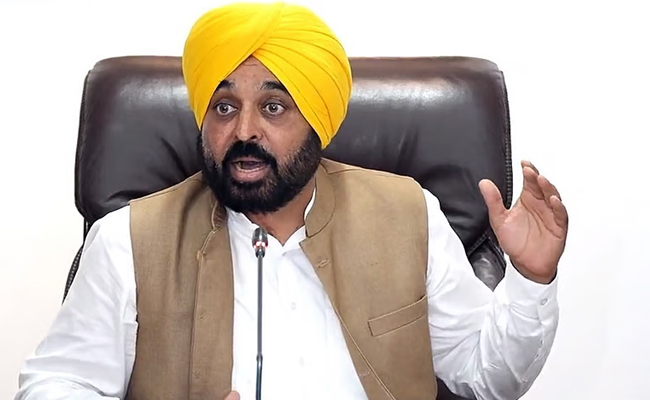
Chandigarh (PTI): Terming the twin blasts in Amritsar and Jalandhar "minor", Punjab Chief Minister Bhagwant Mann on Wednesday targeted the BJP and said this was how the party was preparing for the upcoming assembly elections in the state.
Two blasts occurred on Tuesday night, one outside the Border Security Force's Punjab Frontier headquarters in Jalandhar at around 8 pm and another near the army cantonment area in Khasa, Amritsar, at around 11 pm.
The BJP wants to create an atmosphere of fear, Mann told reporters, adding that the party wanted to scare people into getting their votes. "BJP is a communal party. The assembly elections are over in West Bengal, and they (BJP) have said that now it is Punjab's turn, which indicates that these minor blasts are part of their preparation for the Punjab assembly elections," the chief minister said, adding that investigations are underway.
Mann further alleged that the BJP always sought to gain votes by inciting violence and intimidating the public.
"I urge the BJP to cease such tactics. Punjab is a peaceful state. We are the people who always seek the welfare of the world," Mann said while speaking to reporters in Anandpur Sahib after starting his four-day 'Shukrana Yatra' for the implementation of the anti-sacrilege law.
He claimed that the BJP had a penchant for stirring up trouble in states where it is contesting elections.
Noting the significance of the newly enacted anti-sacrilege law -- the Jaagat Jot Sri Guru Granth Sahib Satkar Amendment Act, 2026 -- Mann stated that it counteracts the BJP's efforts to provoke conflict between communities.
"With the anti-sacrilege law in place, no one will engage in sacrilegious acts at their behest," he said, further alleging that the law contradicts the BJP's agenda.
Mann expressed concern regarding the BJP's tactics, saying, "The BJP claims it is ready for Punjab. Are they trying to scare people with these minor blasts to secure votes? Punjab has already experienced dark times in the past."
"This is the BJP's style of working. In every state where it contests elections, it instigates riots, carries out minor blasts, and divides people based on religion and caste. This demonstrates their preparation for Punjab," he further alleged.
Mann also noted that Punjab often plays a significant role whenever the country faces a crisis. He emphasised that peace, along with law and order, will be maintained at all costs.
Later, in a statement, Mann alleged that the bomb blasts in Amritsar and Jalandhar were part of a deliberate strategy to destabilise the state after the passage of the anti-sacrilege law.
Drawing parallels with West Bengal, Mann alleged that the BJP "thrives on creating communal tension, panic and unrest in poll-bound states to polarise voters," but asserted that peace-loving Punjabis would never allow the saffron party to destroy the hard-earned harmony of Punjab for electoral gains.
He further alleged that the BJP was trying to create "unrest" in Punjab on the pattern of West Bengal ahead of elections, but the people of Punjab are politically aware and united against such conspiracies.
"Violence, divisiveness and communal tension are the patent of the BJP and an integral part of the saffron party's politics. BJP is trying to incite violence and fear in Punjab on the pattern of Bengal to win the ensuing polls. However, BJP's nefarious designs will never succeed in Punjab because anything can germinate on the fertile land of Punjab, but seeds of hatred can never grow here," the chief minister claimed.
Condemning the blasts in the state, Mann alleged such incidents reflected the BJP's "brand of politics", aimed at spreading terror and panic to polarise society and garner votes. "This divisive politics is being pursued by the BJP in every poll-bound state for electoral gains," he alleged.
Mann said those responsible for the blasts would soon be exposed and brought to justice. "All those involved in this heinous crime against humanity will be brought to book and put behind bars very soon. Strict punishment will be ensured for these people because the Punjab Government has zero tolerance for any activity that threatens the peace, safety and integrity of Punjab," he said.
In response to a question about the West Bengal assembly elections, Mann mentioned Mamata Banerjee's complaints regarding the looting of the electoral mandate. "The Election Commission is also facing accusations. It should clarify its stance, ensuring it is not one-sided," Mann added.