Suzanne Scott is first woman CEO at Fox News
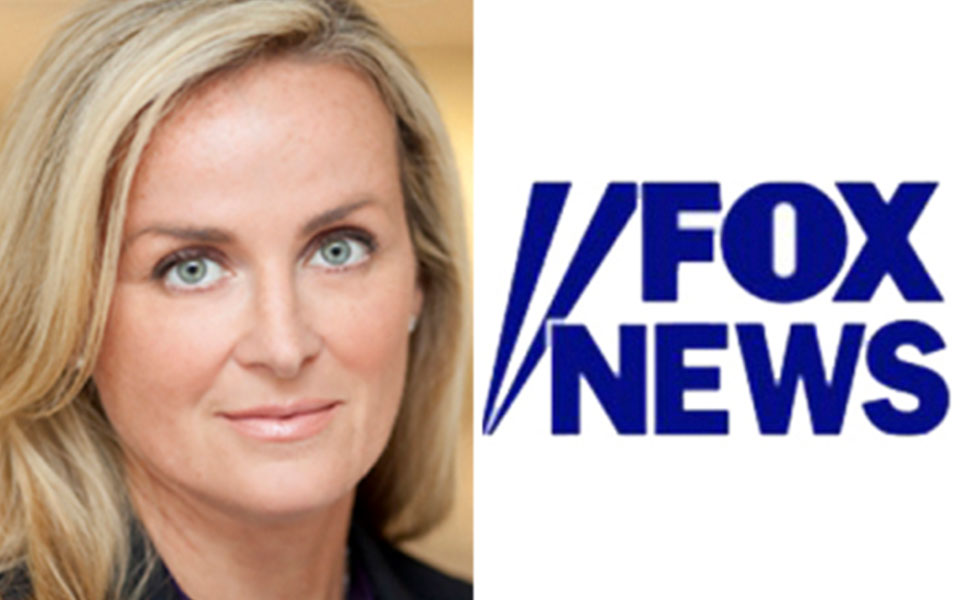
Washington, May 18: Fox News has a new CEO, Suzanne Scott, marking the first time a woman has run the cable news network.
Rupert Murdoch, who took charge after CEO Roger Ailes was forced out amid a sexual harassment scandal in 2016, will remain executive chairman of Fox News. Scott will report to both Rupert and his son Lachlan, CNN reported.
Jay Wallace is effectively Scott's No. 2. His new title is president of Fox News and executive editor.
For the past year, Scott has been the president of programming, meaning she had oversight of opinion shows like "Fox & Friends" and "Hannity". Wallace has been president of news, with oversight of shows like "Special Report".
They shared responsibilities with Fox News co-president Jack Abernethy, who primarily ran business operations. The three executives have been credited with turning Fox News around in the wake of the Ailes scandal, CNN reported.
Scott herself is mired in harassment claims. Staff were apparently aghast when she was promoted in 2017, as she had been the executive tasked with enforcing Ailes's miniskirt dress code for women.
Her appointment comes two days after Fox News paid about $10 million in a settlement that they hoped would resolve many of their outstanding racial and gender discrimination lawsuits, the Guardian reported.
Scott will be CEO of both Fox News and its sister network Fox Business.
The changes were announced on Thursday as part of a broader reorganization of Fox.
The Murdochs have been preparing what they call "New Fox," a slimmed-down version of 21st Century Fox that will emerge once Disney takes control of the existing company's movie studio, entertainment channels and other assets, the CNN report added.
Let the Truth be known. If you read VB and like VB, please be a VB Supporter and Help us deliver the Truth to one and all.
Nation's willpower as important as military strength for ensuring security, says NSA Doval
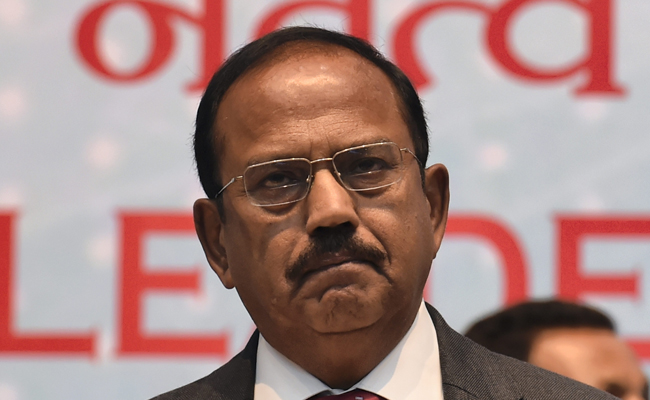
Gandhinagar (PTI): National Security Advisor (NSA) Ajit Doval on Tuesday described national security as a complex and multifaceted phenomenon, and stressed that the biggest mistake in assessing a nation's strength is ignoring the willpower of its people.
While factors such as military strength are critical, inherent strength of people often proves decisive in security matters, he insisted.
Addressing students at the fifth convocation ceremony of the Rashtriya Raksha University (RRU) in
Gandhinagar in the presence of President Droupadi Murmu, Doval emphasised that national security is a collective responsibility shared by the entire nation.
"National security is a vast, complex, and multifaceted phenomenon. It comprises numerous components: a nation's military might, technological prowess, natural resources, diplomatic strength, and human capital," he said in his address to students passing-out of the government-run university, which has been designated as an institution of national importance.
However, what often happens and where errors most frequently occur when assessing this comprehensive national power is in the evaluation of the nation's willpower and the inherent strength of its people, said the NSA.
Explaining this, Doval cited global examples and said, "If Russia (then USSR) withdrew from Afghanistan (in 1988-89), or if the United States was compelled to withdraw from Vietnam (in 1970s) or if the US failed to achieve its objectives in Afghanistan - it was not for a lack of technology or military strength.
"Rather, the decisive factor was the spirit and commitment of the local people, what we refer to as nation's willpower."
He stressed that the sole objective of warfare is to break the morale of one's adversary, thereby compelling them to accept a treaty on your terms.
The NSA said the role of citizens is crucial in building this strength.
"In the cultivation of this willpower, the role of general public is of paramount importance, specifically the degree of awareness regarding their own security," he opined.
Doval noted India is witnessing a shift in this regard.
"Today, after a long time in our history, we are witnessing a new awakening. (That) national security is a collective responsibility shared by the entire nation. It is not the sole responsibility of the armed forces, police, or intelligence agencies -- it is the combined strength of all of you that ultimately constitutes our national morale," he told the gathering.
Highlighting the role of professionals in security ecosystem, including those in academia, research and operations, he said their knowledge, technical expertise and awareness significantly influence outcomes.
The NSA stressed the importance of character and discipline in the field, saying "mental power" and the ability to work as a team are essential qualities for excelling.
Calling commitment the "third indispensable element," Doval said the field of national security demands the highest level of dedication.
In a message to youngsters wishing to join the security domain, the NSA asserted, "This is a game in which there are no silver medals. You are either victorious, or you are vanquished. If you win, you make history; but if you lose, you become history. Your very existence will be at stake."
During the convocation ceremony, Doval was conferred an honorary Doctor of Philosophy (PhD) degree by President Murmu in recognition of his contributions to national security.
"With the utmost humility, I accept the Honorary Doctorate degree conferred upon me here today. I am deeply grateful for this honour," the NSA added.